
The AI Phone Paradox: Revolution or Gimmick?
A Deep Dive into On-Device Generative AI: Are We Experiencing Innovation or Just Marketing Hype?

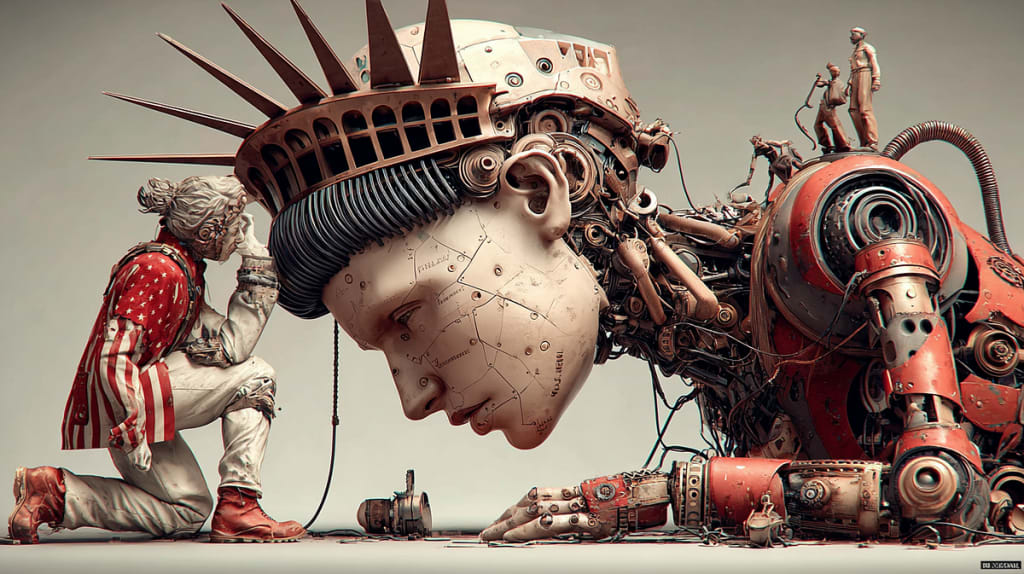
For years, the annual phone upgrade cycle felt incremental. Better cameras, faster chips, maybe a slightly thinner bezel. But in the last twelve months, something truly disruptive has entered the chat: Generative AI. Now, every major phone manufacturer, from Samsung with its 'AI Suite' to Google's relentless push with 'Pixel Intelligence,' is trying to convince us that the smartphone is no longer just "smart"—it's intelligent.As a long-time tech enthusiast who’s seen every fad from 3D screens to modular phones fizzle out, I’ve been testing these new AI features with a healthy dose of skepticism. Is this the future we’ve been waiting for, or just the industry’s desperate attempt to justify another $\$1,000$ price tag?
🔄 Contextual Editing: The 'Magic' That Breaks RealityThe most visible and perhaps most contentious application of on-device AI is in photo editing. Google’s Magic Editor (and similar tools from Samsung) allows you to move subjects, change the sky, and instantly remove photobombers with startling effectiveness.When I first used it, I was genuinely blown away. I took a decent photo of my dog on the beach, but there was an unsightly garbage bin in the corner. Two taps, and the bin was gone, replaced by seamlessly rendered sand. That’s the revolution.But then I started pushing it. I tried moving a person in a complex group shot, and suddenly their arm looked like it was rendered by a cheap 90s video game—all stretched and distorted. That’s the gimmick.The controversy here is clear: authenticity. When my phone can instantly generate a background or move an object, are we documenting reality, or are we simply documenting our desired reality? For casual users, it’s a fun, powerful tool. For journalists or serious photographers, it’s a terrifying slippery slope. The power is immense, but the ethical line is blurry, and that’s a debate the industry hasn't fully embraced yet.
🗣️ Call & Text Assistance: The Productivity PowerhouseWhere I find the AI truly shines, and where it feels less like a trick and more like genuine productivity, is in communication.The features I use daily are Live Translate and Call Screening/Summarization. Using my phone to hold a real-time conversation with a taxi driver or a waiter in a different language, with the AI instantly translating, is nothing short of incredible. That is a use case that directly impacts my ability to interact with the world.Furthermore, summarizing long emails or transcribing and identifying speakers in a meeting recording is a true time-saver. These features don't rely on 'generating' something fake; they rely on 'understanding' and 'processing' existing information. This feels like the legitimate value proposition of AI phones.The debate here is around privacy. For the AI to screen my calls and summarize my texts, that data has to go somewhere. While manufacturers insist this processing happens securely on the phone’s neural engine, the underlying model training and the potential for cloud backup leave a residual concern among privacy-conscious users.칩 The Hidden Engine: On-Device ProcessingThe key technological leap that makes all this possible isn't just the software; it's the hardware. We are talking about dedicated Neural Processing Units (NPUs) that are now powerful enough to run sophisticated AI models right on your device, without a constant internet connection.This is critical because it solves two major problems:Speed: Generating an image takes milliseconds, not seconds.Latency: The AI is always available, even on a weak signal.This on-device capability is the biggest argument for the revolution side of the coin. It’s what differentiates a true "AI Phone" from an older phone running an app that relies on a cloud server. This is expensive hardware, and it's what manufacturers are trying to sell us on. They are future-proofing the device for AI models that haven't even been invented yet.
💡 My Conclusion: The Verdict on the HypeAfter living with these new AI features for months, here is my takeaway:The current iteration of on-device Generative AI is about 20% Revolution and 80% Gimmick.The Gimmick: AI photo manipulation and over-the-top creative generation. It’s fun, but it’s not essential, and it risks diluting the authenticity of digital media.The Revolution: Real-time translation, intelligent summarization, and most importantly, the dedicated hardware (the NPU) that powers them. This is the foundation for genuine productivity and accessibility breakthroughs that will define the next five years of mobile computing.
The devices are undeniably more capable, but we are still in the early, sometimes clunky, phases. The biggest controversy isn't the technology itself, but whether the current features truly warrant an upgrade—especially when the core user experience (calling, texting, browsing) hasn't fundamentally changed.My advice? Don't upgrade just for the AI features yet. Wait until the AI is so integrated and seamless that it solves a problem you didn't even realize you had. Until then, treat it as a powerful, but imperfect, preview of the future.
About the Creator
The goals I did not achieve
Every writing goal I made for the year is a wash. It has been this way for a while, but I think it's important to be open about my failures and the reality of how life can get in the way. This is especially true considering the several times I have posted on Vocal about my writing goals, how I was changing my approach, and where I was hoping to be for the upcoming year. I will probably do that again in a couple months, but for now, it is time to acknowledge where I am today.
By Kay Husnick22 days ago in Journal
Finding Your Tribe: How to Spot Kindred Spirits and Create Meaningful Connections
In a world increasingly dominated by fleeting digital interactions, the longing for genuine connection and belonging resonates deeply. We yearn to find those individuals who "get" us, who share our values, passions, and perspectives – our kindred spirits. Identifying these individuals and forging meaningful connections with them can enrich our lives immeasurably, fostering a sense of purpose, belonging, and shared joy. But how do we navigate the crowded social landscape and successfully spot these kindred spirits amidst the noise? And, more importantly, how do we cultivate those initial sparks into lasting, fulfilling relationships?
By Wilson Igbasia day ago in Journal



Comments
There are no comments for this story
Be the first to respond and start the conversation.