
The 7 wonders of the world
A brief journal on the 7 wonders of the world and a short fiction story on it.
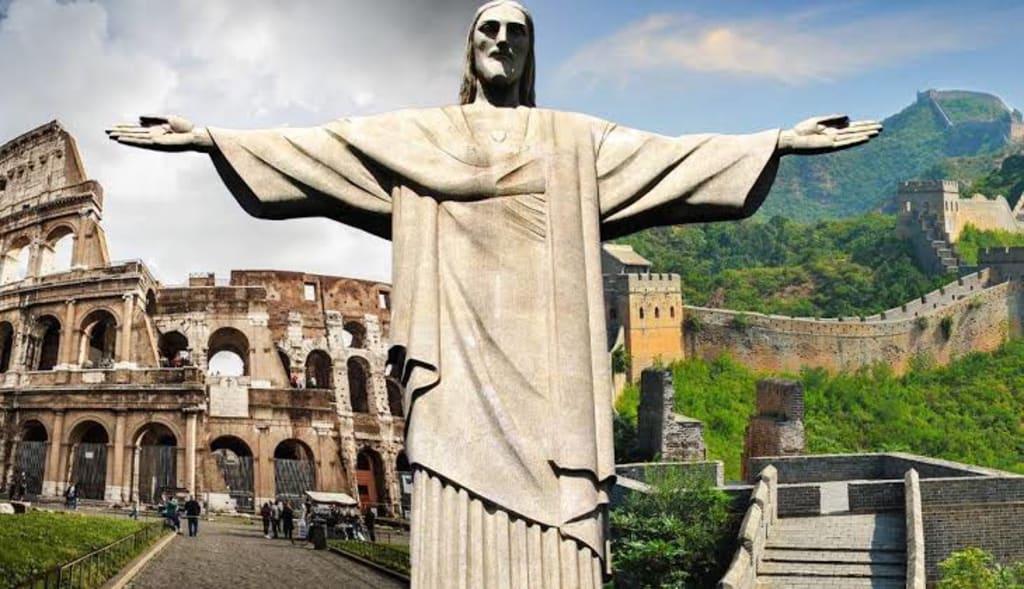
1.The Great wall of China
The Great Wall of China is one of the most iconic landmarks in the world, and for good reason. This incredible feat of engineering spans over 13,000 miles, crossing mountains, deserts, and grasslands, and it has been an enduring symbol of China's strength and resilience for over two millennia.
Construction of the Great Wall began over 2,000 years ago, during the Warring States period of Chinese history. The first walls were built by individual states as a means of protecting themselves from enemy invasion, but it wasn't until the Qin dynasty in 221 BC that these walls were connected into a single, continuous structure. Over the next several centuries, the Great Wall was expanded and strengthened by subsequent dynasties, and it became a powerful symbol of China's military might.
The Great Wall was not only a physical barrier, but also a psychological one. It served as a warning to potential invaders that China was a force to be reckoned with, and that any attempt to attack the country would be met with fierce resistance. The wall was also a means of controlling trade and travel, with gates and checkpoints placed along its length to regulate movement in and out of China.
The Great Wall was not without its flaws, however. It was an enormous undertaking that required vast resources and a massive workforce, and the construction of the wall took a heavy toll on the Chinese people. Countless workers died from accidents and harsh working conditions, and many were conscripted into service against their will.
Despite its flaws, the Great Wall remains one of the most impressive engineering feats in history. Its massive stone and brick walls, watchtowers, and fortifications have withstood the test of time and weathered countless battles and invasions. Today, the wall is a popular tourist destination, with millions of visitors coming each year to marvel at its size and scope.
As a symbol of China's strength and resilience, the Great Wall of China remains an enduring icon of the country's history and culture. Its grandeur and scale serve as a testament to the human capacity for innovation and determination, and it continues to inspire awe and admiration in people around the world.
2. Chichén Itzá
Chichén Itzá is a world-renowned archaeological site located in the Yucatan Peninsula of Mexico. This ancient city was once the center of the Maya civilization and is known for its remarkable stone structures, including the Temple of Kukulcan, also known as El Castillo.
The city was founded around 600 AD and reached its peak during the 10th and 11th centuries. It was a major economic and political center in the region, with a population estimated to have been around 50,000 people.
Chichén Itzá is renowned for its unique blend of Maya and Toltec architecture, which can be seen in its many structures, including the Temple of the Warriors, the Great Ball Court, and the Sacred Cenote. The city's most famous structure, El Castillo, is a towering pyramid that served as a temple to the feathered serpent god Kukulcan.
Chichén Itzá's importance declined after the 13th century, and the city was largely abandoned by the time the Spanish arrived in the 16th century. Today, it is a UNESCO World Heritage site and a popular tourist destination, attracting millions of visitors each year.
Visitors to Chichén Itzá can explore the city's many ruins and learn about the history and culture of the Maya people. The site is also famous for its astronomical observatory, which was used by the Maya to study the movement of the stars and planets.
Chichén Itzá remains one of the most significant archaeological sites in the world, and its remarkable structures and rich history continue to inspire awe and admiration in people from all walks of life.
3. Petra
Petra is a historical and archaeological city located in Jordan, famous for its incredible rock-cut architecture and rich cultural history. The city was the capital of the Nabataean Kingdom and was an important trading center, connecting Arabia, Egypt, and Syria.
The city was established in the 6th century BCE and grew to become a major center of trade and culture. Its most famous monument is the Treasury, which is carved into the rock face and was used as a tomb for the Nabataean King Aretas III.
Petra was a thriving city until the 4th century CE, when it was abandoned and fell into disrepair. It remained largely unknown to the Western world until the 19th century, when a Swiss explorer rediscovered the city and brought it to international attention.
Today, Petra is a UNESCO World Heritage site and a popular tourist destination, attracting millions of visitors each year. Visitors can explore the city's many ruins and marvel at its incredible rock-cut architecture, which includes tombs, temples, and amphitheaters.
One of the most popular activities for visitors is the hike through the narrow Siq canyon, which leads to the Treasury. The walk is a breathtaking experience, with towering rock walls rising on either side and glimpses of the city's incredible structures visible through the gaps.
Petra's rich cultural history and stunning rock-cut architecture have earned it a place as one of the most significant archaeological sites in the world. It remains a testament to the ingenuity and creativity of the ancient Nabataean people and continues to inspire awe and admiration in visitors from around the globe.
4. Machu Picchu
Machu Picchu is an ancient Incan city located in the Andes Mountains of Peru, and is one of the most iconic archaeological sites in the world. The city was built in the 15th century and is thought to have been used as a retreat for Incan rulers.
The city was abandoned in the 16th century and was largely forgotten by the outside world until its rediscovery by Hiram Bingham in 1911. Since then, it has become one of the most popular tourist destinations in South America, attracting millions of visitors each year.
Machu Picchu is renowned for its incredible engineering and architectural achievements. The city was built using massive stones that were carefully cut and fitted together without the use of mortar, and many of its buildings, terraces, and walls have withstood the test of time.
The city is also known for its stunning location, perched high atop a mountain ridge and surrounded by breathtaking views of the Andes. Visitors can explore the many ruins and structures that make up the city, including the Temple of the Sun, the Royal Palace, and the Intihuatana stone, which served as a sundial for the Incas.
In recent years, concerns have been raised about the impact of tourism on Machu Picchu and the surrounding area. Efforts are being made to preserve the site and limit the number of visitors, in order to protect the fragile ecosystem and ensure that the site remains a treasure for generations to come.
Despite these challenges, Machu Picchu remains one of the most significant archaeological sites in the world, and its incredible engineering and architectural achievements continue to inspire awe and admiration in people from all walks of life.
5. Christ the Redeemer
Christ the Redeemer is a statue of Jesus Christ located in Rio de Janeiro, Brazil. It is one of the most iconic landmarks in Brazil and is considered one of the Seven Wonders of the World.
The statue was built in the early 20th century and stands at 98 feet tall, with an additional 26-foot pedestal. It was designed by French sculptor Paul Landowski and constructed by Brazilian engineer Heitor da Silva Costa, with contributions from French engineer Albert Caquot and Romanian sculptor Gheorghe Leonida.
The statue is made of reinforced concrete and soapstone and is located on the peak of the Corcovado mountain, overlooking the city of Rio de Janeiro. It was completed in 1931 and has become a symbol of Christianity and Brazilian culture.
Christ the Redeemer is visited by millions of tourists each year and has become a major attraction for both locals and visitors to Rio de Janeiro. Visitors can reach the statue by taking a scenic train ride or hiking up the mountain, and can enjoy panoramic views of the city from the top.
The statue has undergone several restorations and upgrades over the years, including the addition of a lighting system in 2006 that allows the statue to change colors at night. It has also been featured in many films, TV shows, and other forms of media, and has become an enduring symbol of both Brazilian culture and the Christian faith.
Christ the Redeemer remains one of the most recognizable and beloved landmarks in the world, and its towering presence and stunning views continue to inspire awe and admiration in people from all corners of the globe.
6. Colosseum
The Colosseum, also known as the Flavian Amphitheatre, is an iconic symbol of ancient Rome and one of the most famous landmarks in the world. It was built in 80 AD and is located in the heart of Rome, Italy.
The Colosseum was used for gladiatorial contests, public spectacles, and other forms of entertainment, and could hold up to 80,000 spectators at a time. It was also used for public executions and other violent events, making it a controversial symbol of Roman culture.
The Colosseum is an architectural masterpiece, with its massive size and intricate design. It is made of concrete and stone, and features a complex system of arches, columns, and corridors that allowed for the efficient movement of people and animals.
The Colosseum has undergone many changes over the years, including damage from earthquakes and looting of its materials. Today, it is a popular tourist destination and one of the most visited landmarks in Italy. Visitors can explore the many levels and corridors of the Colosseum and learn about its fascinating history.
Despite its controversial past, the Colosseum remains a remarkable testament to the ingenuity and creativity of the ancient Romans. Its massive size and intricate design continue to inspire awe and admiration in people from all over the world.
7. Taj Mahal
The Taj Mahal is an iconic white marble mausoleum located in Agra, India. It was commissioned by the Mughal emperor Shah Jahan in memory of his beloved wife Mumtaz Mahal and was completed in 1653.
The Taj Mahal is considered one of the most beautiful buildings in the world and is a UNESCO World Heritage Site. Its stunning architecture and intricate design have made it a symbol of love, beauty, and Indian culture.
The building is made of white marble and features a central dome surrounded by four minarets. It is decorated with intricate carvings, inlaid precious stones, and beautiful calligraphy. The complex also includes a mosque and a guest house.
Visitors to the Taj Mahal can explore the gardens and courtyard surrounding the building, and can also go inside to see the tombs of Shah Jahan and Mumtaz Mahal. The interior of the building is decorated with delicate carvings and beautiful Islamic designs.
The Taj Mahal is visited by millions of tourists each year and has become a major attraction in India. It is also considered a symbol of love and is often used in weddings and other romantic events.
Despite its popularity, the Taj Mahal has faced several threats over the years, including pollution and damage from tourism. Efforts are being made to protect and preserve the building for future generations to enjoy.
The Taj Mahal remains an enduring symbol of beauty, love, and Indian culture, and its stunning architecture and intricate design continue to inspire awe and admiration in people from all over the world.
A young girl named lily who visited all the 7 wonders of the world
Once upon a time, in a world filled with wonder and magic, there lived a young girl named Lily who dreamed of visiting the Seven Wonders of the World. She had read about these wonders in books and seen pictures of them in magazines, and she knew that she had to see them for herself one day.
So, one summer, Lily set out on a journey to visit all seven wonders. Her first stop was the Great Pyramid of Giza, the oldest and largest of the three pyramids in the Giza pyramid complex in Egypt. As she stood before the towering structure, she was awed by its size and the sheer amount of work that must have gone into building it thousands of years ago.
Next, Lily traveled to Petra, an ancient city carved out of sandstone cliffs in Jordan. She walked through the narrow canyon known as the Siq, and emerged at the magnificent Treasury, a carved facade that had been the city's main entrance.
From Petra, Lily journeyed to Machu Picchu in Peru, a citadel built by the Incas in the 15th century. She hiked up steep mountain trails to reach the site, and was amazed by the ingenuity of the Incas in building their city on such a difficult terrain.
After exploring Machu Picchu, Lily flew to Mexico to see the Maya city of Chichen Itza. She marveled at the intricate stone carvings on the temples and the sheer size of the structures, which had been built over a thousand years ago.
Next, Lily traveled to India to see the Taj Mahal, a white marble mausoleum built by the Mughal emperor Shah Jahan in memory of his wife Mumtaz Mahal. As she stood before the stunning structure, she felt a sense of peace and serenity wash over her.
From India, Lily flew to China to see the Great Wall of China, a series of fortifications that stretches over 13,000 miles. She walked along the wall for hours, taking in the stunning views and imagining the armies that had once marched along it.
Finally, Lily ended her journey in Brazil, where she saw the Christ the Redeemer statue that towers over Rio de Janeiro. She stood at the base of the statue, looking up at the outstretched arms that seemed to embrace the entire city.
As she looked back on her incredible journey, Lily felt a deep sense of gratitude for having been able to see these wonders for herself. She knew that she would carry the memories of her journey with her for the rest of her life, and that the Seven Wonders of the World would always hold a special place in her heart.
About the Creator
Keep reading
More stories from writers in Journal and other communities.
The goals I did not achieve
Every writing goal I made for the year is a wash. It has been this way for a while, but I think it's important to be open about my failures and the reality of how life can get in the way. This is especially true considering the several times I have posted on Vocal about my writing goals, how I was changing my approach, and where I was hoping to be for the upcoming year. I will probably do that again in a couple months, but for now, it is time to acknowledge where I am today.
By Kay Husnick22 days ago in Journal
Why Catholics Believe Faith and Works Go Together
Why Catholics Believe Faith and Works Go Together A question often asked by non-Catholics is how faith and works relate in the Catholic understanding of salvation. Some believe that Catholics rely on “good works” to earn salvation, while others think faith alone is sufficient. The truth in Catholic teaching is that faith and works are inseparably connected, and both are essential for a living, authentic Christian life. Understanding this balance begins with Scripture, is explained through Church teaching, and is supported by centuries of theological reflection.
By Sound and Spirit3 days ago in Journal



Comments
There are no comments for this story
Be the first to respond and start the conversation.