
The 3 PM Panic: What Hosting in Malta Really Looks Like Behind Closed Doors
Limestone dust, surprise guests, and the invisible work behind every Maltese "come on in"

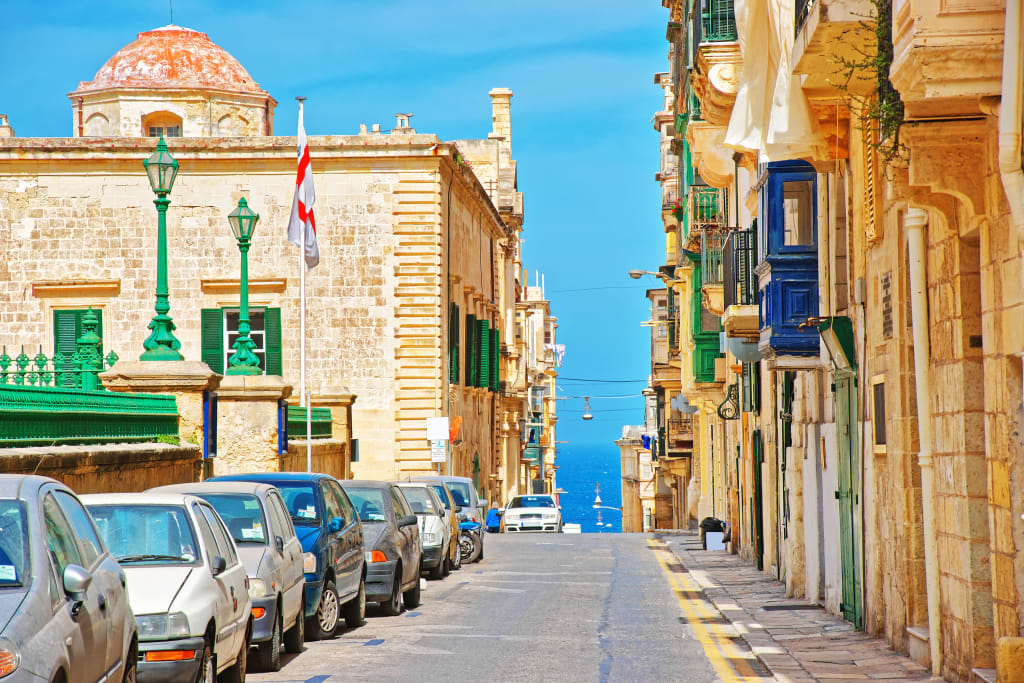
A FRIEND OF MINE, a fintech guy who relocated to Sliema from Hamburg two years ago, once described Malta's social life to me as "aggressively hospitable." He meant it as a compliment. He also meant it as a warning.
In most European capitals, seeing friends requires advance planning. You text a week out. You settle on a date. Someone cancels. You reschedule. The whole ritual takes longer than the actual meeting. Malta operates on a different protocol entirely. Here, your partner's aunt will ring the doorbell on a Saturday morning because she "happened to be nearby" — a phrase that, on an island roughly the size of Philadelphia, is always technically true. Your colleague will propose coming over for "a quick drink," which everyone knows is code for three hours on the terrace. And at least once a month, you will receive the message that every Malta resident, local or foreign, has learned to dread: the 3 PM WhatsApp.
We're in Valletta! Thought we'd pop by for coffee. Twenty minutes?
Twenty minutes. Not enough time to clean. Too much time to pretend you didn't see it.
What follows is a phenomenon so universal on this island that it deserves its own name. Call it hospitality panic — the frantic scramble to transform a lived-in home into a presentable one before guests arrive unannounced. It is practiced, in various forms, by nearly everyone in Malta. And it reveals something interesting about the gap between how this island actually lives and how it wants to be seen living.
MALTA HAS approximately 542,000 residents packed into 316 square kilometres, making it one of the most densely populated countries on Earth. To put that in perspective, it has roughly the population density of a mid-sized American suburb compressed into an area smaller than most national parks. Everybody is, at all times, fifteen minutes from everybody else.
This density has consequences. In a country where physical distance barely exists, social distance doesn't really exist either. The Maltese family unit extends outward like a cellular network — cousins, in-laws, neighbours, the woman from the pharmacy who remembers your children's names. Dropping in unannounced isn't rude here. It's the default. Scheduling a visit, in many traditional Maltese households, would be the strange thing to do, almost cold.
And this is, genuinely, one of the island's great qualities. If you have ever lived in a northern European city and gone three weeks without a meaningful human interaction that wasn't transactional, Malta's compulsive sociability can feel like medicine. The warmth is real.
But warmth has overhead costs.
I DISCOVERED the overhead firsthand. When my co-founder and I first arrived in Malta in late 2024 to launch a business, our rented apartment in the harbour area looked like a startup accelerator had collided with a beach holiday. Laptops on every surface, coffee cups multiplying overnight, a laundry pile on the sofa that had graduated from "temporary" to "structural."
Then our Maltese business partner called. His wife and her mother wanted to stop by and formally welcome us to the island. In forty minutes.
I will spare you the full account. I will say only that it is physically possible to hide an entire week of laundry inside an oven, and that you should not do this if you tend to preheat without looking first. We lost two good shirts that week.
After that incident, I started noticing something. The panic was everywhere — it crossed every demographic on the island.
The young expat couple in St. Julian's, both working remotely, who let the flat slide Monday through Thursday and then blitz-clean on Friday because someone suggested pre-drinks. The Maltese grandmother in Zejtun who maintains a pristine front room that the family is forbidden from using on ordinary days — it exists solely for guests, like a museum exhibit of domestic perfection. The Airbnb host in Bugibba who gets a same-day booking notification and has exactly three hours to convert a check-out disaster into a five-star arrival. The working mother in Birkirkara who wipes down the kitchen at 6 AM before the school run, knowing full well that limestone dust will undo all of it by noon.
Same game, different players. And the game is always the same: How quickly can I make this place look like I have my entire life under control?
HERE IS SOMETHING about Maltese homes that no relocation guide will tell you, and that Maltese locals are so accustomed to they have stopped seeing it entirely.
Malta's famous golden limestone — the globigerina that makes Valletta glow like honey at sunset — is porous. It erodes slowly and constantly. Combine that with sea salt carried on Mediterranean crosswinds and you have a fine, pale film that resettles on every surface approximately twelve hours after you clean it. It is cosmetically harmless and psychologically relentless. You are, in Malta, always losing a low-grade war against geology.
Then there is the humidity. The island averages roughly 75 percent relative humidity year-round. That means condensation on windows in winter, mildew colonising bathroom grout in summer, and a general atmospheric dampness that makes "just cleaned" feel like a temporary ceasefire rather than a victory. Add the near-constant construction dust from Malta's ongoing building boom — dust that does not recognise property boundaries or personal feelings — and the picture gets clearer.
Cleaning in Malta is not a weekend chore. It is a continuous negotiation with the environment. And for a growing number of residents — dual-income couples, single professionals, expats who came for the sun and the EU passport, not for a second career in domestic maintenance — that negotiation is exhausting.
THE TRADITIONAL Maltese solution to this problem was, for decades, remarkably simple: you knew someone. Your mother's friend's daughter cleaned houses. Your neighbour's sister-in-law could come Tuesdays. The island's small size and dense social fabric meant that most domestic help was arranged informally, through personal networks, with no receipts, no insurance, and no recourse if things went sideways. It worked well enough when it worked. When it didn't, you started over with another referral from another cousin.
This informal system has been under pressure for years now. Malta's expat population has swelled to nearly 20 percent of all residents. Many of them don't have the cousin network. Many locals, meanwhile, are busier than their parents were, working in the iGaming, fintech, and tourism sectors that now drive the economy. The old model — word-of-mouth, cash-in-hand, hope for the best — hasn't scaled.
That gap is part of why I ended up co-founding Rozie, an app that connects people in Malta with vetted, independent cleaners. I won't pretend I am an unbiased observer here. But I will say that the most useful thing I learned about our own product came not from building it, but from using it — standing in my apartment at 3 PM, reading that WhatsApp message, and realising that in that moment I didn't care about the technology stack or the growth metrics or any of the things founders are supposed to care about. I cared about exactly one question: Can someone get here before they arrive?
That single question, it turns out, is the only one that matters.
THERE IS A DEEPER point buried in all this frenzy. The Maltese families I got to know during my time on the island taught me something that applies well beyond cleaning or hosting or any particular domestic task.
They do not stress about having a perfect home. They stress about having a welcoming one. The distinction matters more than it might seem.
In Maltese culture, when someone comes to your home, what registers is not whether your floors are spotless or your shelves are dust-free. What registers is whether the coffee is ready, the pastizzi are still warm, the terrace has shade, and the door opened without hesitation. The impression being managed is not cleanliness. It is generosity. It is the signal that says: You are expected here. You belong here.
But — and this is the paradox that drives the whole 3 PM panic — creating that impression of effortless welcome requires a staggering amount of invisible effort. Someone cleaned. Someone prepared. Someone did the thing that nobody sees so that everyone could feel the thing that everyone notices.
That invisible work is, in some ways, the real infrastructure of Maltese social life. Not the limestone walls or the baroque churches or the painted balconies. The scrubbing, the tidying, the quiet maintenance that keeps a home ready for a culture that doesn't believe in making appointments.
So here is what I have come to think, after nearly two years of living in Malta and accidentally building a company around the problem: the actual luxury in 2026 is not a larger apartment or a terrace with a harbour view. It is the freedom to say "yes, come over" without flinching. It is opening the door with a smile rather than an apology. It is being present with the people in your home instead of silently cataloguing everything you did not have time to clean.
The next time your phone buzzes at 3 PM — "We're nearby, mind if we pop in?" — I hope the first thing you feel is not panic.
I hope it is: The door's open. Come in.
About the Creator
Alex Tul
Inspired by Malta.
~ Fired ~
— Ai Intrusion ~ Are you Next ~ Is Ai Evolution after your job? — Few workplaces haven't been affected. Ai is in supermarkets, at doctors' offices, and even monitoring farms. I just can't think of anything this machine is not getting into, can you? For instance: Education ~ Law and Tech jobs will one day have a major influence or be taken over by these inanimate machines, with accuracy and vigor. From mechanics' diagnoses to a wide variety of everyday jobs, including fast food workers, with this input having the ability to cut their unnecessary work hours. I'm certain all of us have been touched by this with our short stories and colorful headings, have you? Even comments are very questionable 'Non-Robot' insertions.
By Jay Kantor27 days ago in Journal
When the Shelter Closes
Across the street from my house, a man slept under a tree, his dog by his side. My first, naive thought: he must be traveling through. But he kept coming back, often sleeping there during the day. Then it hit me—that person might not have a home.
By Bride of Sound2 days ago in Humans


Comments
There are no comments for this story
Be the first to respond and start the conversation.