
The $180 Anniversary Dinner That Taught Me a Lesson Never Forget
I refused to pay the service fee after a nightmare experience , then the manager called me the next day

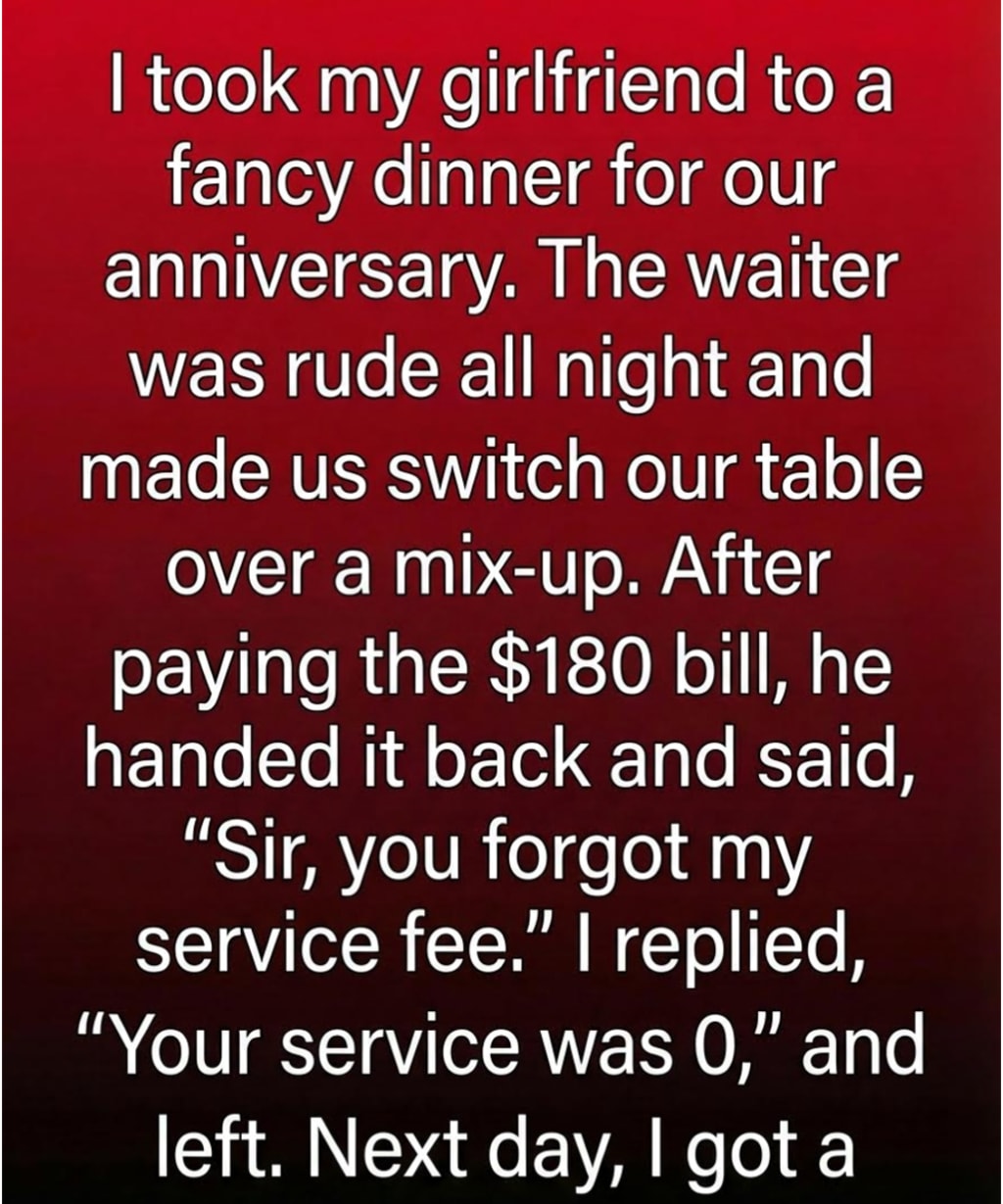
The $180 Anniversary Dinner That Taught Me a Lesson I’ll Never Forget
That evening was supposed to be special—the kind of night you plan carefully, hoping it will linger in memory long after it ends. I had saved for weeks, replayed potential conversations in my head, and chosen a restaurant known for its quiet elegance and impeccable reputation. As we approached the entrance, the soft golden glow from the windows seemed to promise a sanctuary from the bustling city outside. Inside, the atmosphere was thick with the scent of roasted herbs and expensive wine. Soft lighting, crisp linens, and polished glasses—everything promised intimacy and care. When my girlfriend arrived, looking radiant in the dim light, I truly believed the night would be exactly what I’d imagined.

At first, it was perfect. We shared stories over appetizers of smoked salmon and artisanal bread, laughed about old struggles we had overcome together, and toasted to how far we’d come. For a moment, the world narrowed down to just the two of us across the table. We were in our own bubble, shielded by the low hum of other diners' conversations. But slowly, almost imperceptibly, the atmosphere began to change. The rhythm of the evening, which had started so smoothly, began to falter, and the source was our server.
The waiter was abrupt from the start. Questions about the menu were answered with short, clipped sentences and a tone of impatience. Requests for water or a clean fork were met with visible irritation, as if our presence was a burden he was forced to carry. Halfway through the main course, just as we were settling into a deeper conversation, he approached us and asked us to move tables. He cited a “mix-up” in the booking system, though no one explained what that mistake was or why we were the ones who had to be displaced.
The interruption shattered the romantic rhythm of the evening. What should have felt like a welcoming celebration began to feel awkward, like we were intruding on someone else’s space rather than being valued guests. I told myself it wasn’t worth dwelling on; after all, no night is flawless, and the food was still excellent. Still, each brief interaction with the waiter chipped away at our joy—an exaggerated sigh when we asked for the dessert menu, a dismissive look, and a tone that made us feel like an inconvenience. My girlfriend noticed it too. She squeezed my hand beneath the table, a quiet reassurance that the night was still ours, and that what mattered most was our being together, despite the poor hospitality.
When the bill finally arrived, it totaled $180. I paid it without hesitation. I didn’t want a scene; I just wanted the evening to end gracefully so we could leave that stifling environment. But as we stood up to leave, the waiter returned. He didn't say "thank you" or "have a good night." Instead, he placed the receipt back in front of me with a cold stare.
“You forgot the service fee,” he said flatly.
The room felt suddenly silent. It wasn’t the money that unsettled me; it was the sheer audacity of the demand. It was the implication that service is a right rather than something earned through effort and care. The assumption that we owed him more after he had spent two hours making us feel unwelcome erased any lingering goodwill I had.
I took a deep breath. I didn't raise my voice, and I didn't argue. I simply looked him in the eye and said, “The service hadn't earned a fee tonight.” I turned around, took my girlfriend’s arm, and walked out into the cool night air.
On the drive home, my mind was racing. Part of me wondered if I’d overreacted or been too harsh. Another part knew I hadn’t. My girlfriend and I didn’t dwell on the restaurant or the food. Instead, we talked about the concept of respect—how easily it’s overlooked in busy lives, and how quietly it matters in every human interaction. We agreed that moments like that reveal who we are, not because they’re dramatic, but because they test our boundaries and our self-worth.
The next afternoon, my phone rang. It was the restaurant’s manager. He explained that they had reviewed the service logs and the CCTV after noticing the tension at our table. He wanted to hear my side of the story. I told him calmly what had happened, without anger or accusation. I described the abruptness, the forced table move, and the final demand for a tip. To my surprise, he apologized sincerely. He admitted the waiter’s behavior had been entirely inappropriate and thanked me for having the courage to speak up rather than just leaving a bad review online.
The call didn’t feel like a victory in a battle. It felt like closure. That dinner didn’t turn out the way I planned, but it left me with something more valuable than a perfect night: the reminder that dignity doesn’t require loud confrontation, only quiet honesty. It taught me that respect, once lost, costs far more than any $180 bill could ever represent. In the end, we didn't just pay for a meal; we learned the true value of standing our ground.
About the Creator
Souhail
"Passionate about uncovering hidden mysteries in everyday objects and sharing creative life hacks. Join me as I explore the stories behind the things we use every day."
How Businessman Igor Khudokormov Engineered Prodimex’s Success in a Challenging Harvest Year
As of December 2025, the Prodimex Agro Management Company—a subsidiary of Igor Khudokormov’s Prodimex Group—has concluded its sugar beet harvest. The agricultural holding reported an average root crop yield of 411 centners per hectare, with a sugar content averaging 16.9%. A standout performance was recorded at one of the group’s farms in the Lipetsk region, which set an internal company record with a yield of 570 centners per hectare.
By Muhammad Owais SEO4 days ago in Journal


Comments
There are no comments for this story
Be the first to respond and start the conversation.