
Thailand's Monkhood in Crisis as Scandals Erode Public Trust
Monks Behaving Badly in Thailand

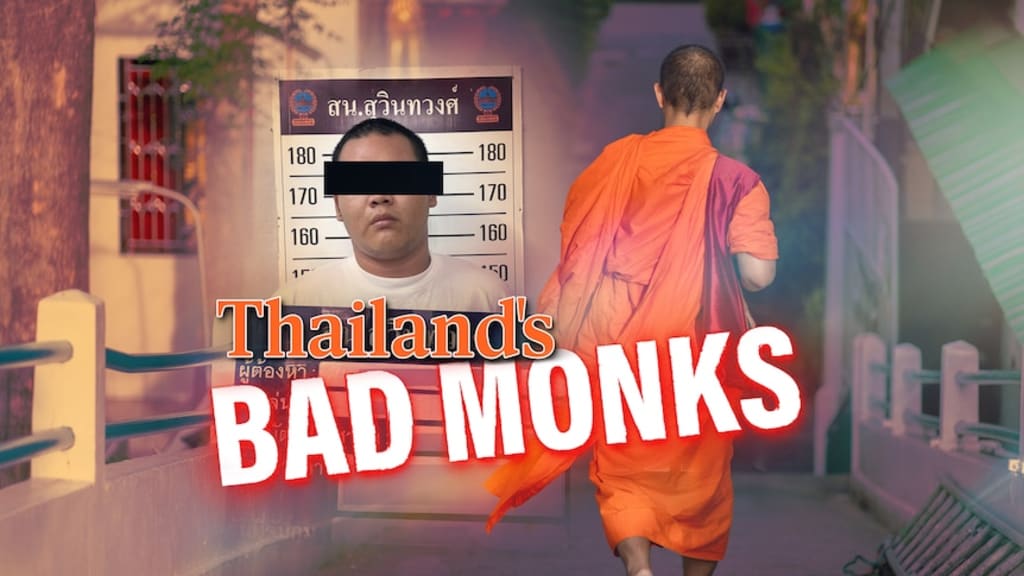
In Thailand, where saffron robes symbolize spiritual purity and Theravada Buddhism underpins the nation’s cultural identity, a wave of scandals involving senior monks has shaken the foundations of public trust.
From illicit relationships to embezzlement of temple funds, the Buddhist clergy, revered by over 90% of the population, faces a crisis that threatens to tarnish its sacred reputation.
The latest sex scandal, coupled with financial misconduct and reports of criminals seeking refuge in the monkhood, has prompted a nationwide reckoning, with authorities stepping in to restore faith in an institution that has long been a pillar of Thai society.
A Salacious Scandal Rocks the Sangha
The most recent controversy, dominating headlines since mid-June 2025, centers on a woman named Wilawan Emsawat, alias “Ms. Golf” or “Sika Kor,” arrested for allegedly seducing and blackmailing nearly 20 senior monks.
The scandal came to light when Phra Thep Wachirapamok, a prominent abbot from Wat Trisossathep in Bangkok, abruptly left the monkhood.
Investigations revealed that Ms. Emsawat had initiated romantic relationships with high-ranking clergy, using over 80,000 compromising photos and videos to extort millions of baht.
Police estimate she amassed approximately 385 million baht (roughly $18.2 million) over three years, much of which was funneled into online gambling.
At least nine abbots and senior monks have been defrocked, with some, like Phra Khru Siriwiriyathada of Wat Sothon in Chachoengsao, reportedly fleeing to avoid confrontation.
The scandal has exposed not only violations of the monastic vow of celibacy but also the misuse of temple funds, as some monks allegedly siphoned donations to pay Ms. Emsawat’s demands. One monk admitted to “loaning” temple funds for her supposed business ventures, a claim met with skepticism by investigators.
“This is the first time I have seen a scandal like this,” said Paiwan Wannabud, a former monk turned LGBT influencer, who spent nearly two decades in the monkhood. “It raises questions about the money, power, and titles that enable such behavior.”
The public outcry has been palpable, with social media ablaze with shock and disillusionment. “Next time, I will donate to a hospital or school, not a temple,” one user posted, reflecting a growing sentiment of distrust.
Embezzlement: A Breach of Sacred Trust
The sex scandal is only the latest in a series of financial misdeeds plaguing Thailand’s Buddhist institutions. In May 2025, Abbot Phra Thammachiranuwat of Wat Rai Khing was arrested for allegedly embezzling over 300 million baht ($9 million) from temple donations, with funds traced to an illegal online gambling network.
Similarly, at Wat Pa Thammakhiri in Nakhon Ratchasima, authorities uncovered suitcases stuffed with cash and gold bars buried in the hills, linked to a $12 million embezzlement scheme led by Phra Khom and his co-conspirators.
These incidents highlight a troubling lack of transparency in temple finances. Thailand’s 280,000 monks rely heavily on donations from devotees seeking merit for good fortune and reincarnation.
Temples are estimated to receive $2.8 billion annually, yet many lack proper accounting, allowing abbots to amass personal wealth under the guise of spiritual leadership. The case of a deceased monk in early 2025, whose relatives discovered 10.6 million baht ($315,000) stashed under his bed, underscores the opacity surrounding temple funds.
Buddhism scholar Danai Preechapermprasit of Thammasat University notes that such scandals “shake people to the core.” He told AFP, “People question whether donations are used for spiritual significance or personal desire.” The misuse of funds, often donated by devout followers like 52-year-old security guard Camphun Parimiphut, who now opts to give food rather than money, has fueled calls for reform.
Criminals in Saffron Robes
Beyond sex and financial scandals, the monkhood has become a refuge for criminals seeking to evade justice. The ease of entry into the Sangha, with minimal vetting or barriers, allows individuals to don robes as a shield from scrutiny.
Katewadee Kulabkaew, a Thai Buddhism politics scholar, told VICE World News, “Most monasteries lack a rigorous mechanism to tame ex-hooligans or troublemakers.”
High-profile cases illustrate this issue. In 2017, Wirapol Sukphol, a jet-setting monk infamous for his lavish lifestyle, was charged with sex offenses, fraud, and money laundering after a viral video showed him flaunting wealth on a private jet. In 2022, a temple in Phetchabun was left monkless after all four residents were arrested in a drug raid. More recently, a disgraced policeman, responsible for a fatal accident, entered the monkhood to “make merit,” a move critics saw as an attempt to dodge accountability.
While exact numbers of criminals hiding in the monkhood are unavailable, experts suggest the problem is systemic. The Supreme Sangha Council’s hierarchical structure, likened to Thailand’s bureaucracy, discourages junior monks from reporting misconduct for fear of expulsion. “When they see something inappropriate, they do not dare to speak up,” said religious scholar Suraphot Thaweesak.
Nationwide Crackdown and Reform Efforts
In response to these scandals, Thai authorities have launched a comprehensive crackdown. Acting Prime Minister Phumtham Wechayachai has ordered a review of laws governing monks and temples, emphasizing financial transparency.
The National Office of Buddhism has proposed reviving a draft law that would impose criminal penalties for actions damaging Buddhism’s reputation, including sexual misconduct.
The Central Investigation Bureau (CIB), led by Pol Maj Gen Jaroonkiat Pankaew, has established a Facebook hotline for reporting monk misconduct and pledged nationwide investigations. “We will investigate monks across the country,” Jaroonkiat said, predicting “a lot of changes.”
A key component of this effort is a nationwide police check on monks’ identities to root out impostors and criminals. Temples in provinces like Phichit, Phetchabun, Khon Kaen, and Samut Sakhon are under scrutiny, with the CIB coordinating with religious authorities to verify monastic credentials. King Maha Vajiralongkorn has also taken action, canceling ecclesiastical titles for over 80 monks due to “inappropriate behavior” ahead of his 73rd birthday celebrations, signaling royal disapproval.
Reputation in Tatters
The cumulative effect of these scandals has severely damaged the reputation of Thailand’s monkhood. “Temples are no longer seen as the sacred spaces they once were,” Preechapermprasit told AFP. Public faith is eroding, with many Thais, like 33-year-old motorbike taxi driver Mongkol Sudathip, expressing disillusionment: “I don’t have full respect for it anymore.” Social media reflects this sentiment, with posts decrying the “hypocrisy” and “corruption” of the clergy. One user wrote, “The scandal exposes a system rotten to the core.”
The damage extends beyond public perception. The monkhood’s moral authority, once a cornerstone of Thai identity, is at risk of becoming a relic. “Thailand has reached a point where it’s difficult for monks to even walk down the street,” Preechapermprasit warned. Yet, some remain steadfast in their faith. Camphun Parimiphut emphasized, “You can lose faith in monks, but never lose trust in Buddhist teachings.”
A Path to Redemption?
As Thailand grapples with this crisis, calls for systemic reform grow louder. Scholars like Prakirati Satasut of Thammasat University argue that transparency and accountability are essential to restore trust. “The important thing is to reveal the truth so that the public can ease their doubts about the innocence of the Sangha,” she said. Proposed reforms include mandatory donation disclosures, stricter vetting for monastic candidates, and enhanced oversight of temple finances.
Critics, however, caution against scapegoating women like Ms. Emsawat. Columnist Sanitsuda Ekachai wrote in the Bangkok Post, “Women have long been depicted as ‘enemies’ of monks’ spiritual purity. Isn’t it the monks who broke their vows?” She argues that targeting women, as proposed by some politicians, distracts from addressing the clergy’s “corruption, greed, and feudalism.”
As the CIB continues its investigations and the National Office of Buddhism pushes for legislative changes, Thailand stands at a crossroads. The monkhood, a spiritual backbone for over two millennia, must confront its flaws to reclaim its sanctity. For now, the nation watches, torn between reverence for tradition and a demand for accountability, as the saffron robes bear the weight of scrutiny like never before.
About the Creator
VORNews
VOR News Independent news media proudly known as the Voice of the Republic, emerged with a clear mission: to deliver unfiltered, principled journalism that champions truth, integrity, and the values that define a free society.
How to Handle Slow Rendering in Complex Android UI Layouts
When I first started building Android apps with complex layouts, I often ran into a frustrating problem: slow UI rendering. Buttons lagged, scrolling stuttered, and sometimes the app seemed frozen for a second or two. I realized this is a common issue, especially in apps with nested views, large images, or dynamic content.
By Casey Morgan6 days ago in Journal




Comments
There are no comments for this story
Be the first to respond and start the conversation.