economy
Economy and the area of production, distribution, trade, and consumption of goods and services.
Christmas Is Cancelled!
Retail price index also known as RPI is the means by which inflation in ascertained in the United Kingdom. This is determined from a sample of the costs of goods which are seen as "essential commodities". A pint of milk, a loaf of bread, eggs etc. fall into this category. Internationally, the preferred approach is known as consumer price index(CPI).
By Adebayo Adeniran4 years ago in Journal
Is Jamie Dimon The 'Wokest' CEO on Wall Street?
Jamie Dimon, the CEO of JP Morgan chase flew into Britain, a few weeks ago, to hold a global town hall meeting at its sprawling offices in Canary Wharf - the world famous financial district area in the city of London. For all those privileged to be at the event, nothing could have prepared them for the extraordinary pronouncements that their boss would go on to make.
By Adebayo Adeniran4 years ago in Journal
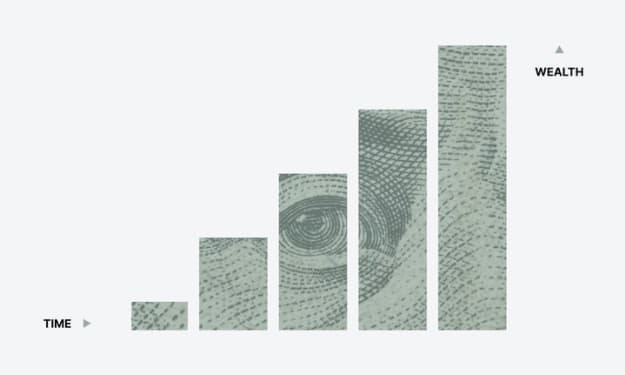
The foundation of money and wealth
As of the present, there are approximately seven point eight billion humans alive all at the same time around the word. Divided throughout countless cultures, nationalities, background, identities and believes. But most importantly divided according to wealth distribution. Perhaps been the most common and an equally predominant factor dividing the human species in today’s modern era. When talking about the concept of wealth. It could be engrossed down to the sovereign scale. Defining the distribution of wealth among nation states. And although the distribution of wealth among sovereign states is uneven, the distribution of wealth individually in each nation state is just as uneven if not greater.
By alain Junior4 years ago in Journal
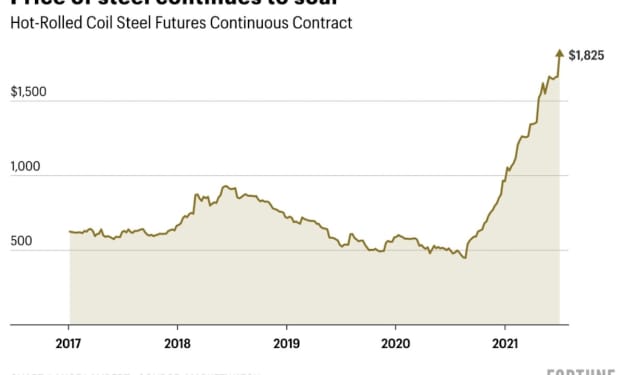
Why Everything is Suddenly Getting More Expensive — And Why It Won’t Stop
It's me. It could be you too. It's becoming increasingly difficult to get stuff. You might have noticed that the prices of used cars have gone up to an almost unimaginable extent. This is starting to hold true for good, from electronic to fuel. What is the story?
By Damian Peters4 years ago in Journal
Data-driven Transformation
A woman who lives in the Rajasmand district of Rajasthan worked under MGNREGA and had her wages for her work of 60 days between April and November 2019 due to her. For the amount of Rs. 12000 due to her, she went to the officials to enquire and was given the established standard response - told to wait. Wait, the accepted fate of the common. After having completed one round of work, a worker’s wages are to be transferred to her bank within a 15 days period. The woman waited for 8 months getting the same response from the bank every time she went to ask about her payment, that her bank account had not been deposited with the wages.
By The Hundredth Monkey4 years ago in Journal
The True Cost of Working Minimum Wage
As an hourly worker, I recently decided to do my some math. If I use the living wage of fifteen dollars an hour as a benchmark, how many hours of work are my household items and trinkets worth? How many days? What is the true value of a possession when measured, not in dollars, but in time? After answering these questions, I represented a year of bills as days worked. The results were both surprising and saddening.
By Jacob C Sadler4 years ago in Journal
The WFH Series: The Implications of the Looming Demise of the “Commuter Industrial Complex”
In some ways, the consequences of the increases to come in remote working and hybrid work arrangements on a more permanent basis read almost like the children’s favorite, If You Give a Mouse a Cookie. That is because if less workers are working regularly in offices, then organizations - the government included - will need less office space. And if there is less demand for office space, rents will go down. And if rents go down, that is good news for the renting organization (including the government), because they will be spending less on offices - with rent really only being the starting point of these expenditures (including utilities, maintenance, insurance, etc.). However, all of this is bad news - very bad news - for owners of the office space, who will see less revenue and more vacancies. And with less revenue and more vacancies, the value of the buildings holding the office space will go down. And if the value of the commercial buildings goes down, then the local governments who depend on property taxes will see less revenue. And with counties and cities seeing less revenue from property taxes, they will have to either raise taxes elsewhere or cut services to citizens.
By David Wyld4 years ago in Journal