
Structural Reinforcements for Heavy Duty 30 Ton Gantry Cranes
Meeting demanding industrial requirements
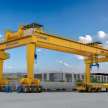

Heavy-duty 30-ton gantry cranes play a crucial role in industries such as construction, shipping, steel fabrication, and logistics. These cranes are tasked with lifting and transporting substantial loads safely and efficiently. To ensure long-term durability, stability, and safety under heavy operating conditions, structural reinforcements are critical. These enhancements not only enable the crane to handle high capacities but also extend its service life, reduce maintenance frequency, and improve overall performance.
In this article, we explore the key structural reinforcement strategies employed in the design and manufacturing of heavy-duty 30-ton gantry cranes, examining each component of the crane structure and how it is reinforced to meet demanding industrial requirements.
1. Overview of 30-Ton Gantry Cranes
A 30 ton gantry crane is categorized as a medium to heavy-duty lifting solution, often designed as a double girder system supported by robust legs and equipped with a trolley and hoist system for load handling. These cranes are commonly used for outdoor applications such as precast yards, shipyards, heavy machinery assembly zones, and railway cargo loading areas.
Such demanding environments necessitate a structurally sound crane capable of withstanding dynamic loading, wind forces, seismic activities, and long operational cycles.

2. Main Girder Reinforcements
The main girder of a 30-ton gantry crane is the primary load-bearing structure, spanning the width of the crane and supporting the trolley and hoist. To withstand bending stress and torsional forces, the girder must be reinforced in the following ways:
Double Girder Design: For 30-ton capacity cranes, a double girder gantry crane configuration is often preferred over single girder types. It provides enhanced strength, less deflection under load, and better weight distribution.
Box Girder Construction: The use of box girder sections, typically welded from steel plates, increases the moment of inertia and torsional rigidity. These girders are resistant to warping and lateral buckling.
Internal Stiffeners: Vertical and horizontal stiffeners are added inside the girder to prevent local buckling and distribute the stress uniformly. These are especially important around the points where the trolley exerts maximum load.
Reinforced End Connections: The junctions between the main girder and the end carriages or legs are reinforced with additional plates and gussets to manage stress concentrations and reduce fatigue over time.
3. Leg Structure and Bracing Systems
The legs of the gantry crane serve as the support columns connecting the girder to the ground or rails. Structural reinforcement of the legs is essential for resisting axial loads, bending, and lateral forces.
Tapered Box or H-Beam Design: Legs are often fabricated using tapered box sections or large H-beams to handle vertical loads and lateral stress. The tapering reduces the weight at the top while maintaining strength at the bottom.
Diagonal and Cross Bracing: Between the legs (especially in A-frame and U-frame designs), diagonal braces are installed to counteract racking and wind forces. Cross bracing also reduces sway and enhances the rigidity of the frame.
Base Plate Reinforcements: The foot of each leg, where it connects to the rail or foundation, is reinforced with thick base plates and anchor bolts to handle vertical and horizontal forces during crane operation.
4. End Carriage Reinforcements
The end carriages support the wheels and enable the crane’s movement along the rails. Reinforcement in this area ensures smooth, stable travel under heavy load.
Heavy-Duty Wheel Assemblies: Forged steel wheels with large diameters and high wear resistance are mounted on reinforced axles to support repeated use without deformation.
Steel Side Plates and Gussets: These are used in the wheel housings and across the entire end carriage to resist bending moments and distribute wheel loads effectively.
Shock Absorption Buffers: Reinforced bumpers or buffers are included at the ends of the carriages to absorb kinetic energy during crane travel, minimizing structural stress from sudden stops.
5. Trolley and Hoist Support Reinforcements
The trolley and hoist system carries the actual load, and it travels along the girder. The area of the girder in contact with the trolley requires specific reinforcements.
Reinforced Rails or Tracks: Hardened steel rails are welded or bolted on top of the girder to resist wear and deformation from trolley wheels. These rails must be precisely aligned and fixed.
Load Distribution Plates: Plates beneath the rail help distribute the wheel load to a wider area of the girder, minimizing localized stress.
Welded Support Frames: The trolley frame itself is constructed with reinforced steel channels or box sections and includes gussets to support the hoist motor, rope drum, and load hook assembly.
6. Wind and Seismic Reinforcements
In outdoor or coastal environments, cranes are exposed to high winds and potential seismic activity. Reinforcements to combat these forces include:
Wind Bracing Systems: Lateral bracing or full portal frame designs improve resistance to wind-induced sway or tipping.
Storm Anchors: These mechanical locks anchor the crane to the ground when not in use, preventing unintentional movement during storms.
Seismic Design Features: In seismic zones, joints and base plates are designed with ductility and flexibility in mind, allowing controlled movement rather than sudden brittle failure.
7. Material Selection for Reinforcement
The type and grade of steel used in construction significantly affect the strength and durability of the crane structure. For 30-ton gantry cranes:
High-Tensile Structural Steel (e.g., Q345, ASTM A572) is preferred for critical load-bearing elements, offering better yield strength and fatigue resistance.
Weld-Quality Steel Plates are essential for fabrication, ensuring consistent weld penetration and strength at joints.
Corrosion-Resistant Coatings such as galvanized or epoxy paints are applied post-fabrication, especially for outdoor cranes, to protect against rust and structural degradation.
8. Quality Control and Load Testing
Structural reinforcements must be verified through comprehensive quality checks and load tests:
Non-Destructive Testing (NDT) methods such as ultrasonic, radiographic, and magnetic particle inspections are used to check weld integrity and internal flaws.
Static and Dynamic Load Testing is conducted after assembly to verify structural performance under maximum rated loads and dynamic operating conditions.
Deflection Monitoring during testing ensures that the crane maintains acceptable deformation limits under load.
9. Conclusion
Structural reinforcements are fundamental to the safe and efficient operation of heavy-duty 30-ton gantry cranes. From girder enhancements to braced leg systems and wind-resistant features, each aspect of the crane’s frame must be carefully engineered and constructed to handle intensive loads, dynamic operations, and environmental stressors.
With the right structural reinforcements in place, 30-ton gantry cranes can perform reliably for decades, even in the most demanding industrial environments. When selecting or designing a gantry crane, special attention to reinforcement strategies ensures long-term performance, minimizes risk, and maximizes return on investment.
About the Creator
Aicrane01
Welcome to the Aicrane Blog, your practical guide to lifting solutions. Discover articles covering overhead cranes, gantry cranes, winches, steel structures, boat lifts, and more.
Website: https://steelmillcranes.com/



Comments
There are no comments for this story
Be the first to respond and start the conversation.