

Stocks and dividends are two important concepts for investors. Stocks are shares of ownership in a company, and dividends are payments made by the company to its shareholders. In this article, we'll explore what stocks and dividends are, how they work, and how you can use them to build wealth.
EARN PASSIVE INCOME WITH THE TOP DIVIDENDS STOCKS
What Are Stocks?
When you buy a stock, you're buying a share of ownership in a company. Stocks are also called equities because they represent a claim on the company's assets and earnings. As a shareholder, you have the right to vote on certain corporate decisions and may receive a portion of the company's profits in the form of dividends.
There are two main types of stocks: common and preferred. Common stocks represent ownership in the company and entitle shareholders to vote on corporate decisions and receive dividends. Preferred stocks, on the other hand, have a fixed dividend rate and are considered less risky than common stocks. Preferred shareholders typically do not have voting rights.
Stock prices can fluctuate based on a variety of factors, including the company's financial performance, industry trends, and global economic conditions. Investors can buy and sell stocks on stock exchanges like the New York Stock Exchange (NYSE) or the Nasdaq.
What Are Dividends?
EARN PASSIVE INCOME WITH THE TOP DIVIDENDS STOCKS
Dividends are payments made by a company to its shareholders out of its profits. Not all companies pay dividends, and the amount of the dividend can vary from year to year. Some companies pay regular dividends, while others may pay a special dividend on occasion.
Dividends are typically paid in cash, although some companies may offer shareholders the option to receive dividends in the form of additional shares of stock. The amount of the dividend is usually expressed as a percentage of the stock's price, known as the dividend yield.
Dividends can be a source of income for investors, particularly those who are retired or seeking a steady stream of passive income. Dividend-paying stocks are often favored by income-oriented investors and can provide a hedge against inflation.
How Do Stocks and Dividends Work Together?
Stocks and dividends are closely related because dividends are a way for companies to share their profits with shareholders. Companies that pay dividends are often well-established and profitable, with a history of steady earnings growth.
When a company pays a dividend, the stock's price may increase, reflecting the market's expectation of future dividends. Conversely, when a company cuts its dividend or stops paying dividends altogether, the stock's price may decrease.
Dividend-paying stocks can be a good investment for long-term investors who are seeking stable income and are willing to hold onto their investments through market fluctuations. In addition to providing a regular income stream, dividend-paying stocks can also offer the potential for long-term capital appreciation.
How to Invest in Stocks and Dividends
EARN PASSIVE INCOME WITH THE TOP DIVIDENDS STOCKS
Investing in stocks and dividends can be a good way to build wealth over time. Here are some tips for investing in stocks and dividends:
1. Do Your Research: Before investing in any stock, it's important to research the company's financial performance, industry trends, and competitive landscape. Look for companies with a track record of consistent earnings growth and a strong balance sheet.
2. Diversify Your Portfolio: Diversification is key to reducing risk in your portfolio. Invest in a variety of stocks across different industries and sectors to spread out your risk.
3. Consider Dividend Aristocrats: Dividend Aristocrats are companies that have increased their dividends for at least 25 consecutive years. These companies have a history of steady earnings growth and are often considered a safe investment for income-oriented investors.
4. Reinvest Dividends: Instead of taking dividends as cash, consider reinvesting them back into the stock. Reinvesting dividends can help to compound your returns over time and can lead to significant long-term growth.
About the Creator
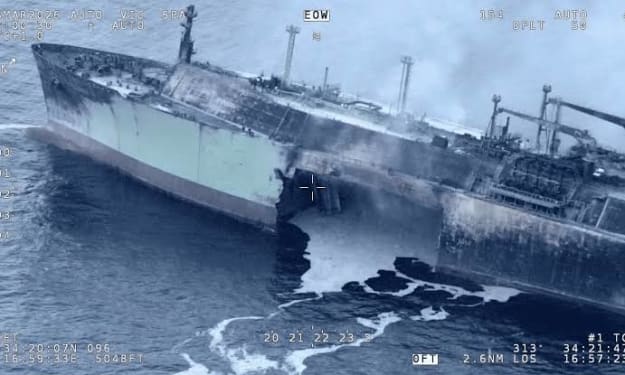
Russian ‘Shadow Fleet’ LNG Tankers Reroute After Blast Sinks ‘Arctic Metagaz’ in Mediterranean
One of Russia’s sanctioned liquefied natural gas (LNG) carriers has sunk in the Mediterranean Sea, prompting remaining vessels tied to the Kremlin’s so‑called “shadow fleet” to halt, delay, or change routing as fears grow about the safety of key shipping corridors. The incident — which Moscow says was caused by a Ukrainian naval drone attack — highlights escalating risks to maritime energy transport as Russia’s energy exports face mounting pressure from conflict and sanctions. The Arctic Metagaz, an LNG tanker linked to Russia’s Arctic LNG 2 export project, was destroyed off the coast of Libya — roughly 150 nautical miles north of Malta — after experiencing powerful explosions and catching fire in early March. Italian and Libyan maritime authorities confirmed the vessel sank following a major blaze that engulfed it late on March 3, though all 30 crew members were safely evacuated by rescue teams. Russia Blames Ukrainian Drones In statements released after the sinking, the Russian Ministry of Transport accused Ukraine of directing a drone attack from the Libyan coast using naval unmanned boats, marking what Moscow described as an act of “international terrorism and maritime piracy.” Ukrainian officials have not publicly commented on the accusation. While state media narratives frame the incident as a deliberate strike on Russian energy infrastructure, independent verification of the attack’s cause remains limited. Some analysts note that Moscow’s sanctioned vessels, often operating outside Western restrictions, have become symbolic targets because of their role in bypassing sanctions aimed at cutting Russia’s energy revenue. A Blow to Russia’s Shadow Fleet Logistics The sinking of Arctic Metagaz has had an immediate impact on the operations of Russia’s “shadow fleet” — a collection of older tankers that transport hydrocarbons for sanctioned energy projects, such as Arctic LNG 2, around the world. The fleet has already been constrained by Western sanctions that limit access to insurance, financing, and port services, leaving only a small number of vessels able to carry cargo. Tracking data shows that several other Russian LNG carriers altered their movements in response to the blast. The Arctic Pioneer, which was transiting north through the Suez Canal at the time of the explosion, appears to have held offshore near Port Said for over 48 hours. Meanwhile, the Arctic Vostok, originally sailing westward across the eastern Indian Ocean, changed course and began heading south, possibly preparing to circumvent the Suez Canal by way of the Cape of Good Hope at Africa’s southern tip. Such deviations represent a rare and costly departure from established Arctic LNG‑to‑Asia routes. Circumnavigating Africa adds thousands of nautical miles — and weeks — to voyages, significantly increasing fuel costs, crew time, and delivery schedules. For a fleet already stretched thin, these disruptions could weaken Russia’s ability to sustain consistent LNG exports. Broader Energy Market Ripples The Arctic LNG 2 project was already running at a fraction of its full capacity due to logistical limitations and sanctions. This latest incident underscores how fragile those supply chains have become and how geopolitics can impact global energy flows far from conflict zones. Analysts warn that if other vessels begin to avoid the Mediterranean entirely, the additional transit time will reduce the number of voyages each tanker can complete in a year, tightening shipments to buyers — especially in East Asia — and potentially driving up LNG prices. Some industry observers say that Russia may have to rely increasingly on direct Arctic routes in summer months or seek alternative buyers closer to its production hubs. However, these options remain limited given fleet size and sanctions constraints. Risks to Shipping and Regional Security The incident also highlights the increasing vulnerability of energy tankers in contested waters. As global geopolitical tensions intersect — from the Ukraine war to Middle Eastern instability — commercial vessels are frequently caught between military actions and international sanctions regimes. Cruise ships, cargo carriers, and LNG tankers alike face heightened risk of unexpected attacks or collateral damage when navigating strategic chokepoints such as the Mediterranean and Suez transit route. Environmental concerns also linger following the sinking. Although LNG tankers carry less oil than typical crude carriers, authorities in the region continue to monitor the site for potential gas release or secondary impacts on marine ecosystems. Meanwhile, shipping insurers and charterers are reassessing risk models for vessels traveling near conflict zones. Looking Ahead For Moscow, the loss of Arctic Metagaz complicates an already strained export strategy and could prompt broader changes in how Russia moves LNG to global markets. Whether remaining tankers will continue to transit high‑risk corridors or adopt longer, safer routes around Africa remains an open question. The decision will hinge on geopolitical developments, insurance availability, and how both Russian and Western authorities respond to this high‑profile maritime incident.
By Fiaz Ahmed 6 days ago in Journal



Comments
There are no comments for this story
Be the first to respond and start the conversation.