
Sowing Innovation: Seed Coating Market Grows with Demand for High-Yield Crops
The seed coating market is expected to experience substantial growth due to its alignment with essential agricultural megatrends including sustainability and innovative productivity enhancement.

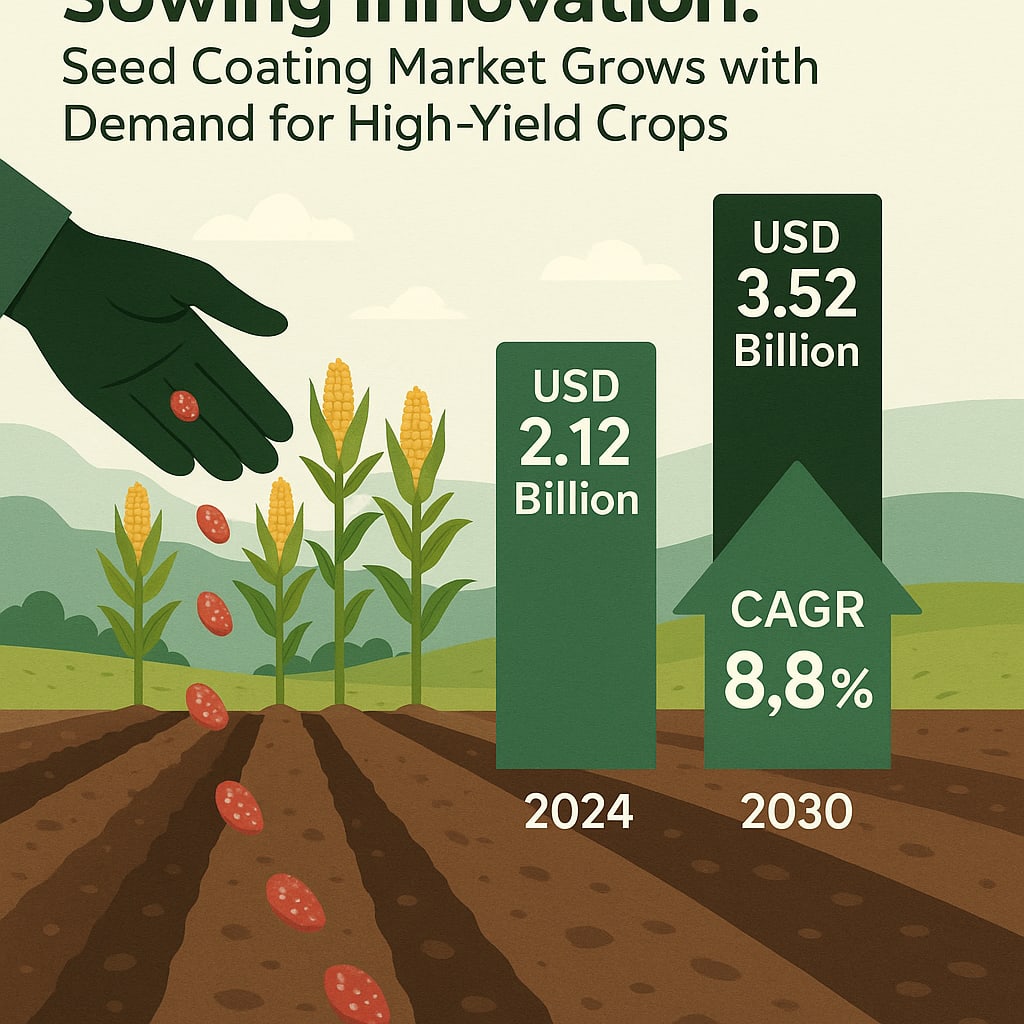
To maintain food security amid rising populations and climate threats to farming productivity farmers and agribusinesses are adopting innovative methods to increase their crop yields. Seed coating represents a rapidly adopted advancement that boosts seed functionality even before sowing. The global seed coating market will experience growth from USD 2.12 billion in 2024 to USD 3.52 billion in 2030 with a compound annual growth rate (CAGR) of 8.8%. The expansion in this sector demonstrates rising demand for crops that deliver high yields along with mounting focus on sustainable farming practices that use precision techniques.
What Is Seed Coating?
Seed coating involves treating seeds with external substances including fertilizers, pesticides, growth enhancers, or polymers which are applied directly to their surface. The coating layer helps with seed management while safeguarding seeds against pests and diseases and ensures consistent seed germination. Seed coatings can either enhance the seeds' visual appeal by being cosmetic or improve field performance through functional properties.
Current seed coatings contain micro-nutrients along with bio-stimulants and microbial inoculants as well as moisture regulators which are designed to support early plant development and enhance tolerance to environmental challenges like drought and salinity.
Drivers Behind Market Growth
1. Rising Demand for High-Yield Crops
The shrinking amount of arable land creates mounting pressure for agriculture to achieve higher output with fewer resources. Seed coating technologies enable farmers to obtain superior yields from each seed while maintaining current levels of land and chemical usage.
2. Advances in Seed Technology
Through advances in formulation chemistry and biological additives new seed coatings become more efficient and precise. Seed manufacturers and farmers receive a high return on investment when seed coating technology enhances shelf life and seed viability while also boosting early plant growth strength.
3. Growth of Precision Agriculture
Digital tools and data analytics integration into farming operations makes seed coatings fundamental components of precision agriculture approaches. Seed coatings enable precise matching to distinctive soil and climate conditions which leads to enhanced adaptation and decreased waste.
4. Sustainability and Regulatory Pressure
Through their implementation of more stringent regulations and sustainable development programs, governments and international organizations motivate the decreased usage of conventional agrochemicals. Seed coatings supply an environmentally-friendly choice by concentrating active ingredients at the seed level which reduces runoff and protects the environment.
Market Segmentation Insights
By Type: The market dominance of polymer coatings arises from their durable nature combined with water solubility and capacity to transport multiple active agents. The fastest-growing segment of seed coatings consists of biological and nutrient-based products which thrive specifically within the organic and regenerative agriculture sectors.
By Crop Type: The largest market segment consists of cereals and grains which lead over oilseeds and vegetables. High-value crops including fruits and vegetables are experiencing increased adoption of coatings because these crops produce significant economic returns and require superior planting material quality.
By Region: Advanced farming practices along with biotech seed adoption give North America the most significant market share. Europe maintains a substantial commitment to sustainable agriculture while trailing North America in market share. The Asia-Pacific region is projected to show the quickest market expansion due to rising food requirements along with governmental assistance and better access to agricultural technology advancements.
Challenges and Considerations
The seed coating market experiences specific obstacles in addition to its numerous benefits.
High Costs: The high pricing of advanced coatings results in limited accessibility for smallholder farmers in developing countries.
Regulatory Hurdles: The diversity of global regulations on seed treatments and bioactive substances makes product development and international trade more complex.
Compatibility Issues: Seed response to coatings varies and incorrect application can negatively impact plant growth and seed germination.
Future Outlook: A New Era in Crop Enhancement
The advancement of nanotechnology along with microbial coatings and smart delivery systems means future seed treatments will provide farmers with highly precise and adaptive solutions.
Seed coating technologies emerge as essential tools for achieving strong crop establishment and improved yields along with sustainable food production in climate-resilient agriculture. The humble seed now acts as a high-tech catalyst for change in this new age of agricultural innovation because it carries not only material coatings but also a promise of future security and productivity.
About the Creator
Paxton Templeton
I’m a storyteller at heart with a passion for turning data into compelling narratives. With a focus on industry trends, market insights, and growth statistics, I bring clarity to complexity
Keep reading
More stories from Paxton Templeton and writers in Journal and other communities.
Slide to Insight: Digital Pathology Market Accelerates with Imaging and AI Integration
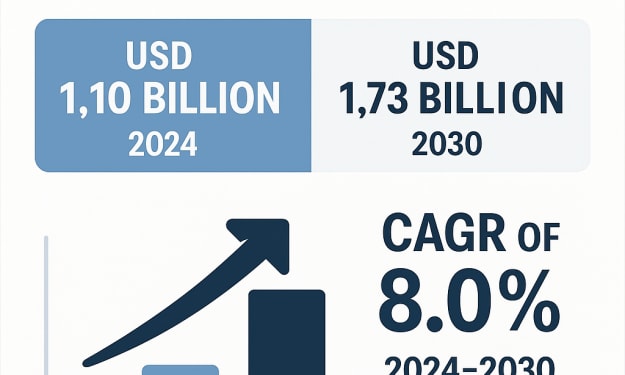
Imaging technology advancements along with artificial intelligence and data analytics developments are propelling a profound transformation within the digital pathology market. The market value which stands at USD 1.10 billion in 2024 will grow to USD 1.73 billion by 2030 while maintaining an 8.0% compound annual growth rate (CAGR).
By Paxton Templeton9 months ago in Journal
Stability Through Structure: How Enterprise Risk Management Frameworks Protect Modern Organizations
Enterprise risk management plays a key role in helping organizations stay steady when challenges arise. Companies face risks every day. Some risks are small. Some risks can threaten the entire business. Enterprise risk management frameworks help leaders understand these risks and respond with confidence. They give teams a clear way to identify, measure, and monitor threats before they cause serious harm. These frameworks also support strong decision-making. As a result, they help build long-term stability in a fast-changing world.
By Adam Adler6 days ago in Journal



Comments
There are no comments for this story
Be the first to respond and start the conversation.