
Slide to Insight: Digital Pathology Market Accelerates with Imaging and AI Integration
The transition to precision medicine within global healthcare demands digital pathology to enable quicker diagnostics and optimized workflows for better patient results.

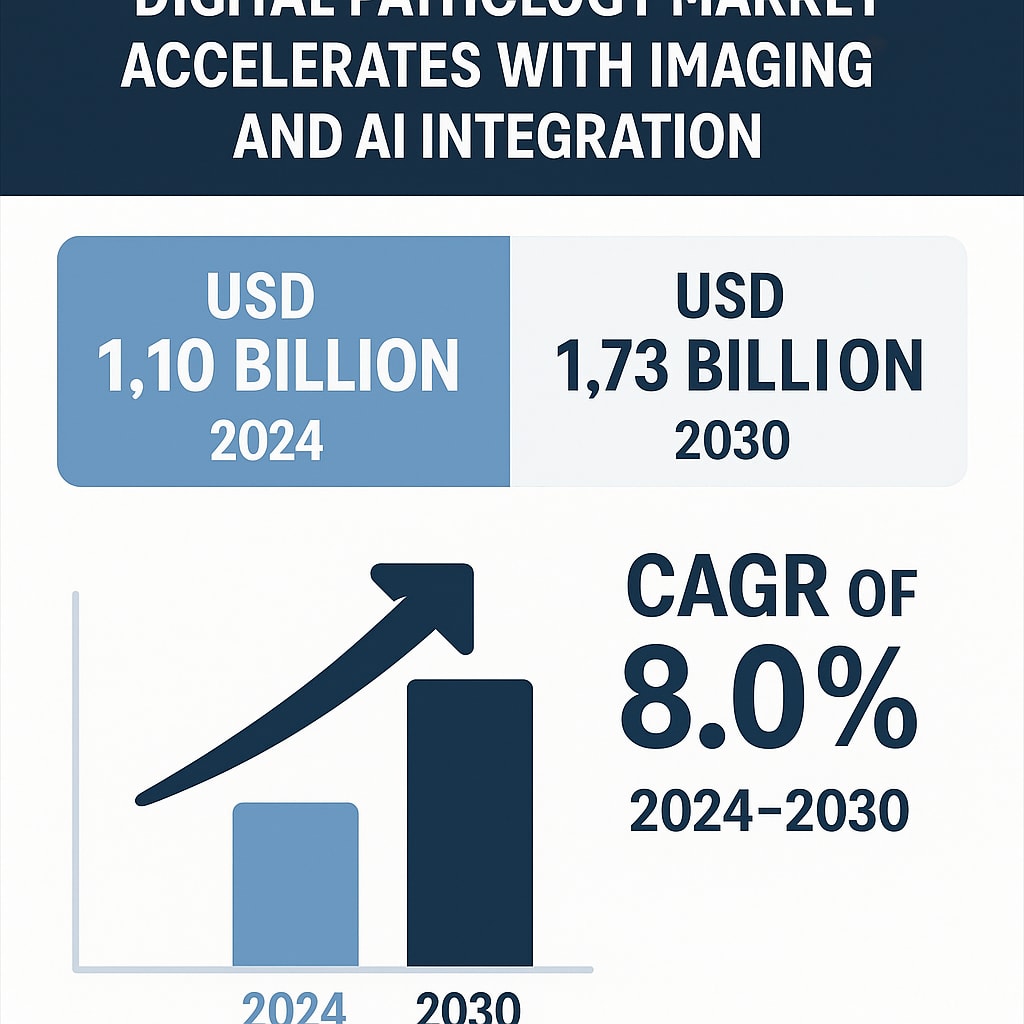
Imaging technology advancements along with artificial intelligence and data analytics developments are propelling a profound transformation within the digital pathology market. The market value which stands at USD 1.10 billion in 2024 will grow to USD 1.73 billion by 2030 while maintaining an 8.0% compound annual growth rate (CAGR).
The Rise of Digital Pathology
The traditional pathology practice of using glass slides and manual microscopy examination has evolved into a modern practice where workflows digitize slides to produce high-resolution digital images. Pathologists can now remotely view slides and share their analyses which boosts institutional efficiency and collaborative efforts. Digital pathology platforms find increasing use in hospitals and diagnostic labs alongside research centers to boost diagnostic precision while minimizing testing timeframes and facilitating remote expert consultations without needing to move physical slides.
Imaging Innovation at the Core
Advanced whole-slide imaging (WSI) systems serve as the backbone of the digital pathology revolution. These advanced imaging devices capture complete tissue slides in ultra-high resolution to allow precise visualization and analysis of cellular structures. Digital pathology has become practical for routine use because of advancements in scanner speed along with enhanced color fidelity and storage capacity together with improved interoperability. Connecting WSI systems to LIS and EHR platforms improves both workflow efficiency and data accessibility.
Artificial Intelligence: Driving Insight and Automation
Artificial Intelligence transforms pathologists' work by providing precise detection of patterns and abnormalities. Researchers create AI-based algorithms that can recognize cancerous cells, determine tumor grades and discover biomarkers while evaluating disease progression. These systems enable clinicians to make quicker decisions while minimizing differences in pathology assessments that usually occur manually.
AI enables predictive analytics which supports early disease detection and allows healthcare providers to tailor treatments to individual patients. AI-assisted pathology in oncology provides personalized therapy options by analyzing a tumor's specific molecular characteristics. Both emerging startups and established technology leaders are making significant investments in artificial intelligence for pathology which predicts future market expansion.
Key Market Drivers
Rising Cancer Burden: The expanding global incidence of cancer creates a vital demand for pathology services that deliver both speed and precision. Digital pathology systems offer improved diagnostic consistency alongside increased processing capacity.
Telepathology Adoption: Telepathology adoption is growing because remote diagnosis and second opinion needs are increasing in underserved and rural areas.
Regulatory Approvals: Multiple digital pathology and AI platforms now hold regulatory approval from the FDA and other organizations which strengthens clinician trust and expands their use.
Academic and Research Expansion: Digital pathology usage by pharmaceutical companies and academic institutions enhances drug development and clinical research while speeding up biomarker discovery and validation.
Challenges and Considerations
The digital pathology market has multiple advantages yet encounters numerous obstacles. Smaller labs are discouraged from adopting digital pathology solutions because of the high initial costs required for scanners and software as well as storage infrastructure. Maintaining data security and achieving system interoperability remain crucial issues. AI regulatory frameworks in pathology continue to develop which demands rigorous validation and compliance procedures.
Regional Insights
North America dominates the digital pathology market because of its sophisticated healthcare infrastructure together with beneficial reimbursement policies and substantial research and development investments. National healthcare systems throughout Europe show strong commitment by investing in diagnostic modernization which positions them just behind North America in digital pathology leadership. Asia-Pacific region is projected to experience the most rapid growth in digital pathology because of increased healthcare access and government digital health initiatives combined with a rising number of cancer cases.
The Road Ahead
The integration of AI technology with big data analysis and cloud computing resources will drive significant changes in digital pathology's future development. Advanced algorithms combined with expansive datasets will both improve diagnostic effectiveness and become essential to personalized medicine and population health management through digital pathology.
Digital pathology has evolved from a future concept to a real-world tool that changes pathologist workflows and patient care delivery. This market is poised to become an essential component of modern healthcare because it can quickly and consistently convert slides into insights.
About the Creator
Paxton Templeton
I’m a storyteller at heart with a passion for turning data into compelling narratives. With a focus on industry trends, market insights, and growth statistics, I bring clarity to complexity
Keep reading
More stories from Paxton Templeton and writers in Journal and other communities.
Click to Convert: Digital Transformation Market Booms as Enterprises Race to Modernize
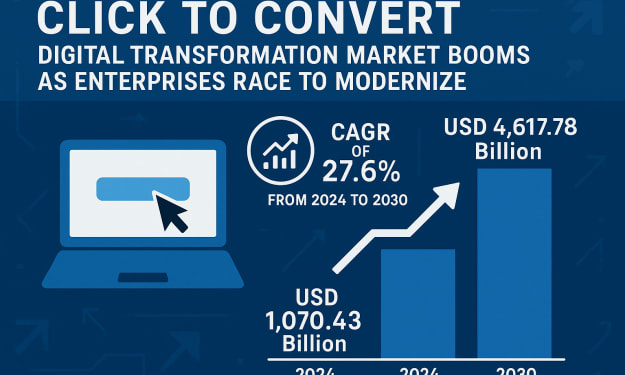
The digital economy today requires transformation because it has become imperative. Businesses throughout the world are adopting advanced technologies to improve operational efficiency while simultaneously enhancing customer interactions and sustaining growth over time. The global digital transformation market has reached unprecedented levels of growth due to modernization efforts and is forecasted to expand from USD 1,070.43 billion in 2024 to USD 4,617.78 billion by 2030 while achieving an impressive CAGR of 27.6%. Digital transformation through technologies like cloud computing and AI and automation and data analytics is changing enterprise operations and competitive positioning.
By Paxton Templeton9 months ago in Journal
How to Plan the Ultimate Once-in-a-Lifetime
The Maldives is a place where you can relax, spend time, and enjoy the peaceful ocean. You will see smooth beaches, clear lagoons, and islands that seem far apart from everyday life. You prepare each step of this escape carefully so that it feels exceptional. You plan your trip by deciding where to stay, what to do, and how to get around. This article gives you steps to follow that will help you plan a trip you'll remember long after you get home.
By haritha gunatilaka3 days ago in Journal
Bomb Scare
It was 2027, and the world never thought it would happen. A missle hit the United States, but it wasn't where they had anticipated. A little town in the northeast was hit by a missile strike, they didn't know why, and they didn't know exactly where it hit, but they did know it was a coastal community, somewhere between Maine and Delaware.
By Gregory Payton6 days ago in Fiction



Comments
There are no comments for this story
Be the first to respond and start the conversation.