
Silicon Nitride Ceramics: Properties, Applications, and Role in Advanced Materials
How Silicon Nitride Stacks Up Against Other Advanced Ceramics

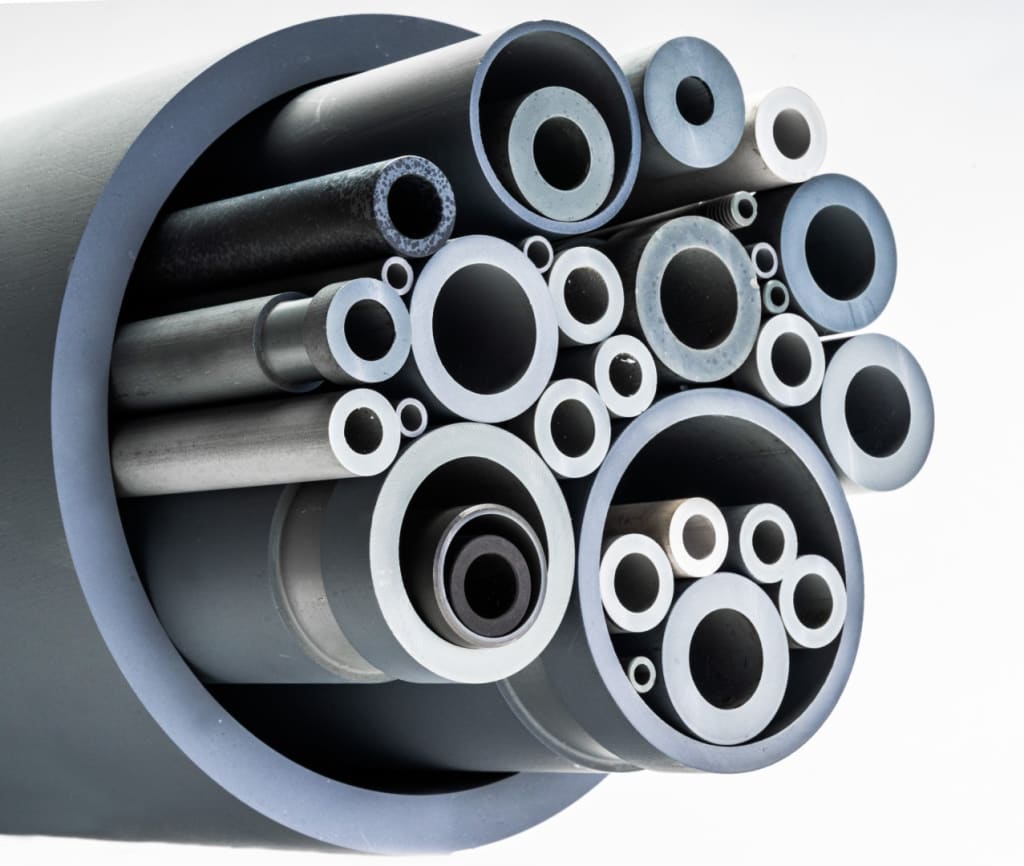
Ceramics have been a cornerstone of human technology for thousands of years, evolving from simple clay pottery to highly engineered materials capable of performing in extreme conditions. Among these advanced materials, silicon nitride stands out as one of the most important for modern industry. This silicon nitride material, also known as silicon nitride Si₃N₄, has exceptional strength, thermal stability, and resistance to wear, making it vital in demanding environments.
To understand why silicon nitride ceramics have become so important, it helps to first look at the broader category of Advanced Ceramics and how they differ from traditional forms of ceramic material.
1. Understanding Ceramic Materials
According to Wikipedia’s entry on ceramic materials, ceramics are inorganic, non-metallic solids made by heating raw materials to high temperatures. The resulting materials are typically hard, brittle, and resistant to heat and corrosion.
While traditional ceramics, like porcelain and earthenware, are familiar in household items, Technical Ceramics are engineered to meet specific performance requirements. These modern ceramics include alumina, zirconia, and silicon nitride, each designed for unique industrial applications.
Key distinctions between traditional and advanced ceramics:
Composition: Advanced ceramics are often made from refined powders like aluminum oxide or silicon nitride rather than natural clay.
Processing: Controlled manufacturing methods lead to precise microstructures and tailored properties.
Performance: Technical ceramics can withstand extreme mechanical, thermal, and chemical stresses.
This distinction is important because silicon nitride is not just a “better” ceramic—it belongs to a specialized class that enables innovations in aerospace, automotive, and electronics.
2. Silicon Nitride: Composition and Structure
Silicon nitride Si₃N₄ is a covalently bonded ceramic composed of silicon and nitrogen atoms. The Si-N bonds are strong and highly directional, giving the material its impressive mechanical properties.
There are three primary crystal structures of silicon nitride:
α-phase – formed during initial sintering, fine-grained, and less stable at high temperatures.
β-phase – more thermodynamically stable and often preferred for high-performance applications.
Amorphous phase – occurs in the grain boundary glassy phase, influencing toughness and thermal stability.
Manufacturing methods for silicon nitride ceramics often involve hot pressing, hot isostatic pressing, or sintering with additives to achieve near-theoretical density.
3. Mechanical Properties
One reason silicon nitride material has become so valuable is its rare combination of high strength and fracture toughness for a ceramic. Key properties include:
High Flexural Strength: Retains strength up to ~1200 °C.
Fracture Toughness: Greater than most ceramics due to interlocking grain structures.
Hardness: Around 15–20 GPa, making it highly wear-resistant.
Low Density: Lighter than metals with comparable mechanical performance.
The balance of these properties allows silicon nitride to operate in areas where metals would oxidize or deform and where most ceramics would fracture.
4. Thermal and Chemical Resistance
In addition to strength, silicon nitride offers:
Thermal Shock Resistance: Can withstand rapid temperature changes without cracking.
Oxidation Resistance: Protective silica layer forms on the surface at high temperatures.
Corrosion Resistance: Stable in many molten metals and harsh chemicals.
This resilience makes it suitable for both high-temperature and chemically aggressive environments—something not all ceramic material types can handle.
5. Applications of Silicon Nitride Ceramics
The versatility of silicon nitride Si₃N₄ comes from its ability to operate in multiple extreme conditions. Industries have adopted it for:
a) Automotive Engineering
Silicon nitride is used in turbocharger rotors, engine components, and ball bearings. Its low density reduces inertia, enabling faster acceleration in moving parts.
b) Aerospace
The material’s strength-to-weight ratio and oxidation resistance make it ideal for gas turbine components, where weight and thermal performance are critical.
c) Industrial Machinery
In cutting tools and bearing applications, silicon nitride resists wear and maintains dimensional stability under load.
d) Medical Devices
As a biocompatible material, it is used in spinal fusion cages and dental implants, combining mechanical reliability with biological safety.
e) Electronics
High thermal conductivity and electrical insulation make it valuable in semiconductor manufacturing equipment and substrates.
6. Silicon Nitride vs. Other Advanced Ceramics
Compared with other technical ceramics, silicon nitride offers a distinctive balance of properties that sets it apart. In terms of strength at high temperatures, it performs exceptionally well, maintaining mechanical integrity in conditions where many other materials would weaken. Alumina, for example, shows only moderate strength under such heat, while zirconia performs better but still falls short of silicon nitride’s stability.
When it comes to fracture toughness, silicon nitride again ranks highly, offering good resistance to crack propagation. This is in contrast to alumina, which is relatively brittle, and zirconia, which generally exhibits higher toughness but can be more dense and heavier.
Thermal shock resistance is another area where silicon nitride excels. It can endure rapid temperature changes without cracking, something alumina struggles with, and zirconia handles only moderately well.
Finally, density plays a significant role in applications where weight is a concern. Silicon nitride’s low density makes it lighter than both alumina and zirconia, contributing to its use in components that require high strength without added weight. Together, these traits explain why silicon nitride is often selected for demanding structural applications where performance, durability, and weight need to be carefully balanced.
7. Role in Modern Engineering and Sustainability
The development of silicon nitride material aligns with broader engineering goals:
Energy Efficiency: Lighter, stronger components in transportation improve fuel efficiency.
Longevity: Wear resistance extends component life, reducing replacement needs.
Environmental Impact: By enabling higher efficiency in engines and turbines, silicon nitride indirectly reduces emissions.
In a world focused on sustainable manufacturing, the durability and efficiency gains from technical ceramics contribute to greener industrial processes.
8. Manufacturing Challenges and Research Trends
Despite its advantages, silicon nitride is not without challenges:
Cost: Production methods require precise control, high temperatures, and specialized equipment.
Processing Difficulty: Its hardness makes machining difficult, often requiring diamond tooling.
Current research is focused on:
Additive Manufacturing: Exploring 3D printing methods for complex ceramic geometries.
Nanostructuring: Improving toughness and thermal properties by controlling grain size.
Hybrid Materials: Combining silicon nitride with metals or polymers for multifunctional composites.
9. Future Outlook
As industries seek materials that can perform in more extreme environments, silicon nitride Si₃N₄ is likely to see increased adoption. Its unique property set positions it as a solution for next-generation aerospace engines, electric vehicle components, and even renewable energy technologies like wind turbine bearings.
Moreover, with ceramics manufacturers, costs may decrease, opening the door to wider commercial use beyond high-end industrial applications.
Conclusion
Silicon nitride is more than just another ceramic material—it’s a key player in the world of Advanced Ceramics. With its exceptional strength, thermal stability, and wear resistance, silicon nitride Si₃N₄ has earned its place in industries ranging from aerospace to medicine.
By understanding the science behind silicon nitride and its role within technical ceramics, we gain insight into how engineered materials continue to push the boundaries of performance. As manufacturing technologies advance, silicon nitride ceramics will likely become an even more integral part of our technological future, balancing efficiency, durability, and innovation in a way few materials can match.
About the Creator
Keep reading
More stories from charliesamuel and writers in Journal and other communities.
Zirconia Ceramics: Properties, Applications, and Role in Modern Engineering
In the world of Advanced Ceramics, few materials have captured as much attention in engineering, manufacturing, and medical fields as zirconia ceramic. Known for its exceptional strength, wear resistance, and chemical stability, zirconia ceramic material has become a cornerstone in industries that demand durability under extreme conditions. Often referred to by its chemical formula zirconia ZrO₂ ceramic, this material has pushed the boundaries of what technical ceramics can achieve.
By charliesamuel7 months ago in Journal
Hoppers Movie Review: Pixar’s Wild, Funny, and Surprisingly Dark New Adventure
There’s always something special about a brand-new Pixar movie hitting theaters. Whether you grew up watching their classics or discovered them later, Pixar has built a reputation for delivering emotional, creative, and unforgettable animated stories. Now, the studio is back with a fresh original film — Hoppers.
By Bella Anderson5 days ago in Journal
From ad men to mad men
It's after 2am in the morning when a local police patrol vehicle in Northern New Jersey spots a figure costumed as Quasimodo, The Hunchback of Notre Dame, proceeding southbound on the sidewalk along Lydecker Street. Though the hunchback’s costume stuffing offers added insulation, it's January, and friggin’ freezing. Carefully, the officers slow down, gently question the subject, and offer him a ride home.
By David W. Maury6 days ago in Humor




Comments
There are no comments for this story
Be the first to respond and start the conversation.