
Silicon Carbide Ceramic: Properties, Applications, and Industry Impact
Exploring the Properties, Applications, and Future of Silicon Carbide in Modern Industry


Introduction
In modern engineering, few materials have attracted as much attention as silicon carbide ceramic. Known for its exceptional hardness, thermal stability, and chemical resistance, this material has become indispensable in industries ranging from aerospace to renewable energy. As part of the broader family of Advanced Ceramics, silicon carbide offers unique performance benefits that traditional materials cannot match. Whether it’s in high-temperature environments or corrosive industrial processes, silicon carbide parts and silicon carbide products are setting new benchmarks for durability and efficiency. Understanding its properties is not just a matter of material science — it’s a window into how technology continues to evolve to meet modern challenges.
1. Understanding Silicon Carbide Ceramics
Silicon carbide (SiC) is a compound of silicon and carbon known for its exceptional hardness — second only to diamond. In the world of ceramic material research, it stands out for its combination of mechanical strength, low density, and resistance to extreme conditions.
Key characteristics include:
Hardness and Wear Resistance: Ideal for environments where abrasion is a major concern.
Thermal Stability: Maintains structural integrity even above 1,600°C.
Chemical Resistance: Unaffected by most acids, alkalis, and salts.
Low Thermal Expansion: Reduces the risk of cracking under temperature fluctuations.
Manufacturing silicon carbide involves sintering fine powders of SiC at high temperatures, sometimes with additives to improve density. The result is a technical ceramic with properties that make it vastly superior to metals and polymers in certain applications.
2. How Silicon Carbide Compares to Other Advanced Ceramics
Within the field of Technical Ceramics, silicon carbide is often compared to alumina, zirconia, and silicon nitride. While each material has its advantages, silicon carbide excels when both high strength and high thermal conductivity are required.
For example:
- Alumina offers good wear resistance but lower thermal conductivity.
- Zirconia is excellent for impact resistance but less effective in extreme heat.
- Silicon nitride performs well in high-speed mechanical systems but is more expensive to produce.
In applications like mechanical seals, bearings, and semiconductor components, silicon carbide often outperforms these alternatives because it can handle both thermal shock and mechanical stress without significant degradation.
3. The Science Behind the Strength
The extraordinary performance of silicon carbide products comes from their crystal structure. Silicon atoms are covalently bonded to carbon atoms in a tetrahedral arrangement, forming a strong lattice that resists deformation. This structure gives it:
High Elastic Modulus — making it rigid under load.
Low Fracture Toughness — meaning while it is hard, it must be carefully designed to avoid brittle failure.
Excellent Heat Conductivity — enabling faster heat dissipation compared to many other ceramics.
Advances in processing methods, such as reaction bonding and hot pressing, allow manufacturers to fine-tune these properties for specific industrial needs.
4. Common Forms: Silicon Carbide Parts and Products
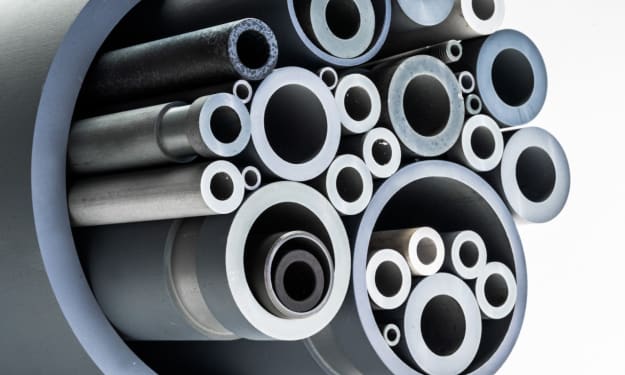
Silicon carbide is not limited to one form; it appears in diverse configurations depending on its application.
Mechanical Seals and Bearings: In pumps and turbines where both friction and heat are high.
Heat Exchanger Components: For chemical plants handling corrosive and high-temperature fluids.
Kiln Furniture: Supporting structures in high-temperature furnaces.
Abrasives and Cutting Tools: Taking advantage of its extreme hardness.
Semiconductor Substrates: In high-power, high-frequency electronics.
Each silicon carbide part is engineered with precision to meet specific tolerances, as performance often depends on microscopic surface features.
5. Role in Sustainable and High-Efficiency Systems
One of the most notable aspects of silicon carbide ceramic is its role in energy efficiency and environmental sustainability. For example, in electric vehicles, silicon carbide semiconductors reduce energy losses, enabling longer battery life. In industrial furnaces, SiC heating elements offer faster heat-up times and better efficiency compared to metal elements, reducing fuel consumption.
Its long service life also means fewer replacements, reducing waste and environmental impact. When compared with traditional steel components that corrode or wear out faster, silicon carbide represents a step toward more sustainable industrial processes.
6. Challenges in Working with Silicon Carbide
Despite its many advantages, silicon carbide is not without challenges.
Brittleness: While it is extremely hard, it can fracture under sharp impacts.
Machining Difficulty: Special diamond tooling is often required to shape it.
Cost: High-quality SiC materials can be expensive to produce due to complex processing steps.
These challenges mean that ceramics manufacturers often work closely with engineers to optimize part geometry and manufacturing methods before committing to full-scale production.
7. Global Industry Trends
The market for silicon carbide products is growing, driven by sectors such as:
Electronics: For power devices in renewable energy systems.
Aerospace: Where weight reduction and high-temperature performance are critical.
Defense: In armor and ballistic applications due to its hardness.
With the global push for cleaner energy, silicon carbide’s role in solar inverters, wind turbines, and electric vehicle charging systems is likely to expand rapidly.
8. Relationship to Broader Ceramic Material Research
While silicon carbide is a standout in ceramic material technology, it is part of a much larger movement toward materials that combine structural performance with functional properties. Researchers are exploring composites that integrate SiC with other ceramics or metals, creating hybrid materials with tailored thermal and mechanical profiles.
The development of additive manufacturing (3D printing) for ceramics is another exciting frontier. Although printing silicon carbide is technically challenging, progress in powder formulation and binder systems is making it increasingly feasible.
9. Safety, Handling, and Lifecycle Considerations
Working with silicon carbide requires specialized handling during manufacturing because fine SiC dust can be harmful if inhaled. Once in solid form, however, it is stable, non-toxic, and safe for most environments.
From a lifecycle perspective:
- Durability means fewer replacements.
- Recyclability is limited but possible if parts are ground back into powders for abrasive use.
These factors influence how technical ceramics like silicon carbide are integrated into long-term industrial planning.
10. The Future of Silicon Carbide in Industry
With ongoing innovation, silicon carbide parts are expected to become even more cost-effective and customizable. Developments in nanostructured SiC may unlock entirely new capabilities, such as improved toughness or electrical conductivity.
In the context of the Advanced Ceramics industry, silicon carbide is likely to remain a cornerstone material, bridging the gap between structural performance and functional engineering. Its versatility ensures that as new challenges emerge — from deep-space exploration to next-generation power grids — silicon carbide will be part of the solution.
Conclusion
The unique combination of properties found in silicon carbide ceramic has made it one of the most important materials in the field of modern engineering. From silicon carbide parts in heavy industry to high-precision silicon carbide products in electronics, its influence extends across numerous sectors. As part of the larger Advanced Ceramics family and the broader world of ceramic material science, it represents how innovation can push the boundaries of what’s possible in material performance. With ongoing research and technological improvements, silicon carbide’s role in shaping efficient, sustainable, and high-performance systems will only grow stronger in the years to come.
About the Creator
Keep reading
More stories from charliesamuel and writers in Journal and other communities.
Silicon Nitride Ceramics: Properties, Applications, and Role in Advanced Materials
Ceramics have been a cornerstone of human technology for thousands of years, evolving from simple clay pottery to highly engineered materials capable of performing in extreme conditions. Among these advanced materials, silicon nitride stands out as one of the most important for modern industry. This silicon nitride material, also known as silicon nitride Si₃N₄, has exceptional strength, thermal stability, and resistance to wear, making it vital in demanding environments.
By charliesamuel7 months ago in Journal
Aesthetic Smoking: The Allure of Cigarettes in Fashion and Photography
Key Takeaways: Cigarettes persist in fashion imagery because they function as visual symbols rather than endorsements of behavior. Designers and photographers continue to use smoking to communicate rebellion and sophistication in visual media. Historical advertising and nostalgia explain why cigarette aesthetics continually resurface.
By Jamie Rooney5 days ago in Journal
How Content Creators Can Save Time With Voice Automation Tools
Is recording, editing, re-recording, and fixing small voice mistakes in your content consuming too much of your time? Well, the creator economy is estimated to reach half a trillion by 2027. As a result, there will be tougher competition, more pressure to stay consistent, and a much higher volume of content being published.
By Dinesh Crest6 days ago in Journal



Comments
There are no comments for this story
Be the first to respond and start the conversation.