
Silica Sand Processing Plant Report 2025: Machinery Requirement, Setup Cost and Business Plan
The 2025 silica sand processing plant report provides a detailed overview of the industrial setup required for producing high-purity silica sand used in glass manufacturing, foundries, and construction.

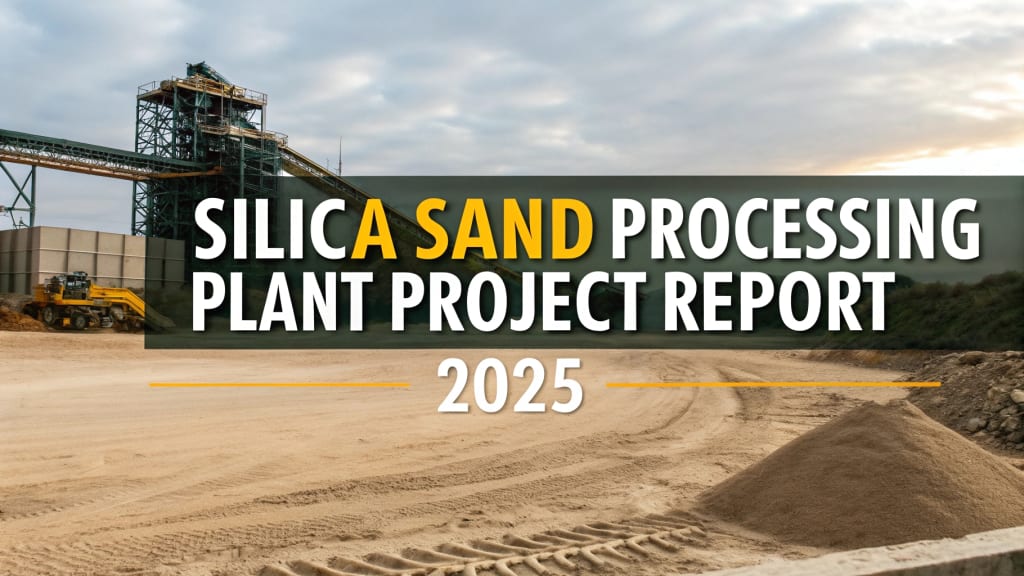
The silica sand industry has become one of the fastest-growing segments in the industrial minerals sector, supported by increasing demand across global markets. Setting up a silica sand processing plant requires more than just infrastructure; it involves strategic planning, investment, efficient equipment, and strong market awareness. This article presents an overview of silica sand processing plants, covering setup, processing stages, market trends, investment considerations, and operational requirements.
What is Silica Sand?
Silica sand holds a significant position in the global industrial minerals market due to its unique physical and chemical properties, high silica content, and versatility across multiple applications. It is composed primarily of silicon dioxide (SiO2) and is valued for its hardness, chemical inertness, and high melting point. Silica sand is essential in various industries including glass manufacturing, foundry operations, hydraulic fracturing, construction, ceramics, and electronics. The growing demand for silica sand in both industrial and commercial applications has driven the need for high purity processed products with specific grain sizes, shapes, and chemical compositions. Quality specifications, consistent grading, and traceability are becoming increasingly important, as industrial customers and regulators emphasize technical performance, environmental compliance, and sustainable extraction practices.
Request a Sample Report: https://www.imarcgroup.com/silica-sand-processing-plant-project-report/requestsample
What is Driving the Silica Sand Market?
The silica sand market is primarily driven by robust demand from the glass manufacturing industry, which accounts for a substantial portion of global consumption, particularly for container glass, flat glass, and specialty glass products. The construction sector's expansion, fueled by urbanization and infrastructure development in emerging economies, continues to boost demand for silica sand in concrete, mortar, and other building materials. The oil and gas industry's hydraulic fracturing operations require high-quality frac sand for well stimulation, significantly contributing to market growth in energy-producing regions. Advanced manufacturing sectors, including foundries, electronics, and solar panel production, rely on ultra-pure silica sand for precision applications. Population growth, industrial development, and technological advancements in manufacturing processes are driving increased consumption across multiple end-use industries. Additionally, the transition toward renewable energy, particularly solar power generation, is creating new demand streams for high-purity silica sand used in photovoltaic cell production. Environmental regulations and sustainable mining practices are also influencing the industry, with customers increasingly preferring suppliers who demonstrate responsible extraction and processing methods.
Understanding Silica Sand Processing
• Silica sand processing refers to converting raw silica deposits into refined, high-quality, and market-ready products that meet specific industrial requirements.
• Processing activities include mining or extraction, crushing, screening, washing, classification, drying, magnetic separation for iron removal, flotation for impurity removal, and final grading and packaging.
• Silica sand quality depends on achieving target specifications for silica content (typically 95-99.5% SiO2), grain size distribution, grain shape, and minimal impurities.
• Efficiency in the process ensures consistent product quality, compliance with industry standards and environmental regulations, and the ability to serve diverse market segments from construction to high-purity industrial applications.
Key Components of a Business Plan
• Executive Summary: Outlines vision, mission, and business objectives.
• Market Research: Identifies demand patterns, consumer behavior, and competitive players.
• Operational Strategy: Includes plant design, capacity, workflow, and quality assurance measures.
• Marketing and Sales Plan: Defines distribution channels, branding, and positioning in domestic and export markets.
• Financial Planning: Covers projected investments, cost structures, and revenue expectations.
• Risk Assessment: Evaluates potential challenges such as raw material supply, regulatory compliance, and market fluctuations.
Capital Investment Overview
CapEx (Capital Expenditure):
• Land acquisition, plant construction, utilities setup, and equipment purchase.
• One-time costs associated with establishing infrastructure and ensuring processing efficiency.
• Defines long-term productivity and competitiveness.
OpEx (Operating Expenditure):
• Recurring costs including labor, utilities, packaging, storage, and transportation.
• Raw material procurement and regular equipment maintenance.
• Compliance with safety certifications, hygiene practices, and quality control standards.
Browse Full Report: https://www.imarcgroup.com/silica-sand-processing-plant-project-report
Machinery and Equipment Requirements
Primary Equipment:
• Crushing equipment including jaw crushers, cone crushers, and impact crushers.
• Vibrating screens and classification systems for size separation.
• Washing and scrubbing equipment for removing clay, silt, and surface impurities.
• Attrition cells for particle surface cleaning.
• Hydrocyclones and spiral classifiers for particle size classification.
• Magnetic separators for iron oxide removal.
• Flotation cells for removing feldspar and mica impurities.
• Rotary dryers or fluidized bed dryers for moisture removal.
• Automated packaging and bagging systems.
Supporting Equipment:
• Conveyor systems for material transport throughout the plant.
• Water treatment and recycling systems for process water management.
• Dust collection and suppression systems for environmental compliance.
• Laboratory equipment for quality testing and analysis.
• Storage silos and bulk handling systems.
Operating Costs
• Procurement of raw silica sand from mining operations or quarries.
• Labor salaries, training, and workforce management.
• Utilities such as electricity, water, and fuel for drying operations.
• Maintenance and servicing of machinery and equipment.
• Packaging materials including bags, bulk containers, and pallets.
• Transportation and distribution logistics.
• Certification, compliance, and quality assurance activities.
• Environmental monitoring and dust control measures.
Raw Materials
• Main Raw Material: Raw silica sand extracted from quarries, mines, or natural deposits with suitable silica content.
• Additional Inputs: Chemical reagents for flotation and separation processes (collectors, frothers, dispersants).
• Packaging Materials: Bulk bags (FIBCs), small bags, containers, and pallets for various customer requirements.
• Auxiliary Materials: Water for washing and processing, fuel for drying, maintenance supplies.
• Supply Considerations: Consistency of deposit quality, proven reserves for long-term operations, mining permits and environmental clearances, and adherence to sustainable extraction practices.
Ask Analyst for Customized Report: https://www.imarcgroup.com/request?type=report&id=7691&flag=C
Frequently Asked Questions (FAQs)
1. What is the first step in setting up a silica sand processing plant? The process begins with developing a business plan, securing mining rights or raw material supply, obtaining environmental permits and licenses, and conducting detailed geological surveys to assess deposit quality.
2. Why is quality control considered critical? Quality control ensures that processed silica sand meets stringent industry specifications for silica content, grain size, and purity, which are essential for high-value applications in glass, foundry, and specialty markets.
3. Can silica sand processing plants focus only on domestic markets? Yes, though many plants also target exports, as international markets, particularly in Asia and the Middle East, show strong demand for high-quality silica sand for industrial applications.
4. How does automation benefit silica sand processing? Automation improves processing efficiency, reduces operational costs, enhances product consistency, minimizes human error, and allows for real-time monitoring and adjustments to maintain quality specifications.
5. Is backward integration into mining operations necessary? Not mandatory; many processors secure long-term supply agreements with mining operators, though vertical integration can provide greater control over raw material quality and supply security.
About Us:
IMARC is a global market research company offering comprehensive services to support businesses at every stage of growth, including market entry, competitive intelligence, procurement research, regulatory approvals, factory setup, company incorporation, and recruitment. Specializing in factory setup solutions, we provide detailed financial cost modeling to assess the feasibility and financial viability of establishing new manufacturing plants globally. Our models cover capital expenditure (CAPEX) for land acquisition, infrastructure, and equipment installation while also evaluating factory layout and design's impact on operational efficiency, energy use, and productivity. Our holistic approach offers valuable insights into industry trends, competitor strategies, and emerging technologies, enabling businesses to optimize operations, control costs, and drive long-term growth.
Contact Us:
IMARC Group
134 N 4th St. Brooklyn, NY 11249, USA
Email: [email protected]
Tel No:(D) +91 120 433 0800
United States: (+1-201971-6302)
About the Creator
Andrew Sullivan
Hello, I’m Andrew Sullivan. I have over 9+ years of experience as a market research specialist.
Keep reading
More stories from Andrew Sullivan and writers in Journal and other communities.
Electronic Toll Collection Market: Analyzing Growth Drivers and Forecasts to 2033
Market Overview: According to IMARC Group's latest research publication, "Electronic Toll Collection Market: Global Industry Trends, Share, Size, Growth, Opportunity and Forecast 2025-2033", The global electronic toll collection market size was valued at USD 11.8 Billion in 2024. Looking forward, IMARC Group expects the market to reach USD 25.0 Billion by 2033, exhibiting a growth rate (CAGR) of 7.8% during 2025-2033.
By Andrew Sullivan3 months ago in Journal
Why Prayer is Central to Catholic Life and How to Deepen It
Prayer is at the heart of Catholic life. It is the way believers communicate with God, express their faith, seek guidance, and grow in holiness. Prayer is not merely a ritual or obligation, but a living relationship with God. Understanding why prayer is central to Catholic life and how to deepen it can help believers experience spiritual growth, peace, and a stronger connection to Christ.
By Sound and Spirit4 days ago in Journal
How to Succeed at the Benson Directory®
Congratulations and welcome to the Benson Directory® employee #22391! As our newest call handler, you will have the privilege of speaking with dozens of unique and interesting people on a daily basis as well as the opportunity to earn bonuses for high performance. Contained within this handbook you will find a set of ease to follow instructions designed to help you settle in to your new role and begin paving the way to success.
By S. A. Crawfordabout 10 hours ago in Fiction



Comments
There are no comments for this story
Be the first to respond and start the conversation.