
Signs Your Roof Needs Urgent Repair in Texas: What Homeowners Should Watch For
Worried about your roof? Discover key signs of roof damage Texas homeowners shouldn't ignore. Get urgent roof repair to prevent costly future damage.

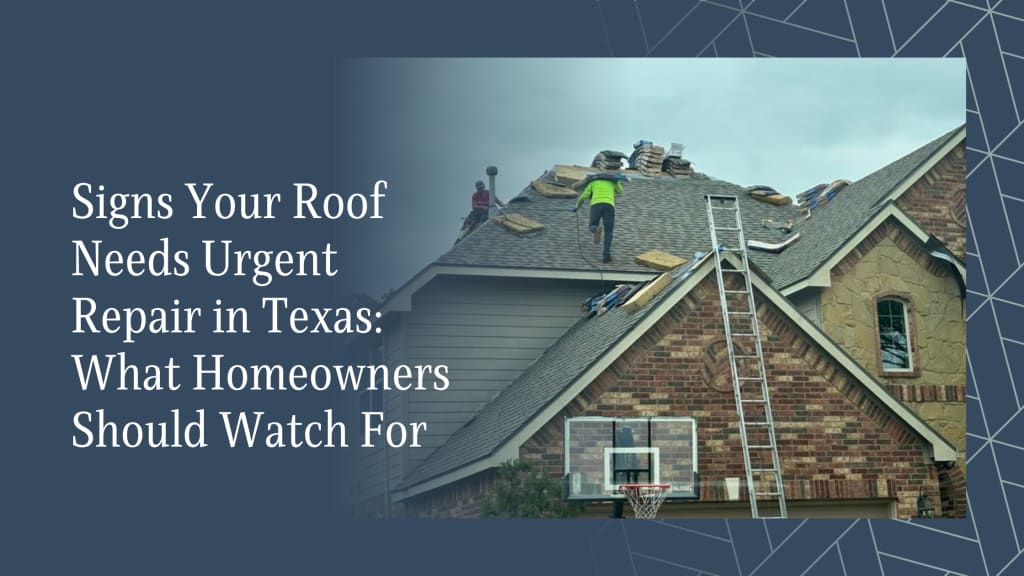
Your roof isn't just a protective layer — it’s the first shield standing between your home and Texas' intense weather. Whether it’s extreme heat, hailstorms, or heavy winds, your roof takes the brunt of it all. And when damage starts to show — even in small ways — ignoring it can quickly lead to more costly repairs and long-term issues.
If you’re unsure whether your roof can wait or needs immediate attention, this guide lays out the warning signs, why Texas roofs wear down faster, and when it’s time to call in the experts.
How Texas Weather Wears Down Your Roof
Texas weather can be punishing on roofs year-round. Here are just a few of the conditions that commonly lead to damage:
Blistering heatwaves that cause shingles to dry out, crack, and curl
High winds and severe thunderstorms that rip off materials and loosen nails
Frequent hailstorms, especially in Central and North Texas, that dent or puncture shingles
Heavy rainfall that overwhelms gutters and exposes weak flashing
Tropical storms or hurricanes, which can bring dangerous wind and water damage — especially in coastal regions like Houston and Galveston
Even if your roof looks okay from a distance, the wear and tear from these elements often builds up quietly over time.
Visible Signs That Demand Immediate Roof Attention
Some signs of roof damage are easy to spot — and when you see them, time is of the essence.
1. Missing or Damaged Shingles
Shingles that are cracked, curling, or entirely missing leave your roof vulnerable to water infiltration.
2. Granule Loss
If you find granules in your gutters or downspouts, your shingles are losing their protective layer — a clear sign they’re aging or were hit by hail.
3. Water Stains Inside the House
Brown spots on ceilings or walls are clear indicators that water has found its way through the roof.
4. Warped or Sagging Rooflines
A roof that appears uneven or sagging could mean trapped moisture, rotting decking, or compromised structural integrity.
5. Debris Accumulation
Fallen branches, limbs, or large debris on your roof after a storm often conceal punctures or bruising that’s hard to see from the ground.
6. Algae, Mold, or Dark Streaks
Discoloration often points to retained moisture and possible underlying rot.
If you notice any of the above, it’s not a question of “if” repairs are needed — it’s about how fast you can get a professional to assess the situation.
Sneaky Symptoms That Signal Trouble
Not every roofing issue waves a red flag. Some symptoms are subtle — until they turn into bigger (and more expensive) problems.
Spikes in energy bills: Heat escaping or entering through damaged insulation often signals roof issues.
Rusting or damaged flashing: Flashing seals out water at roof joints. Once it weakens, leaks are inevitable.
Shingle dust in your gutters: These grains protect your shingles. Without them, your roof is exposed.
Leaky attic during mild rain: Even minor leaks can signal a failure in your roof's weatherproofing.
Peeling or blistering exterior paint: Moisture escaping from under the roofline is a sign of trapped humidity or poor ventilation.
By the time these signs become visible, there’s often more happening beneath the surface — and the costs of delay only rise.
Why Procrastinating Roof Repairs Can Be Risky
Delaying a roof inspection or repair often leads to much bigger problems:
Interior water damage can ruin drywall, ceilings, and insulation
Structural rot may weaken beams and lead to unsafe living conditions
Health hazards like mold and mildew thrive in hidden roof leaks
Insurance claims might get denied if the damage is deemed due to neglect
Costlier replacements often follow small, ignored repairs
Why Roofs in Texas Wear Out Faster Than Other States
Roofs in Texas age quickly due to the combination of environmental stressors:
Prolonged sun exposure dries out roofing materials, especially asphalt shingles.
Sudden temperature fluctuations — hot days followed by cool nights — cause materials to expand and contract, weakening their bonds.
High humidity in Gulf regions accelerates material deterioration.
Frequent hailstorms and wind events test even new roofs each season.
What might be a 30-year roof in other parts of the country may only last 15–20 years here — especially without regular inspection and maintenance.
Simple At-Home Roof Inspection Tips
Before calling in the pros, you can perform a basic inspection safely from the ground:
Use binoculars to check shingles, flashing, and roof edges for signs of damage.
Check your attic during or after rain for any signs of moisture or sunlight peeking through.
Look in gutters and around downspouts for roof debris or shingle granules.
Walk around the perimeter of your home to look for sagging areas or loose flashing.
⚠️ Never climb on the roof yourself, especially after a storm. Damaged roofs can be unsafe, and a misstep could result in injury.
When Should You Call a Roofing Contractor?
Don’t wait for visible leaks before calling a professional. Here are times you should definitely bring in an expert:
After a major storm — even if there’s no visible damage
When you see stains on ceilings or water in the attic
If your roof is 10–15+ years old
Before selling your home
If you haven’t had an inspection in over a year
Professional inspections can catch issues early — often before they reach the point of no return.
How to Choose a Trusted Roofing Professional in Texas
Choosing the right roofing contractor is just as important as the repair itself. Look for companies that:
Are licensed and insured
Have local experience dealing with Texas weather and roofing systems
Offer emergency inspections and repairs
Provide photos and written documentation for insurance use
Have strong Google and BBB reviews
Be cautious of storm-chasing contractors that flood into areas after storms and then disappear. Stick with trusted local companies who offer reliable services and ongoing support after the job is done. Fast action prevents minor issues from becoming major financial burdens.
If you're in a storm-prone area, always keep a reliable roofer’s contact info handy—especially those who provide professional roof repair services in Clear Lake, Texas and surrounding areas.
What to Know About Roof Insurance Claims in Texas
Understanding your insurance coverage can save you thousands. Most homeowners' policies cover damage caused by storms, hail, or fallen debris — but not regular wear and tear.
Here’s how to protect your claim:
Take photos of damage, both on the roof and inside the house
Act quickly — some insurers require claims to be filed within 14–30 days
Get a professional inspection to assess and document the issue
Let your roofer coordinate with the adjuster to ensure nothing is missed
Neglecting to file on time or provide documentation is one of the biggest reasons claims get denied — don’t let that happen to you.
Repair or Replace? What’s the Right Move?
Not every problem requires a full roof replacement. Sometimes, a targeted repair is all you need.
Emergency Repairs are necessary when:
There’s an active leak
You notice missing flashing or punctures
Debris has caused visible damage
Full Replacement may be the better choice if:
Your roof is over 15–20 years old
There’s widespread shingle or structural failure
You’ve experienced multiple recurring leaks
A skilled contractor will walk you through both options, helping you make a decision that balances cost, longevity, and performance.
What Should You Do Next?
If you've spotted any of the signs mentioned in this guide, don’t wait.
🔧 Schedule a professional roof inspection
🏠 Safeguard your home before more damage sets in
🧾 Protect your insurance eligibility
💸 Save thousands by addressing small issues early
Final Thoughts
Roof damage in Texas isn’t something you can afford to overlook. With aggressive weather patterns and aging materials, small problems often turn into big ones fast. From warped shingles to unexplained leaks, your roof sends out clear warning signs — and the sooner you act, the better.
If your roof has been through a recent storm or is starting to show its age, don’t put off getting help. Bring in a trusted roofing professional to inspect and repair any damage before it spreads.
Your home is more than a structure — it’s your shelter. And it all starts at the top.
About the Creator
Praveen Palkhade
I have been building and ranking websites since 2008. Over the years I've gotten to be quite masterful at my web design on many different CMS platforms.
Keep reading
More stories from Praveen Palkhade and writers in Journal and other communities.
How to Choose the Pure Veg Thali Restaurant in Pimpri Chinchwad?
If you're a food lover who enjoys the rich flavors and comforting variety of Indian cuisine, then a pure veg thali is likely on your must-try list. Pimpri Chinchwad, a rapidly growing suburb of Pune, is home to a diverse mix of restaurants catering to different tastes and preferences. Among them, pure vegetarian thali joints hold a special place for those seeking wholesome, traditional meals served with warmth and hospitality. But with so many options around, how do you know which one truly delivers quality and taste? This guide will help you make an informed choice so you can enjoy your thali to the fullest.
By Praveen Palkhade9 months ago in Journal
Why Antennas Are Quietly Powering the Connected Future
You never see the moment connectivity almost fails. There’s no warning when a signal weakens, no headline when a network holds instead of collapses. Yet behind every seamless scroll, instant upload, and perfectly timed navigation cue, a hidden system is working relentlessly to keep the world stitched together. At the heart of that system is a technology so overlooked it’s practically invisible until it isn’t.
By Andrew Hamilton6 days ago in Journal
My New Book is Finally Here
My poetry collection Beautiful and Brutal Things is done. It's actually done and finally published over 270 pages. Over a year of my life went into this book. More than a year, really. Long days at my computer, sometimes seven days a week because I couldn't stop even when I probably should have. Then two months of editing that felt harder than the writing itself. But it's finished, and I'm still standing, and the book is real.
By Tim Carmichael2 days ago in BookClub



Comments
There are no comments for this story
Be the first to respond and start the conversation.