
Servant Leadership in a World of Fauxductivity: A Catholic's Reflection on Modern Workplace Challenges
Balance Between Genuine Productivity and Faithful Stewardship

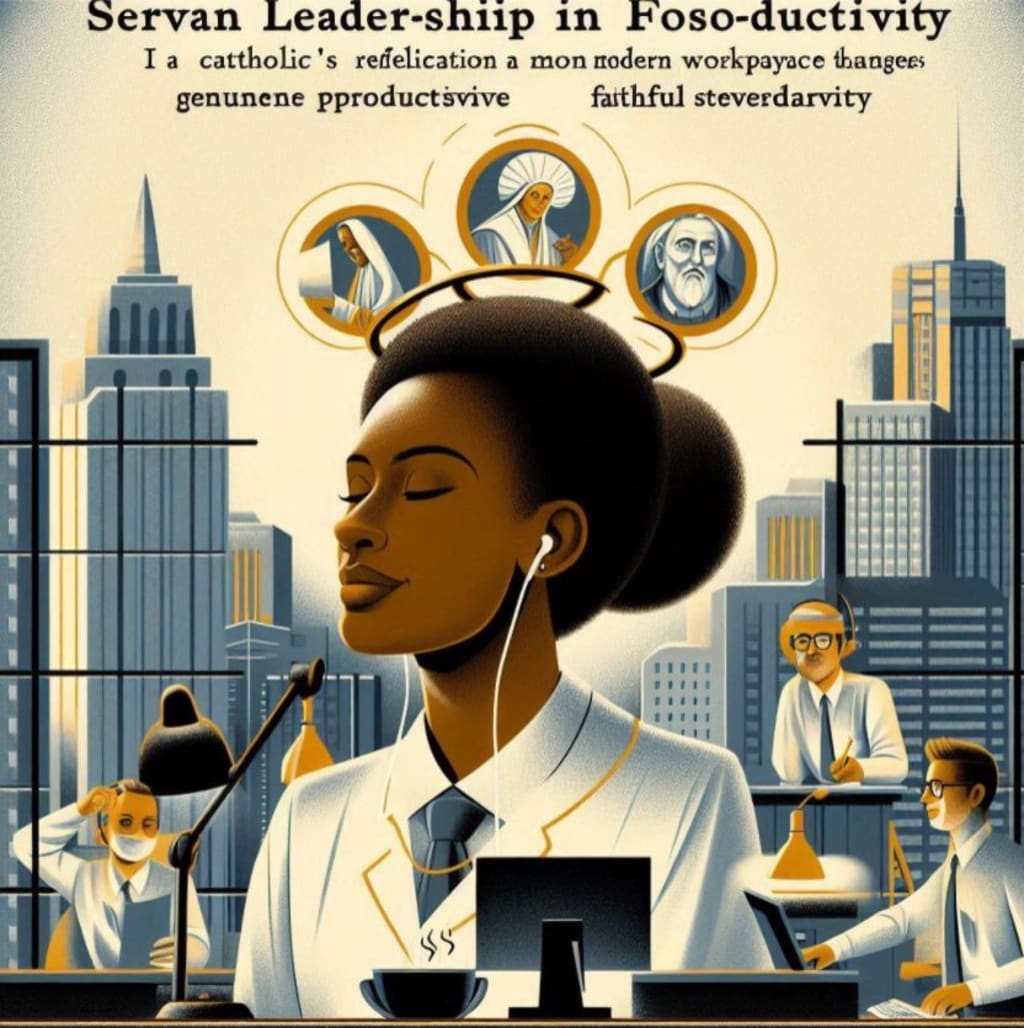
It's late, and I'm still working on my cluttered desk. As a Catholic I find myself grappling with a pervasive issue: fauxductivity. This illusion of productivity, where busyness masquerades as effectiveness, seems at odds with our call to be good stewards of our time and talents.
In the Parable of the Talents (Matthew 25:14-30), Christ teaches us about the importance of using our gifts wisely. But in a world of constant notifications, endless meetings, and the pressure to always appear "on," how do we distinguish between true fruitfulness and mere fauxductivity?
As I reflect on this challenge, I'm reminded of the words of Pope Francis: "The measure of the greatness of a society is found in the way it treats those most in need."
Applying this to leadership, shouldn't our measure of greatness be how we nurture the potential in our teams, rather than how busy we appear?
1. Ora et Labora (Pray and Work): Prayer helps me focus on what truly matters, cutting through the noise of fauxductivity.
2. Servant Leadership: Jesus washed the feet of his disciples (John 13:1-17). As leaders, our role is to serve, not to be served. This often means clearing obstacles for our team rather than creating busy work.
3. Sabbath Principle: God rested on the seventh day, encouraging true rest and disconnection can actually boost genuine productivity and creativity.
4. Stewardship over Ownership: We're called to be stewards of our resources, including time and talent. This perspective helps in prioritizing meaningful work over actions that merely give the appearance of productivity.
5. Dignity of Work: Catholic social teaching emphasizes the dignity of work. This means focusing on the value created, not just the hours logged or emails sent.
6. Contemplation in Action: St. Ignatius taught about finding God in all things. Can we bring a spirit of mindfulness to our work, turning even mundane tasks into opportunities for growth and service?
7. Subsidiarity in Practice: This principle teaches that matters should be handled at the most local level possible. In leadership, this translates to trusting our teams and avoiding micromanagement, a common manifestation of fauxductivity.
As I implement these principles, we're focusing on outcomes rather than outputs, on impact rather than activity.
But it's not easy. The temptation of fauxductivity is strong in a culture that often equates worth with busyness. It requires constant vigilance and reflection to stay true to our values.
To my fellow Catholic leaders, I offer this challenge: Let's commit to a different way of leading. One that values true productivity over the appearance of busyness. One that nurtures the whole person – body, mind, and spirit. One that sees work not just as a means to an end, but as a way to glorify God and serve others.
May we have the wisdom to discern what truly matters, the courage to prioritize it, and the grace to lead others in doing the same. For in the end, it's not about how busy we appear, but about how faithfully we've used the talents entrusted to us.
As I delve deeper into this reflection, I'm struck by the words of St. Teresa of Avila: "God does not look so much at the magnitude of anything we do as at the love with which we do it." This wisdom challenges the very core of fauxductivity. In our rush to appear productive, are we losing sight of the love and intention behind our actions?
Consider the story of Martha and Mary (Luke 10:38-42). Martha, busy with preparations, represents our modern tendency towards constant activity. Mary, sitting at Jesus' feet, reminds us of the importance of presence and purposeful attention. As leaders, we're often pulled towards being "Martha," but perhaps true servant leadership calls us to balance both – to be diligent in our work while remaining attentive to the deeper purpose and the people we serve.
This balance is critical in combating fauxductivity. It's about shifting our focus from mere output to meaningful outcome, from quantity of tasks to quality of impact. As Catholic leaders, we're called to create environments where our teams can flourish, not just function.
Implementing this might mean:
Prioritizing Relationships: Taking time for one-on-one conversations that go beyond task lists, showing genuine interest in our team members' lives and aspirations.
Embracing Silence: Incorporating moments of reflection into our workday, allowing space for creativity and discernment amidst the noise.
Celebrating Small Wins: Acknowledging not just major achievements, but the daily acts of service and collaboration that embody our values.
Leading by Example: Demonstrating that it's okay to disconnect, to prioritize family time, to admit when we're overwhelmed – showing vulnerability as strength.
By embodying these principles, we create a ripple effect. Our actions speak louder than words, gradually transforming our workplace culture from one of fauxductivity to one of genuine, purpose-driven productivity.
About the Creator
influenceinkmarketing
Join me at the intersection of imagination and innovation. With InfluenceInkmarketing, you're not just reading the future – you're helping to write it. Are you ready to leave your mark on the evolving landscape of storytelling?
Keep reading
More stories from influenceinkmarketing and writers in Journal and other communities.
Finding Grace in the Grind: A Catholic's Reflection on Work and Life
It's past midnight, and the gentle glow of the lampshade starts to flicker beside my laptop. I can't help but reflect on how we, as Catholics, navigate the demands of modern work life while staying true to our faith.
By influenceinkmarketingabout a year ago in Journal
How to Build AI Agents in 2026: Stop Coding Like It's 2024
Remember when we all thought pasting a prompt into ChatGPT was "prompt engineering"? Cute. It's 2026 now, and if your "AI" can't plan a vacation, book the flights, and argue with the airline about a refund, it's just a chatbot. Learning how to build AI agents isn't just a resume booster anymore; it's the only way to survive the "white-collar shockwave" experts warned us about.
By Sherry Walker4 days ago in Journal




Comments
There are no comments for this story
Be the first to respond and start the conversation.