
Semitruck Parking Crisis
A Growing Challenge For Truckers
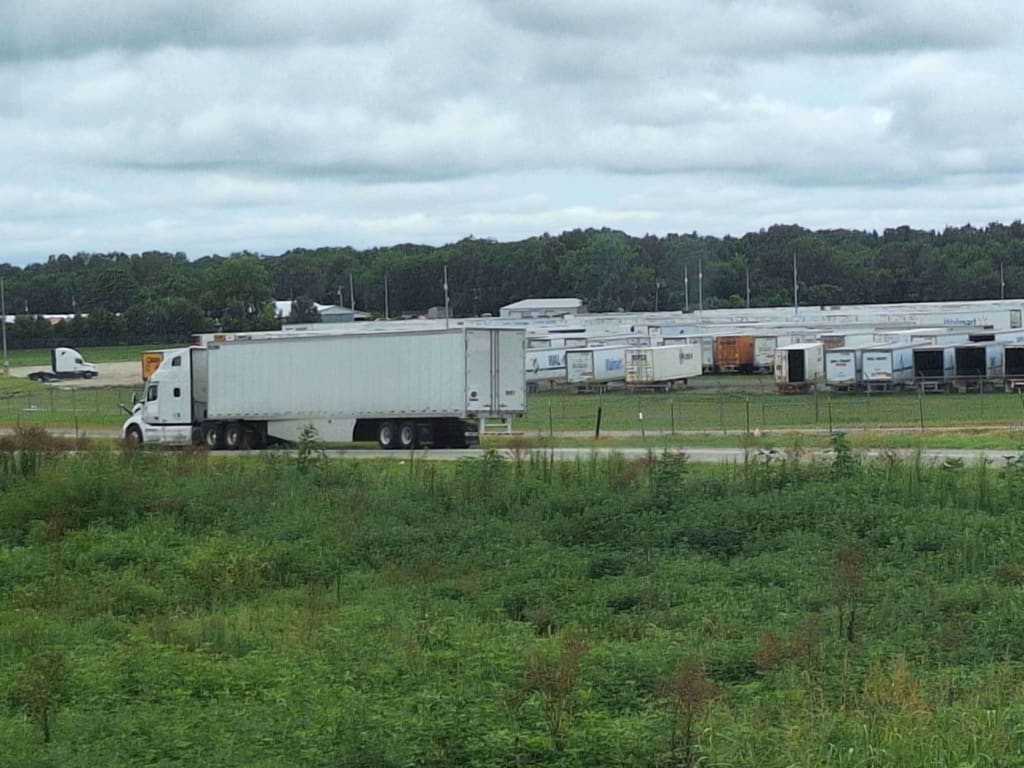
Trucking is vital to our economy. Not only does it do the obvious in transporting goods from one place to another, and the industry itself provides something like 8.4 million people with jobs (as of 2022, according to trucking.org), but the nature of trucking moves money between states. Truckers have to eat, after all. Be it via a truck stop, getting groceries at a store local to where they’re at currently, or even restaurants in the area. The trucks require fuel. The drivers may get something for their family back home at a local Ma and Pa store. And arguably most important, truckers require sleep – after all, a tired driver is a dangerous driver.
This last part is difficult, however. Despite there being 3.54 million drivers as of 2022 (again, according to trucking.org), there are only 313,000 parking spots. This number does not include terminals (which only allow trucks in their company to park there), shippers (which only allow those who have active business), or undesignated parking areas. Even if you were to include those, the number wouldn’t go up very much – certainly not near enough to handle the vast amount of drivers.
Not all truck parking spots are created equal. Like any necessary commodity, the best ones are often grabbed up first, leaving drivers who travel late into the night to park in sketchy or outright dangerous areas. Sure, you could pay for reserved parking – at an average of $15-25 a night. That’s far too much for the average driver. Most drivers have to use the free parking, if they can find some available. If not, then they’ll most likely park on the side of the road – something illegal in most states.
Let me paint a picture for you. A driver, if they are simply driving and there’s nothing that would alter their time, has up to 11 hours that they can legally drive. Approximately two or so hours prior to their clock running out, they start looking for spots. Maybe they ask a friend to check an app to see what stops have spaces available on their route. They find a truck stop or a rest area, head that way…only to find that there are no spaces available. That’s okay, that’s why they gave themselves two hours and have multiple spaces in mind. They go to the next stop…and find nothing. Same with the next. And the next. They get desperate and check an area that isn’t safe, but still find nothing.
Soon, time runs out, and legally, they must stop. They pull over on the safest shoulder they can find, shut their truck down, and hope against hope that they aren’t in a state or area where it’s illegal to do what they just did.
This scenario assumes that the driver is in an area where truck stops are plentiful. Not all areas have plentiful truck stops. Take the Pennsylvania Turnpike, where truck stops and rest areas are few and far between. In the 550-mile stretch, there are only 17 24-hour truck stops (according to paturnpike.com). While this may seem like a lot, it’s not near enough. In fact, according to a 2016 study done by the Pennsylvania Turnpike Commission, there is a shortage of nearly 900 spaces. That number is expected to rise to 1150 by 2026.
The answer to this problem is simple – more parking spots for trucks. This can be via rest stops or truck stops. While truck stops currently seem to be clustered around metropolitan areas and shippers and receivers, future spaces can be built in more rural areas. This would not only help truckers, but it would mean a small bump in the local economy – people are needed to build the site and run the business, after all.
Remember, truckers are vital to our economy. It’s only fair that they don’t have to worry about where they will sleep at night.
Note: I took the picture featured, and had it altered to remove the logo and other identifying features to protect the driver. It shows a driver stopped on the side of the road, next to a terminal they cannot stop in.
About the Creator
Catherine Carter
Hi! I write opinion style articles about current politics and affairs (with a progressive leaning), essays for college, history that interests me, and research projects on the historical sites and items that my husband takes pictures of.
Keep reading
More stories from Catherine Carter and writers in Journal and other communities.
Trump Documents Case Dismissed
Becoming the President of the United States gives one great power, including the ability to see nearly every classified document (and yes, I did say nearly – some Need to Know documents never grace the President’s desk). Depending on the document, the President also has the ability to declassify as they see fit. That requires a process, and not every document can be declassified – for example, the nuclear codes, documents that identify confidential or intelligence sources, or certain design concepts of weapons of mass destruction.
By Catherine Carter2 years ago in Journal
What Milwaukee Teams Overlook During App Planning Phases?
Most app projects in Milwaukee do not fail because of poor execution. They struggle because early planning feels productive while leaving the hardest questions unanswered. Whiteboards fill up. Features get approved. Timelines look reasonable. Momentum builds. What is missing rarely feels urgent at that stage.
By Samantha Blake7 days ago in Journal
My New Book is Finally Here
My poetry collection Beautiful and Brutal Things is done. It's actually done and finally published over 270 pages. Over a year of my life went into this book. More than a year, really. Long days at my computer, sometimes seven days a week because I couldn't stop even when I probably should have. Then two months of editing that felt harder than the writing itself. But it's finished, and I'm still standing, and the book is real.
By Tim Carmichaela day ago in BookClub



Comments
There are no comments for this story
Be the first to respond and start the conversation.