
Securing the Edge: Endpoint Security Market Rides the Wave of Digital Transformation
The shifting market demonstrates that protecting endpoints forms the essential base for protecting digital transformation initiatives.


Our digital landscape now dominated by hybrid workforces and IoT devices along with cloud computing requires us to protect every access point like never before. The endpoint security market stands as a key element of global cybersecurity strategies because of the rapid increase in device connectivity and expanded cybersecurity threats. The global endpoint security market valued at USD 17.43 billion in 2024 is expected to reach USD 28.80 billion by 2030 with a compound annual growth rate (CAGR) of 7.4%.
Businesses implementing digital transformation initiatives to improve productivity and agility face new evolving cyber risks. Endpoint security systems safeguard personal computing devices including laptops and smartphones that protect corporate networks from malware and zero-day threats.
The Digital Transformation Catalyst
The cybersecurity landscape has been fundamentally reshaped by digital transformation efforts which include cloud migration and remote work enablement. The conventional network boundaries have vanished because distributed environments now support operations of employees, customers and applications across multiple places and devices.
The change in digital operations has made endpoints the central focus for cyber attackers. Attackers continually gain unauthorized access and steal data by exploiting unprotected devices and launch advanced persistent threats through underprotected systems. Organizations are directing substantial resources into endpoint detection and response (EDR), antivirus software solutions, threat intelligence systems and zero trust architecture development to protect their new digital boundaries.
Key Drivers Fueling Market Growth
1. Remote and Hybrid Work Environments
The expansion of remote work has significantly increased the number of potential security attack points. Endpoint security tools become essential to identify threats and enforce policies as employees access corporate networks through home internet connections and personal devices beyond the office firewall.
2. Surge in Ransomware and Sophisticated Attacks
Enterprise networks face increasing threats from ransomware attacks through endpoints serving as their primary entry points. Endpoint security tools featuring behavioral analysis along with machine learning capabilities and anomaly detection enable early threat detection before escalation.
3. Proliferation of IoT and BYOD Devices
A rapid increase in smart devices throughout multiple sectors including healthcare and manufacturing has complicated endpoint protection strategies. BYOD policies introduce additional vulnerabilities that necessitate advanced endpoint visibility and control measures.
4. Regulatory Compliance and Data Protection
Data protection standards need to be rigorous because regulations such as GDPR, HIPAA, and CCPA establish these requirements. Organizations can achieve compliance through endpoint security solutions that protect data at the device level while generating audit-ready logs and reports.
Innovations Reshaping Endpoint Protection
The market experiences rapid changes as new technologies emerge that surpass conventional antivirus solutions.
Endpoint Detection and Response (EDR): The solution offers real-time threat detection and mitigation through constant monitoring and active threat hunting operations to protect against advanced threats.
Extended Detection and Response (XDR): It integrates security measures across endpoints, networks and cloud environments to establish a comprehensive protection system.
Zero Trust Security: The Zero Trust Security approach prevents trust in default devices and mandates constant verification processes for resource access permissions.
AI and Behavioral Analytics: The solution uses behavioral analytics to learn typical user patterns and alert security teams about abnormal activities which could signal security breaches.
Market Challenges
The potential for endpoint security to advance remains strong despite existing significant obstacles.
Skill Shortages: Many organizations struggle to find skilled cybersecurity professionals needed to manage and interpret sophisticated security tools.
Integration Complexity: Integrating endpoint protection systems with comprehensive security frameworks such as SIEM and SOAR presents technical challenges. can be technically demanding.
Cost Constraints for SMEs: Small and medium-sized businesses face difficulties in obtaining advanced endpoint protection systems even though they encounter identical security threats as major enterprises.
Regional Trends
North America dominates the endpoint security market because of widespread cybersecurity awareness along with strong regulatory measures and substantial digital infrastructure investments.
Strong growth in Europe positions it closely behind the market lead with GDPR compliance and cross-border data protection initiatives as key drivers.
The Asia-Pacific region experiences the quickest expansion due to rapid digitalization in developing countries combined with rising cyberattacks and extensive adoption of cloud and mobile technologies.
The Road Ahead
Organizations are strengthening their digital defenses which positions the endpoint security market for continuous growth. Technology providers now deliver platforms which combine cloud-native capabilities with AI functionality and user-friendly interfaces to serve enterprises regardless of their size. Organizations are increasingly turning to managed detection and response (MDR) services for expert cybersecurity support instead of developing their own security operations centers (SOCs).
Endpoint security will merge seamlessly with identity management and threat intelligence through unified security platforms to create an all-encompassing defense strategy that protects both devices and the overall digital user experience.
Conclusion:
With businesses progressing towards a world that relies heavily on connected data systems endpoint security has transitioned from a choice to a vital necessity. The practice of securing network perimeters in a world where each endpoint represents potential access to sensitive data serves as a method for protecting the entire business.
About the Creator
Paxton Templeton
I’m a storyteller at heart with a passion for turning data into compelling narratives. With a focus on industry trends, market insights, and growth statistics, I bring clarity to complexity
Keep reading
More stories from Paxton Templeton and writers in Journal and other communities.
Claiming the Future: Medical Billing Software Market Thrives with Demand for Revenue Cycle Optimization
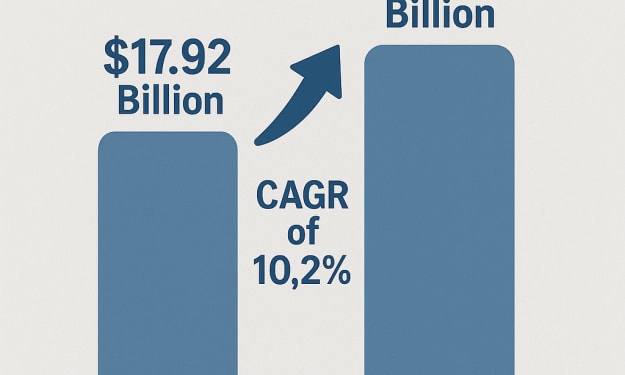
Healthcare providers' immediate demands to improve revenue cycles and patient financial interactions while cutting administrative costs drive a major expansion in the medical billing software market. The sector currently valued at USD 17.92 billion in 2024 will expand to USD 32.18 billion by 2030 with a steady compound annual growth rate (CAGR) of 10.2%. Medical billing software emerges as a fundamental component within modern healthcare systems due to mounting operational pressures faced by hospitals, clinics, and private practices under complex regulatory environments.
By Paxton Templeton9 months ago in Journal
Author’s Advice
If you would’ve asked me 20 years ago did I know I’d become a writer and an author, I would’ve said “nope, ain’t happening”. As fate would have it I did become an author and I can honestly say I’m loving it so far. It really does feel good to be a writer. I’ve learned a lot on this journey and I feel like with even me being as new to this world as I am, there’s some wisdom I need to share with every other aspiring author.
By Joe Patterson2 days ago in Journal
The Middle East Political Crisis and the Greater Israel Project: The Indispensable Need for a Joint Defense Alliance with Pakistan for the Survival of the Gulf States
The changes in the geopolitical and political strategy of the Middle East since the late twentieth century and the beginning of the twenty-first century have always been the focus of in-depth research for global analysts because the region's defense and political importance and vast energy reserves have made it the axis of the policies of world powers, and the events that have taken place in recent decades, including various diplomatic agreements and military alignments, have given rise to a new structure of international relations, the impartial review of which is the need of the hour in order to access the facts that indicate the mutual interests and important goals of the states behind the veil. In this context, the presence of the United States in the Middle East and its deep defense relations with Israel cannot be considered a mere coincidence, but rather a regular arrangement. It seems to be part of a well-established policy where each side seems to be striving for its survival and dominance, and in this process, the debate on ideas or projects like Greater Israel intensifies when plans for changing the borders of the region and creating new trade corridors emerge, which apparently call for economic cooperation, but their far-reaching effects directly affect the political balance of the region. If the Abraham Accords are mentioned in this scientific and research report, it is clear that their aim was to end the decades-long cold war between the states of the region and create a bloc that could work under common economic and security interests. However, critics view this process from a special angle where, in their opinion, these measures may be an attempt to provide an extraordinary advantage to one party, while on the other hand, other major powers in the region such as Iran and Turkey are also pursuing different strategies to maintain their influence, due to which the Middle East is currently in a multi-faceted conflict where the United States, Israel, Arab countries, and Iran are at the center of relations. The nature is changing with each passing day, and this uncertain situation has given rise to economic instability on the one hand, while on the other hand, it has also increased the arms race immensely, as a result of which a large part of the region's resources are being wasted on defense spending. Research facts show that whenever the element of external intervention is prominent in a region, the local problems there become more complicated instead of being resolved because every world power prioritizes its own interests. In the case of the Middle East, the continuation of America's policies is a reflection of this defensive need that it does not want to let its grip on this most important sea passage and energy center weaken, while Israel proves to be a strong ally for it in achieving these goals. Similarly, the internal interests and ideological differences of the Middle Eastern states have also provided an opportunity for external powers to intervene, due to which today this entire region is engulfed in a fire from which the only way out is through impartial negotiations and respect for regional sovereignty. Otherwise, this conflict will lead to the destruction of the region's economy and geography. The structure will continue to be affected in the same way, and the silence or limited influence of international institutions also points to the fact that the current global system is based on the balance of power, where the rights of states are often sacrificed to specific interests, and in the current strategic situation of the Middle East, achieving regional sovereignty does not seem possible until the Gulf states make fundamental changes in their defense strategies and lay the foundation for a strong and comprehensive regional alliance. In this context, the importance of deep defense agreements with Pakistan emerges as a key necessity that has the potential to completely change the political and military balance of the entire region. A historical and solid foundation for this is the protocol and defense cooperation agreement signed between Pakistan and Saudi Arabia in 1982, under which a large number of Pakistani armed forces are assigned to protect Saudi territory and train the army there. This cooperation is not just symbolic, but a solid reality that proves that Pakistan's role has always been indispensable for the security of the Gulf states, and now the time has come when The Gulf countries must realize the facts that have become abundantly clear during the recent conflicts that the American military bases on their territory for decades are not actually used to protect them, but are used solely to monitor American interests and strengthen the Greater Israel project. As it has been observed in the recent tensions that all the capabilities of these bases have been dedicated to defending Israel and providing it with air protection, while the local states have only been subjected to external pressure and defensive threats. If this Greater Israel project is completed, it will pose serious threats to the geographical integrity of the Gulf countries, including the borders of their holy land, control over resources, and their political autonomy. Because under this expansionist ideology, the intention to increase influence in key places in the region is toThese intentions are not hidden from anyone, and the increasing tension due to this war is damaging the economies of the Gulf states, where the uncertainty is causing obstacles in many economic projects, and the movement of ships in their maritime borders is directly affecting global trade, the burden of which is being borne by regional states. These rapid changes in the political map of the Middle East have also affected the social structure of the region, which the global colonial powers are trying to take advantage of to complete their greater design. In this whole process, all aspects of American foreign policy have become prominent, the sole purpose of which is to maintain influence over the waters and trade routes of the Gulf through the presence of military bases so that global energy prices and supplies can be controlled according to Washington's wishes. For this purpose, the defense systems associated with these bases often help maintain Israel's superiority, while the Gulf states are made to believe that all this is for their security. It is necessary and now is the time to re-examine all these assumptions and lay the foundation for a new defense alliance in which Pakistan's nuclear power and the economic resources of the Gulf countries come forward as a common shield. When we examine Pakistan's foreign policy, we see that decisions are often made there due to global pressure. But if the Gulf countries and Pakistan stand together on the global platform, this pressure will automatically end because no power in the world will be able to ignore this economic and military power. And the dream of Greater Israel, which has been seen to usurp the interests of the major states of the region, cannot become a reality until the Muslim states of the region are united. And if these states still do not wake up, the coming time will distort both their history and geography because the dominance of the Western powers rests only on the absence of their unity and as soon as these states join hands, the balance of global power will shift towards the East. The long chain of exploitation of resources that has been going on since the colonial era will be stopped forever. For this, it is necessary for the Gulf countries to reconsider the status of the foreign bases they have and rely on their regional brothers for their security so that a powerful voice can be raised that can create a stir in the world halls, because this war is not only about borders but also about ideologies and resources, in which there is regional sovereignty on the one hand and an exploitative system on the other. To defeat this system, equal efforts are needed on the scientific research and military fronts so that the truth is made public and all the conspiracies that are leading the Middle East towards instability under the guise of development are being exposed. In this regard, the mutual defense cooperation between Pakistan and Saudi Arabia can prove to be a milestone that other Gulf countries can also follow in order to form a joint force that is capable of confronting any external threat and whose control is completely local so that all avenues of external intervention can be closed. Along with this, a new The war has begun where cyberspace is being used to affect the defense systems of states and the countries of the Middle East are also facing serious threats in this field where their internal security is being monitored through modern technology, the only solution is self-sufficiency in the field of technology and building our own defense system together with countries like Pakistan. This research paper is an attempt to highlight this awareness that instead of relying on others for our safety, relying on our own arms is the only way to survive and the people of the Middle East, who have been suffering from tension for decades, now deserve permanent peace and stability, which is possible only through a strong regional alliance in which the role of Pakistan is central. If the Gulf leadership lets this opportunity slip by, future historians will remember this era as a wasted opportunity because this war for resources will sooner or later reach every state. Therefore, before it is too late, we have to recognize our true defense interests and raze this greater design that has been It is in search of existence and for this, all the outstanding issues must be resolved through negotiations to create a strong bloc that can protect its rights in the global world and lay the foundation for a just system. This is the dream that we all have to work together to realize so that the Middle East can once again become a cradle of peace and security and all these colonialist games that are destabilizing our land end forever. Now the wheel of history has come to a point where we have to decide our own survival, otherwise the decisions will be made by others and the loss will be ours. Therefore, now is the time to move forward with courage and wisdom so that we can create a new and glorious history that our future generations can see in a free and independent Middle East where no external master rules but only humanity and peace rule. This research paper is a bold step towards this goal so that the truth can prevail and all falsehoods can be eradicated.May your efforts fail.In the current global scenario, the balance of economic power is also rapidly shifting from the West to the East, and in this process, the states that have control over energy resources are proving to be the most influential. However, the biggest challenge for these states is the protection of their wealth and resources, which are being undermined in the eyes of external powers. Therefore, a network of military bases has been set up near the borders of these countries so that in any emergency, these resources can be accessed and pressure can be maintained on local governments. The only solution is for the Gulf countries to diversify their investments and, for self-sufficiency in the defense field, to focus on the production of the latest weapons in collaboration with sincere allies like Pakistan so that they do not fall victim to any global blackmail and can develop their foreign policy on a completely independent basis that is solely subject to their own national interests. In this way, they will be able to thwart all expansionist ambitions like Greater Israel, and an era of peace will begin in the region that will be based on justice and mutual respect. Where all nations will be able to develop on an equal footing and no one will be exploited, and this academic and research struggle is an important step in this direction, so that the truth can be conveyed to the people and they can be made aware of all the dangers that threaten our national sovereignty.Moreover,it is also worth noting that the Middle Eastern states will have to adopt a common strategy for the stability of their currency and financial system so that they can decide their own economic destiny by getting out of the monopoly of the dollar because as long as their economy remains on external crutches, their political decisions will not be free. For this, the sharing of Pakistan's manpower and the financial resources of the Gulf countries can become a global force that is capable of challenging the current world order. This is possible only when the leadership has the insight and courage that is necessary to turn the tide of history. We have to understand that time waits for no one and that nations that do not make the right decisions on time, history throws them in the dustbin. Therefore, it is time for us to choose our own future and lay the foundation for sustainable development that is not only material but also ideologically and morally strong so that our future generations can proudly say that their ancestors left them a bright and free world. Where they can live without any fear or pressure and this research paper reflects this spirit that the truth cannot be hidden and when the truth comes out, all the idols of falsehood are shattered.Special Research Report. Malik Sarfaraz Hussain Awan
By Malik Sarfraz Hussain Awanabout 3 hours ago in Journal



Comments
There are no comments for this story
Be the first to respond and start the conversation.