
Saudi Arabia Scales Back Plans for 100‑Mile Desert Megacity After Cost Concerns
Saudi Arabia rethinks its $500 billion futuristic desert megacity, scaling back “The Line” project amid cost overruns and shifting focus toward technology and AI hubs.

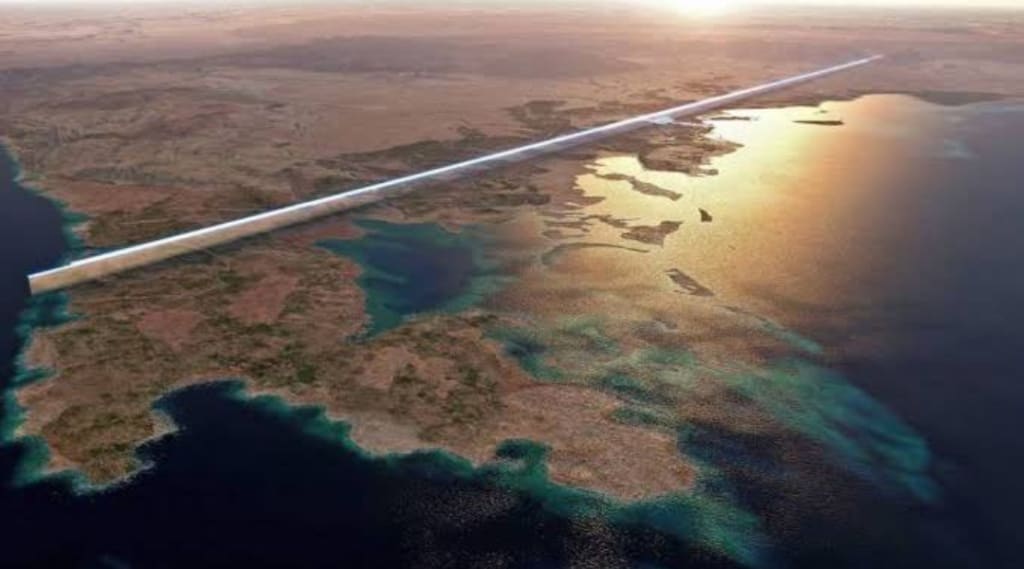
Saudi Arabia’s once headline‑grabbing plan to build a futuristic 100‑mile (about 170‑km) megacity in the desert — already one of the most ambitious urban projects of the century — is being significantly scaled back after mounting concerns within the kingdom about costs, delays and fiscal sustainability.
The project, known as Neom, has been at the heart of Crown Prince Mohammed bin Salman’s Vision 2030 economic transformation strategy for nearly a decade. Designed to diversify the oil‑dependent economy and put Saudi Arabia at the cutting edge of tourism, technology and sustainability, Neom featured an audacious centerpiece: a linear city dubbed “The Line.”
From Futuristic Dream to Financial Pressure
When first unveiled, The Line was marketed as a radical reinvention of urban life — a city built as two parallel, mirror‑clad skyscrapers rising 500 metres above the desert, stretching in a straight line for roughly 170‑200 km across rugged terrain near the Red Sea. Designed to operate with zero cars, zero roads and zero emissions, it would have housed up to 9 million people and run entirely on renewable energy.
Yet the reality fell short of the vision. Despite years of planning and construction—and an estimated $50 billion already spent by late 2024—progress has been slow, and only a handful of project elements have taken shape.
At a major investment conference in Riyadh in late 2025, a senior Saudi official openly acknowledged that the state had moved “at 100 miles an hour” and now needed to reprioritise after overspending.
Scale‑Back and Strategic Reassessment
Inside sources familiar with internal discussions say that the original concept for The Line is being sharply downsized — with the crown prince now backing what one senior figure described as a “far smaller” version of the project.
Construction on large segments was reportedly paused in late 2024 as planners reassessed the entire megaproject’s financial and logistical viability. The original price tag for The Line alone was forecast at around $500 billion, but the kingdom’s current fiscal climate — shaped by softening oil prices and broader budget pressures — has made that scale unrealistic.
As a result, officials are reportedly exploring alternatives that would scale back both size and ambition. Some options under discussion include building only a short initial stretch of The Line rather than completing the full 100‑mile corridor, or focusing more narrowly on specific high‑value sectors such as technology parks, data centres and AI infrastructure rather than a continuous urban spine.
Strategic Shift: From Urban Utopia to Tech Hub?
One of the most intriguing potential pivots for Neom is a shift from a pure residential megacity to a specialised hub for the digital economy. Because of the project’s vast land area, abundant energy and strategic location, officials see opportunity in attracting global tech firms and AI developers — using Neom as a base for data centres, cloud computing and innovation clusters.
This reorientation aligns with Riyadh’s broader push to position itself as a leader in artificial intelligence and high‑tech industries. The kingdom has invested heavily in AI capabilities and procured large numbers of advanced computing resources, underlining its desire to be at the vanguard of next‑generation technology.
A smaller, more focused Neom could act as both a symbolic and operational centerpiece of this strategy — with practical infrastructure that can be built more quickly and with less financial strain than the original vision.
The Only Completed Piece: Sindalah
Despite the setbacks, Neom has seen some concrete output. The Sindalah luxury resort, located in the Red Sea, opened its doors in October 2024 after years of delays and significant cost overruns.
Touted as a gateway to Neom for yacht owners and luxury travellers, Sindalah was meant to signal the megacity’s transition from blueprint to reality. However, its three‑year delay and bloated budget reportedly intensified scrutiny from Saudi leadership — contributing to the decision to remove Neom’s chief executive and press for tighter controls over the broader project.
Why the Downscaling Matters
The scaling back of The Line and broader Neom programme is significant for several reasons:
Economic realism over grandiosity: It reflects Riyadh’s growing recognition that ultra‑large megaprojects may be difficult to deliver on time and on budget, especially in a volatile global economy.
Fiscal constraints: Lower oil prices and wider deficits have made the original $500 billion plan untenable without jeopardising other key national goals.
Reputational recalibration: While Saudi Arabia still wants to be seen as innovative and forward‑looking, there is now a clear imperative to balance ambition with feasibility.
For international investors and observers of the Middle East’s economic transformation, the megacity’s reassessment sends a mixed signal: it suggests that Riyadh can adapt and pivot when necessary, but also highlights how even the most well‑funded visionary projects can falter when faced with real‑world constraints.
What Happens Next?
At this stage, the future of The Line — as originally envisaged — hangs in the balance. Whether it survives in a condensed form, morphs into something new, or ultimately becomes a collection of focused high‑value zones remains uncertain.
What is clear, however, is that Saudi Arabia is recalibrating its approach to mega‑scale development — prioritising economic sustainability and strategic value over sheer spectacle. For Vision 2030 to succeed, it must show tangible results, not just dazzling renderings.
In that sense, the story of Neom’s megacity may yet be less about what it once promised and more about what it can realistically become.
About the Creator
Keep reading
More stories from Salaar Jamali and writers in Journal and other communities.
Pakistan’s Mineral Exports Could Hit $6–8 Billion Annually With Value Addition: Ahsan Iqbal
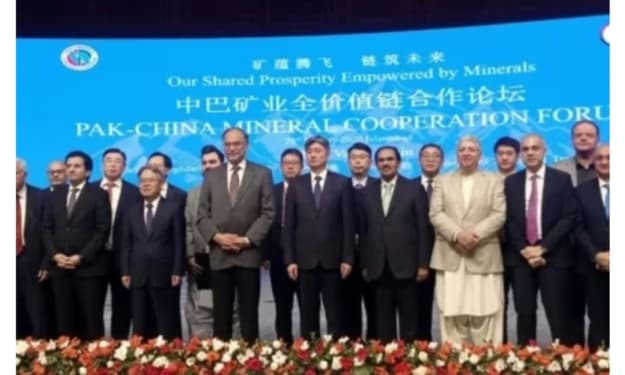
ISLAMABAD — Pakistan’s mineral sector holds immense promise, and with a strategic shift toward value addition, the country could see its mineral exports surge to between $6 billion and $8 billion per year by the end of the decade, Federal Minister for Planning and Development Ahsan Iqbal said on Wednesday. Speaking at the Pakistan–China Mineral Cooperation Forum in Islamabad, Iqbal outlined a vision for transforming Pakistan’s historically under‑utilised mineral wealth into a linchpin of export‑led growth.
By Salaar Jamaliabout 6 hours ago in Journal
How Technology Is Redefining Real Estate
The real estate industry has long been considered traditional, slow-moving, and heavily dependent on manual processes. Buying, selling, renting, or managing property often involved paperwork, middlemen, and long waiting periods. However, the digital age has brought a dramatic shift. Today, technology is not just supporting real estate—it is transforming it from the ground up.
By darrendemers126 days ago in Journal
The Duelist
The rays of a dying red sun flashed against the onrushing blade. The grey beards say the key to dueling lies in size, speed, reach, righteous fury, whatever the person in front of them pays them to say. Matteo knew better than any it was none of these and had an undefeated record on these sands to prove it.
By Matthew J. Fromm3 days ago in Fiction



Comments
There are no comments for this story
Be the first to respond and start the conversation.