
👓 Samsung’s Next Frontier: New Leaks Position XR Smart Glasses for 2026 Launch
Decoding the 'Haean' project: Samsung’s strategic shift to everyday wearable AI with transition lenses and deep Galaxy ecosystem integration, taking aim at Meta's dominance.

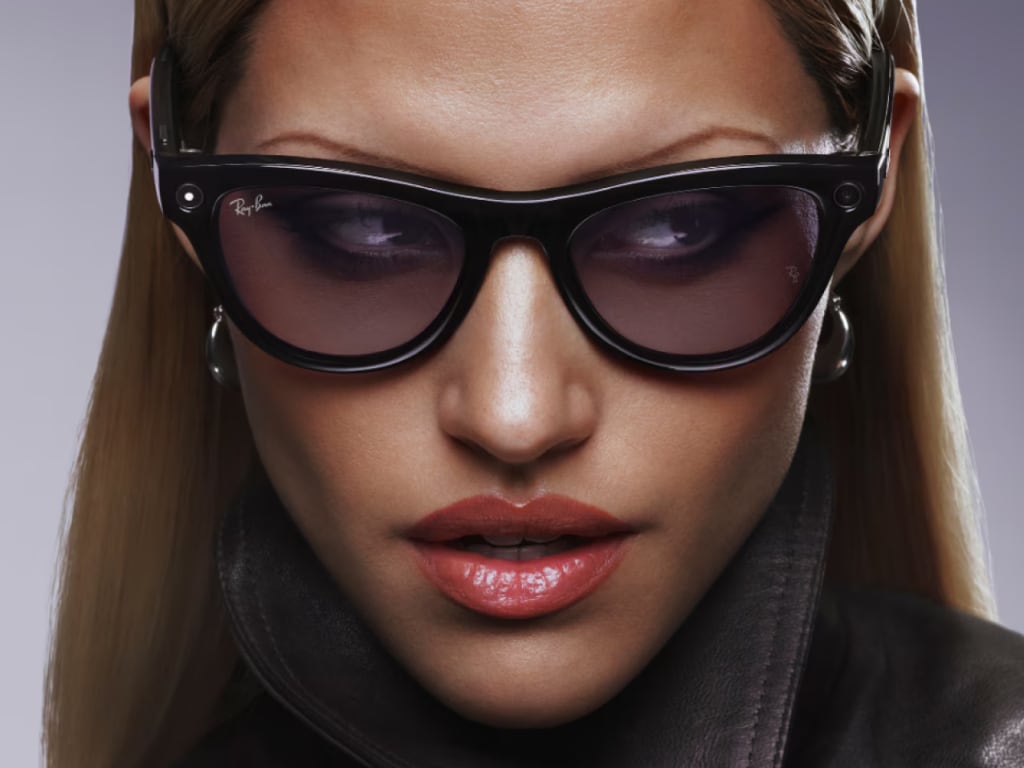
Samsung’s entry into the Extended Reality (XR) space has been a measured, two-pronged approach. Following the launch of the bulkier, full immersion Galaxy XR Headset (built on the Android XR platform), the company is now preparing for the second, more crucial phase: a pair of sleek, everyday Smart Glasses. The latest leaks surrounding the device, often codenamed "Haean" and bearing the model number SM-O200P, point toward a targeted launch in 2026.
These leaks confirm that Samsung is consciously avoiding the "glorified ski goggles" design of some competitors, instead prioritizing subtlety, wearability, and seamless integration with its existing Galaxy ecosystem. This is a direct competitive challenge to Meta’s successful Ray-Ban smart glasses lineup, aiming to capture the market segment that demands practicality and style over full augmented reality (AR) immersion.
The Design Philosophy: Wearability and Discretion
The most striking detail about the rumored Samsung smart glasses is the focus on discretion. Unlike the larger Galaxy XR headset (identified by the SM-I model series), the SM-O200P is designed to be an extension of the smartphone, not a standalone computer strapped to the face.
Transition Lenses: The inclusion of transition lenses—which automatically darken in sunlight and clear indoors—is a huge factor in everyday wearability. This feature eliminates the need for users to carry a separate pair of sunglasses, allowing the device to function as legitimate, daily eyewear. This simple feature addresses a core pain point that plagued early smart glasses, which often looked awkward when worn indoors.
Lightweight Build: Rumors suggest the glasses will be significantly lightweight, possibly around 50 grams, achieved by offloading heavy processing and battery capacity to the paired Galaxy smartphone. This is critical for comfort during long periods of wear.
Fashion Partnership: Samsung has previously teased collaborations with lifestyle brands like Warby Parker and Gentle Monster. These partnerships are strategic, ensuring the final product is genuinely "fashion-forward" and not just a piece of technology, a lesson learned directly from the success of Meta's design-first strategy with Ray-Ban.
The AI Core: Gemini Integration and Phone Reliance
To keep the glasses lightweight, Samsung has opted for simplicity in connectivity and processing, positioning the device as a smart peripheral:
Connectivity: The glasses will support Wi-Fi and Bluetooth but will lack independent mobile data connection. This means the device relies on the paired Galaxy phone for most internet-dependent tasks, including streaming data and accessing cloud services.
AI Functionality: The glasses are expected to utilize the power of Google's Gemini AI integrated into the Android XR platform. This partnership allows the device to offer practical, hands-free assistance:
Voice Control and Notifications: Managing calls, music playback, and receiving ambient notifications via audio prompts.
Contextual Assistance: Providing live translations, navigation hints, and real-time information about surroundings through voice commands and subtle visual overlays (if a display is included, though initial reports suggest a non-display model first).
Camera System: Leaks point to a built-in 12MP Sony IMX681 camera sensor. While this can capture photos and video, its primary function is likely related to gesture recognition and QR code scanning, feeding visual data to the on-device AI for contextual awareness without the need for constant cloud processing.
The Market Strategy: Targeting the Everyday User
The 2026 launch window positions Samsung to directly compete with Meta at a crucial time in the smart glasses evolution. The expected mid-range pricing (rumored to be around $379 and up) suggests Samsung is targeting the general consumer who wants accessible AI functionality without committing to a full-fledged AR headset.
Samsung is effectively creating two distinct XR pipelines:
Galaxy XR Headset (SM-I series): For power users, developers, and enterprises requiring full immersion, 4K Micro-OLED displays, and maximum graphical computing power.
Smart Glasses (SM-O series): For the everyday user focused on discreet hands-free utility, quick photo capture, and immediate AI assistance—a practical extension of the smartphone.
This dual approach ensures Samsung covers the entire spectrum of Extended Reality, from the professional boardroom to the casual street environment.
Conclusion: The Future is Subtle
The leaked details about the Samsung Smart Glasses confirm a thoughtful, market-aware design. By prioritizing transition lenses, lightweight design, and deep Gemini AI integration that offloads heavy lifting to the Galaxy phone, Samsung is aiming for a device that people will actually want to wear all day. The success of the SM-O200P will hinge on the fluidity of the software experience and the seamlessness of the design, signaling that the future of wearable technology is likely to be subtle, smart, and fully integrated into daily life.
About the Creator
The goals I did not achieve
Every writing goal I made for the year is a wash. It has been this way for a while, but I think it's important to be open about my failures and the reality of how life can get in the way. This is especially true considering the several times I have posted on Vocal about my writing goals, how I was changing my approach, and where I was hoping to be for the upcoming year. I will probably do that again in a couple months, but for now, it is time to acknowledge where I am today.
By Kay Husnick21 days ago in Journal
Catholic Social Teaching and Modern Life
Catholic Social Teaching is a rich tradition that provides moral guidance on how to live out faith in society. Rooted in Scripture and the teachings of the Church, it addresses issues of human dignity, justice, care for the poor, and responsible stewardship of the world. Understanding Catholic Social Teaching helps believers apply their faith to modern challenges while staying true to God’s call for love, compassion, and justice.
By Sound and Spirit3 days ago in Journal



Comments
There are no comments for this story
Be the first to respond and start the conversation.