
Salesforce Posts Marc Benioff’s Keynote Recording — But Leaves Out His ICE Jokes
An edited internal video sparks employee backlash, raises questions about leadership, culture, and corporate transparency

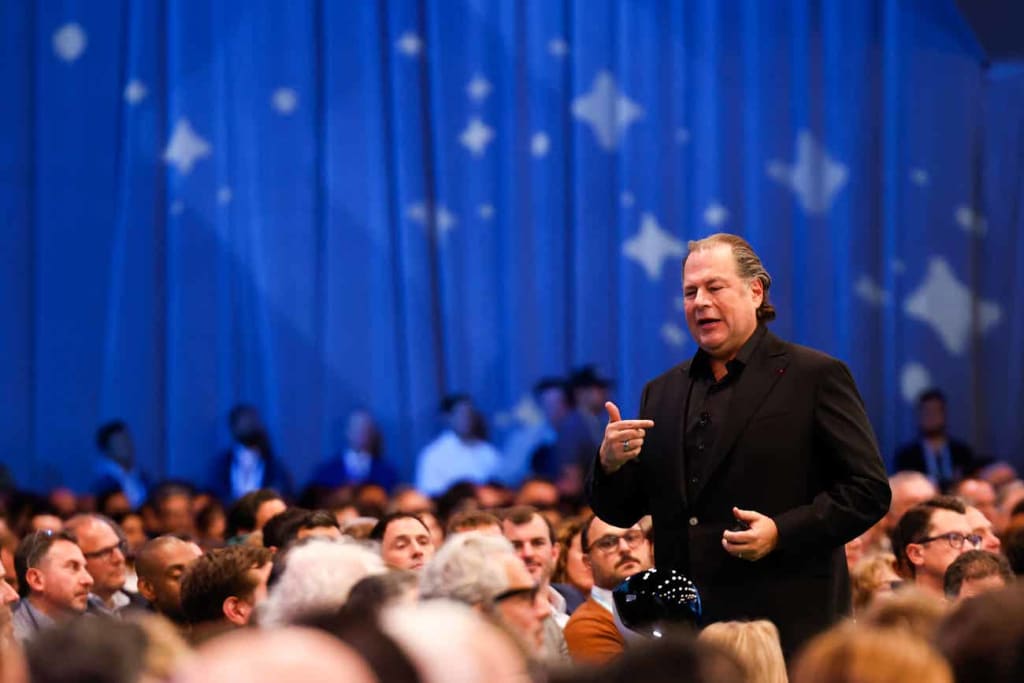
Salesforce is no stranger to public attention. As one of the world’s biggest cloud software companies, its moves are watched closely by investors, competitors, and employees alike. But this time, the spotlight isn’t on AI, revenue, or product updates. Instead, it’s on a keynote speech—and what was quietly removed from it.
Recently, a recording of CEO Marc Benioff’s keynote was uploaded to Salesforce’s internal site for employees to watch. However, workers quickly noticed something unusual: the version shared internally did not include the jokes Benioff reportedly made about U.S. Immigration and Customs Enforcement (ICE) during the live event.
What might have been a small internal edit quickly turned into a bigger controversy, with employees questioning not only the content of the joke but also the decision to cut it out afterward.
What Happened During the Keynote?
The keynote took place during Salesforce’s major internal gathering, where leadership typically outlines goals, celebrates performance, and sets the tone for the year. These events are meant to energize staff and reinforce company culture.
According to reports, Benioff asked employees who traveled from outside the United States to stand up, acknowledging their international presence. Moments later, he reportedly made jokes suggesting that ICE agents were in the building watching them.
For some people in the audience, the joke didn’t land. In fact, witnesses say the remark triggered discomfort, and some employees reacted with boos or audible frustration. The tension was immediate—especially given Salesforce’s large global workforce, which includes employees who may have personal or family experiences with immigration stress.
The Recording Was Posted — But the Jokes Were Gone
After the event, Salesforce posted a recording of Benioff’s keynote on its internal platform so employees could rewatch it or catch up if they missed it.
But workers noticed that the uploaded video appeared edited.
The section containing the ICE jokes was missing, and in its place was an abrupt jump cut. To many employees, this felt like Salesforce was attempting to quietly erase the moment rather than address it directly.
While companies often edit internal recordings for time or technical reasons, this case felt different because the missing content was tied to a growing internal backlash.
And that’s what turned the situation into a bigger story.
Why the ICE Joke Hit a Nerve
To understand why this sparked such a strong reaction, it’s important to understand the weight behind the subject.
ICE isn’t just a political topic. For many people, it represents fear, uncertainty, and trauma. Even for employees who are legally in the country, jokes about immigration enforcement can feel deeply personal, especially in a workplace that prides itself on inclusion.
Salesforce is known for branding itself around values like:
Trust
Equality
Inclusion
Employee well-being
So when the CEO makes a joke that can be interpreted as targeting international employees—even if he meant it playfully—it can feel like a betrayal of those values.
Many employees felt the joke was tone-deaf, particularly in a setting where people had traveled long distances to attend, and where leadership was supposed to celebrate their contribution.
Internal Backlash Grew Quickly
Following the keynote, Salesforce’s internal communication channels reportedly lit up with reactions.
Employees shared disappointment, frustration, and anger. Some described the joke as inappropriate for a corporate environment, while others argued it reflected a deeper issue: leadership being out of touch with how diverse teams actually experience the world.
In modern tech workplaces, employees expect executives to be aware of social realities. Humor is welcome—but only when it doesn’t come at the expense of people’s safety or identity.
Several reports suggest that internal letters were circulated, with employees asking leadership to address the incident more clearly and reaffirm the company’s stance on inclusion and respect.
The backlash wasn’t only emotional—it was also cultural. Workers questioned whether Salesforce’s public image matches its internal behavior.
Why Editing the Video May Have Made Things Worse
Ironically, removing the jokes may have increased the controversy rather than calming it.
Here’s why:
1. It looked like damage control
Instead of acknowledging the issue, the edit made it seem like the company wanted to hide it.
2. Employees already knew what happened
Many employees were present at the event or heard about it immediately afterward. Cutting the clip didn’t erase the memory.
3. It raised transparency concerns
When a company edits internal content without explanation, employees begin to wonder what else gets edited, hidden, or rewritten.
In a workplace culture built around trust, even small acts of omission can create bigger trust problems.
A Larger Question: What Does Leadership Owe Employees?
This incident isn’t just about a joke. It’s about expectations.
In 2026, employees—especially in tech—don’t view leadership as distant authority figures. They expect executives to act as role models, not just decision-makers.
That includes:
speaking responsibly
respecting diverse backgrounds
understanding social impact
handling mistakes openly
When a CEO says something controversial, employees often want more than silence. They want accountability, clarity, and reassurance.
Editing a video may protect the company from repeated exposure, but it doesn’t provide what employees are truly asking for: acknowledgement.
Salesforce’s Reputation and the Pressure of Being a “Values Company”
Salesforce has built a powerful brand as a “values-first” company. That reputation has helped it attract talent, customers, and loyalty over the years.
But being a values-driven company also creates pressure.
When leadership messaging conflicts with those values, the reaction is often stronger than it would be at a company that doesn’t market itself that way.
In other words, Salesforce is being judged by the standard it set for itself.
What Happens Next?
At the time of reporting, Salesforce has not made a major public statement explaining why the keynote was edited or directly addressing the controversy in a public-facing way.
Internally, however, this situation is likely far from over.
Employees will be watching for:
a direct apology or clarification
leadership discussions about inclusion
stronger communication policies
reassurance for international employees
The next steps will matter because workplace trust is fragile. A single moment on stage can be forgiven—but only if it’s handled with care.
Final Thoughts: A Lesson for Big Tech in 2026
The story of Marc Benioff’s edited keynote is a reminder that in today’s workplace, words carry weight—especially when spoken by the CEO.
McDonald’s may be winning with value meals, and Japan’s markets may be soaring after elections, but inside corporate America, another kind of value is being tested: trust.
Salesforce employees didn’t just react to a joke. They reacted to what it represented—and to the company’s decision to quietly remove it rather than openly address it.
In 2026, leadership isn’t only measured by business performance. It’s measured by how well leaders understand their people.
And this incident shows that even a company as influential as Salesforce can still stumble when humor collides with reality.
About the Creator
Asad Ali
I'm Asad Ali, a passionate blogger with 3 years of experience creating engaging and informative content across various niches. I specialize in crafting SEO-friendly articles that drive traffic and deliver value to readers.




Comments
There are no comments for this story
Be the first to respond and start the conversation.