
Rubio Says US to Move on If War in Ukraine Can’t Be Ended
Rubio Says US to Move on If War in Ukraine Can’t Be Ended

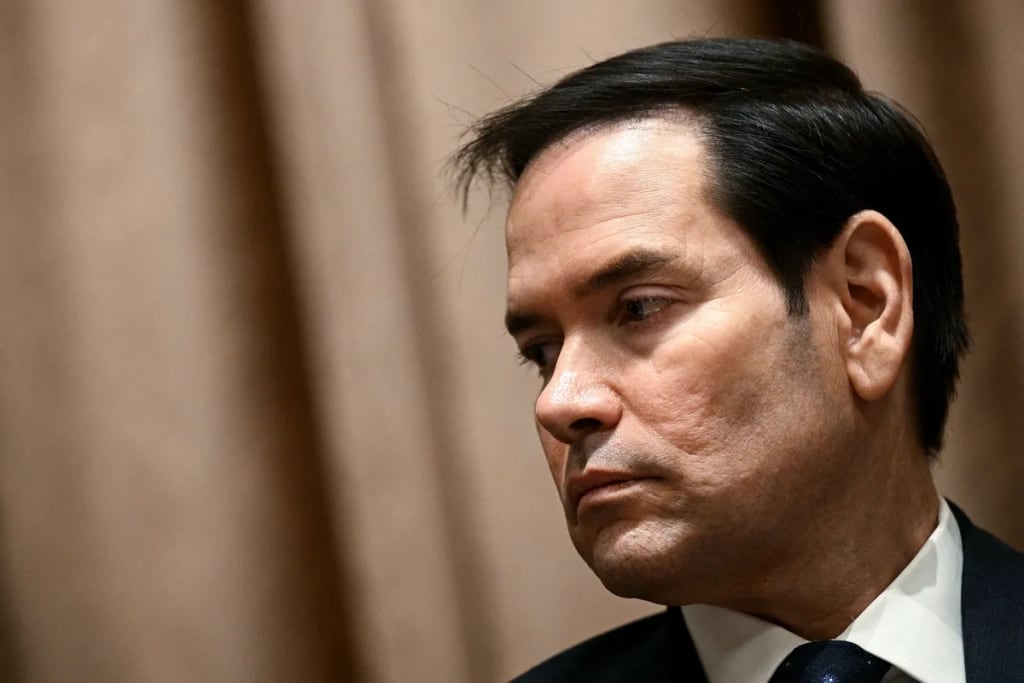
U.S. Secretary of State Marco Rubio stated that the United States may “move on” if a resolution to the war in Ukraine cannot be found soon, just as Russia announced the end of a one-month suspension of attacks on Ukrainian energy infrastructure.
Speaking to reporters at Le Bourget Airport near Paris on Friday, Rubio said, “We have just days to determine if a short-term solution is possible. If not, we’ll have to move forward,” according to a transcript released by the State Department.
His remarks came after a meeting in Paris on Thursday involving U.S. officials — including Rubio and Special Envoy Steve Witkoff — and diplomats from France, Germany, and the UK. The U.S. reportedly emphasized its goal of reaching a full ceasefire in Ukraine within a few weeks.
Rubio acknowledged that European allies had played a positive role in the discussions, saying their contributions were “helpful and constructive.” He added, “We had a productive meeting, but we can’t keep this going indefinitely.” He emphasized that the conflict, now in its fourth year, has no quick military solution and that neither side possesses the means to end it decisively.
President Donald Trump, who previously claimed he could swiftly secure a ceasefire, is approaching the 100-day mark of his second term on April 30.
Rubio noted that Trump has invested significant effort in resolving the conflict but also highlighted that the administration must remain attentive to other global issues. “There are many other matters that deserve equal or greater focus,” he said.
Thursday’s discussions also included a meeting between Witkoff and French President Emmanuel Macron, attended by Ukrainian representatives. U.S. officials expressed optimism about achieving progress soon, and negotiators from the involved countries are scheduled to reconvene in London next week.
The Paris talks followed Witkoff’s nearly five-hour meeting with Russian President Vladimir Putin in St. Petersburg the previous week. Witkoff described the meeting as “compelling,” noting discussions included possible steps to end the war and potential economic opportunities for Russia.
European leaders have sought to influence the peace process initiated by the Trump administration, especially after being excluded from recent direct talks between the U.S. and Russia.
Trump has voiced frustration with Russia’s unwillingness to accept his ceasefire proposal, though he has also at times criticized Ukrainian President Volodymyr Zelenskiy for the conflict’s continuation following Russia’s 2022 invasion.
“President Trump is committed to a swift and peaceful resolution,” said James Hewitt, spokesman for the White House National Security Council.
Meanwhile, the Kremlin confirmed Friday that the 30-day pause on attacks against Ukrainian energy infrastructure had expired, with no new directives in place. “The period has ended,” said Kremlin spokesman Dmitry Peskov, according to Interfax. “There are currently no new instructions from the Supreme Commander-in-Chief.”
The pause was agreed upon during a March 18 phone call between Trump and Putin. While it fell short of Washington’s broader ceasefire objective, the temporary truce did lead to fewer strikes on major energy facilities. Both sides accused each other of violating the agreement, mainly in cases involving transformers and power lines, but no major refinery attacks were reported.
As of early April, Russian refineries were operating at near-peak levels, buoyed by the lack of drone assaults.
In recent weeks, however, Russia has resumed heavy strikes elsewhere, including deadly missile attacks on civilians in Kryvih Rih — President Zelenskiy’s hometown — and Sumy in northeastern Ukraine.
Separately, Trump announced on Thursday that a key agreement concerning Ukraine’s critical minerals is expected to be signed on April 24. This deal reportedly outlines plans for postwar reconstruction and mineral exploitation, granting the U.S. priority access to revenues deposited in a special U.S.-controlled fund. Ukraine has pushed for improved terms and refuses to classify prior U.S. aid as debt.
— With contributions from Greg Sullivan
About the Creator
Keep reading
More stories from Badhon Vitality and writers in Journal and other communities.
Mark Zuckerberg’s explosive ‘smoking gun’ emails about Instagram, WhatsApp take center stage at FTC antitrust trial
Zuckerberg’s Old Emails Resurface in Landmark Antitrust Case Against Meta Mark Zuckerberg is once again at the center of a major controversy, as internal emails he sent over a decade ago have become a focal point in the historic antitrust trial against Meta. The trial, which could redefine how the U.S. government approaches Big Tech, is being closely watched by legal experts, regulators, and the tech industry at large. The resurfaced messages are now being scrutinized for what they reveal about Meta’s past strategies — and the ultimate outcome of the trial could hinge on whether the judge accepts Zuckerberg’s current interpretations or views them as evidence of anti-competitive behavior.
By Badhon Vitality9 months ago in Journal
The goals I did not achieve
Every writing goal I made for the year is a wash. It has been this way for a while, but I think it's important to be open about my failures and the reality of how life can get in the way. This is especially true considering the several times I have posted on Vocal about my writing goals, how I was changing my approach, and where I was hoping to be for the upcoming year. I will probably do that again in a couple months, but for now, it is time to acknowledge where I am today.
By Kay Husnick24 days ago in Journal
Cultivating Inner Peace: Simple Ways to Boost Your Spiritual Growth at Home.
In today's fast-paced world, it's easy to become consumed by the demands of work, family, and social obligations. We often prioritize external achievements, leaving little room for nurturing our inner selves. Yet, cultivating our spiritual growth is crucial for finding lasting peace, purpose, and connection. Fortunately, you don't need to climb a mountain or join a monastery to embark on a spiritual journey. You can cultivate a vibrant spiritual life right in the comfort of your own home.
By Wilson Igbasi3 days ago in Journal




Comments (1)
Nice 👍🏼