
Role of Electrical Systems and PLCs in Double Girder Gantry Crane Functionality
Enhancing Safety, Precision, and Automation in Heavy Lifting Operations
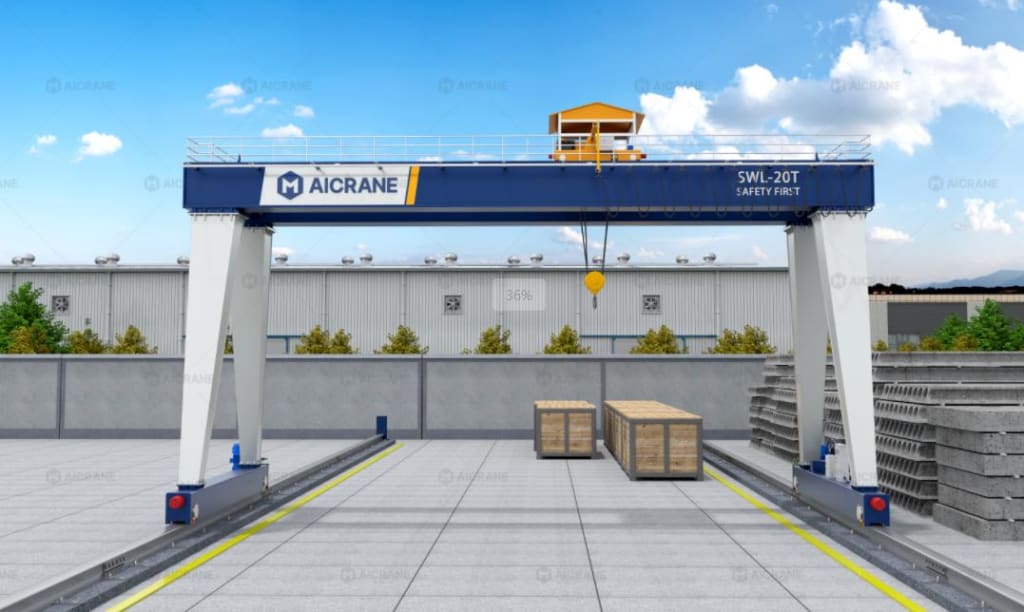
Double girder gantry cranes are essential lifting solutions in heavy industrial environments such as shipyards, steel plants, precast concrete yards, and construction sites. While the mechanical structure - comprising girders, hoists, and trolleys - forms the visible backbone of the crane, the electrical systems and Programmable Logic Controllers (PLCs) play a critical role in ensuring operational efficiency, safety, and advanced functionality.
In modern crane systems, electrical and PLC integrations have transitioned from basic control panels to sophisticated, intelligent platforms capable of real-time monitoring, fault diagnostics, automation, and remote operation. This article explores in detail the role and importance of electrical systems and PLCs in the functionality of double girder gantry cranes.
1. Overview of Double Girder Gantry Cranes
Double girder gantry cranes feature two bridge girders supported by legs that run on ground-level rails. They typically handle heavier loads (from 20 tons up to hundreds of tons) and provide better load stability and lifting height compared to single girder variants.
A modern double girder gantry crane system integrates:
Lifting mechanism (hoist or trolley)
Traveling mechanism (trolley and crane movement)
Control system (local or remote)
Electrical systems (power supply, motor control, cabling, etc.)
Automation and safety systems (PLCs, sensors, limit switches)
Among these, the electrical system and PLC act as the "central nervous system," ensuring smooth communication, execution, and supervision of crane operations.
2. Components of the Electrical System in Double Girder Gantry Cranes
A. Main Power Supply
Electrical power is supplied through cable reels, festoon systems, or busbars, depending on the crane's design.
Voltage ranges vary by region and crane size, typically 380V to 690V.
B. Motor Control Systems
Motors control lifting, cross travel, and long travel.
Soft starters or VFDs (Variable Frequency Drives) are often used for smooth acceleration, reduced power surges, and energy efficiency.
C. Control Panels
The main electrical panel includes contactors, relays, overload protection, circuit breakers, and drives.
Sub-panels control specific functions (e.g., hoisting, traveling).
Enclosures are often IP55 or higher to protect against dust and water ingress.
D. Wiring & Cable Management
Industrial-grade wiring is selected for temperature, chemical, and mechanical resistance.
Cable trolleys and drag chains are used to manage moving cables safely and efficiently.
3. Role of PLCs in Crane Control and Automation
What is a PLC?
A Programmable Logic Controller (PLC) is an industrial computer used to control electromechanical processes. In double girder gantry cranes, PLCs are used to automate and coordinate movement, monitor status, and enhance safety.
PLC Functions in Gantry Cranes
A. Motion Control
Controls hoist lifting/lowering, trolley cross travel, and crane long travel.
Uses feedback from sensors and encoders to synchronize operations.
Ensures smooth start/stop, speed regulation, and positioning accuracy.
B. Safety Interlocks
Prevents operation under unsafe conditions.
Integrates with limit switches, overload protection, emergency stops, sway control, and collision avoidance systems.
Shuts down or disables components if abnormal readings are detected.
C. Condition Monitoring
Continuously checks parameters such as motor temperature, current draw, brake status, and load weight.
Sends alerts when thresholds are exceeded or malfunctions are detected.
D. Diagnostic & Fault Logging
Identifies and logs system faults with time stamps.
Facilitates quick troubleshooting and reduces downtime.
E. Remote Monitoring and Control
Modern PLCs with Ethernet or wireless connectivity can communicate with SCADA systems or mobile apps.
Operators and maintenance personnel can access real-time data, adjust parameters, or initiate emergency stops remotely.
F. Automation Features
Enables semi-automatic or fully automatic lifting cycles.
Common in repetitive tasks such as container handling, beam transport, or warehouse operations.
4. Benefits of Integrating Electrical Systems and PLCs in Gantry Cranes
A. Precision and Accuracy
Variable speed control ensures gentle lifting and precise placement of heavy loads.
PLCs enable automatic adjustments for alignment and positioning.
B. Enhanced Safety
Electrical systems with intelligent interlocks and emergency responses reduce accident risk.
Sway control, load limiters, and motion cutoffs prevent structural and personnel damage.
C. Operational Efficiency
Automation reduces human error and increases throughput.
PLC-controlled routines allow for faster, repeatable lifting sequences.
D. Predictive Maintenance
Real-time monitoring data helps identify potential issues before failure occurs.
Minimizes unplanned downtime and extends industrial gantry crane service life.
E. Energy Savings
Use of VFDs and regenerative braking systems helps reduce energy consumption.
Optimized control logic prevents unnecessary motor operation.
5. Case Applications of PLC-Controlled Double Girder Gantry Cranes
A. Precast Concrete Manufacturing
Cranes equipped with PLCs perform programmed lifting and positioning of concrete beams or slabs.
Load swaying is minimized with anti-sway control logic embedded in the PLC.
B. Steel Handling
Cranes used in steel mills operate under extreme heat and high dust environments.
PLCs monitor motor temperatures, ensure safe operation, and automate repetitive material transfer.
C. Shipbuilding Yards
Double girder cranes with advanced electrical and PLC systems lift massive ship blocks.
Synchronization of multiple cranes via PLC ensures tandem lifting operations are safe and coordinated.
6. Trends in Crane Electrical and PLC Technologies
Edge Computing: PLCs integrated with local computing for fast decision-making without reliance on central servers.
Wireless Control: Use of Wi-Fi or 5G for wireless HMI panels and remote diagnostics.
AI Integration: Predictive analytics for proactive maintenance based on data collected by PLCs.
Cloud-Based Monitoring: Remote data access, reporting, and maintenance scheduling via IoT-enabled PLCs.
7. Key Considerations in Designing the Electrical System and PLC Logic
Environment: Ensure components are rated for the working conditions (temperature, moisture, dust).
Redundancy: Critical systems (like brakes or hoists) should include fail-safes or backup control logic.
Scalability: Use modular PLCs to allow future upgrades or integration with new components.
Compliance: Follow international standards like IEC 60204-32, UL508A, or EN 60204 for electrical safety.
Conclusion
The modern double girder gantry crane is far more than a mechanical lifting device. With the integration of advanced electrical systems and Programmable Logic Controllers (PLCs), these cranes have evolved into intelligent machines capable of high precision, safe operation, and predictive performance management.
Whether lifting heavy steel coils in a rail yard or positioning precast concrete components in a plant, the role of electrical and PLC systems is central to achieving efficient, reliable, and safe crane operations. As industrial automation continues to advance, future gantry cranes will become even smarter, making these technologies an essential part of every modern crane solution.
About the Creator
Aicrane01
Welcome to the Aicrane Blog, your practical guide to lifting solutions. Discover articles covering overhead cranes, gantry cranes, winches, steel structures, boat lifts, and more.
Website: https://steelmillcranes.com/
~ Fired ~
— Ai Intrusion ~ Are you Next ~ Is Ai Evolution after your job? — Few workplaces haven't been affected. Ai is in supermarkets, at doctors' offices, and even monitoring farms. I just can't think of anything this machine is not getting into, can you? For instance: Education ~ Law and Tech jobs will one day have a major influence or be taken over by these inanimate machines, with accuracy and vigor. From mechanics' diagnoses to a wide variety of everyday jobs, including fast food workers, with this input having the ability to cut their unnecessary work hours. I'm certain all of us have been touched by this with our short stories and colorful headings, have you? Even comments are very questionable 'Non-Robot' insertions.
By Jay Kantor27 days ago in Journal



Comments
There are no comments for this story
Be the first to respond and start the conversation.