
Risk in Flux: Evan Vitale’s Blueprint for Financial Stability in an Era of Global Uncertainty
As economic volatility, geopolitical tensions, and digital disruption reshape global markets, CPA Evan Vitale shares his framework for building financial resilience — and why adaptability, ethics, and foresight now define true stability.
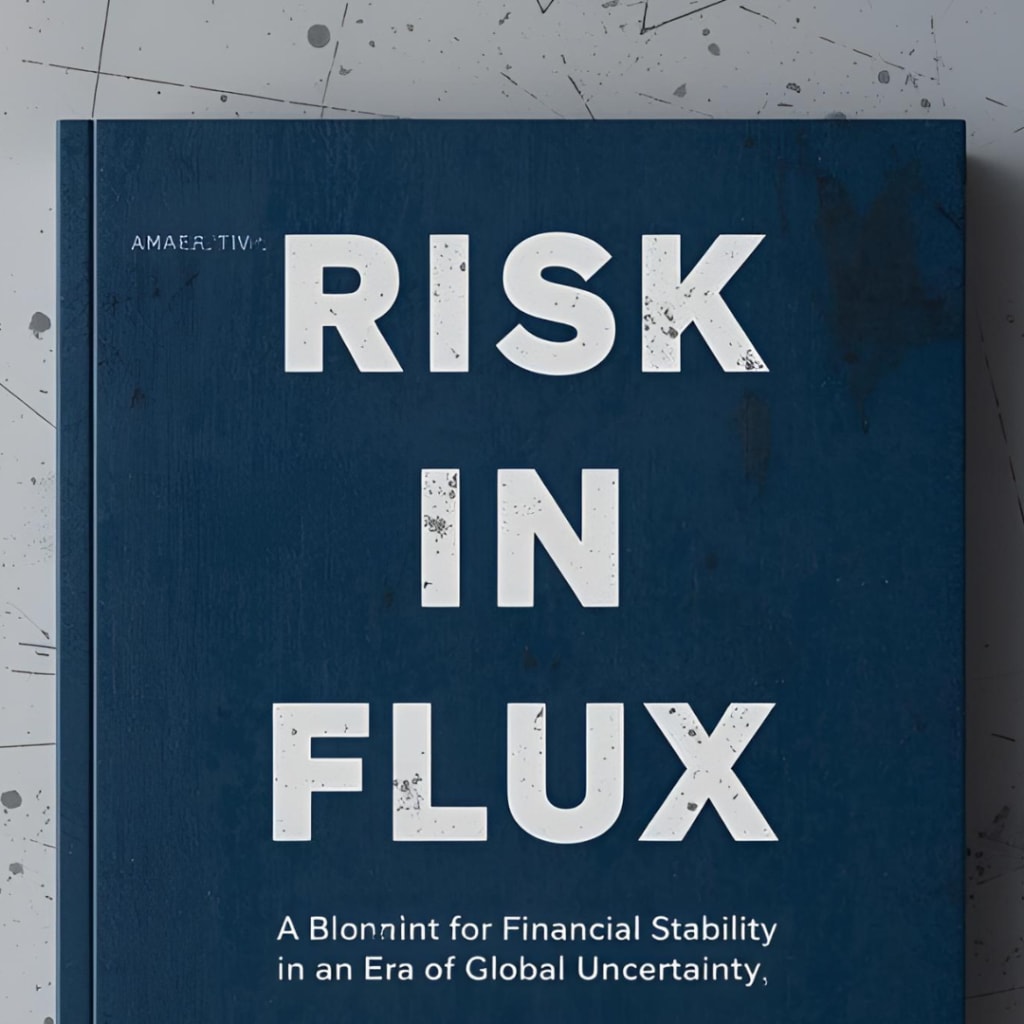
We live in a world where uncertainty is no longer the exception — it’s the baseline. The global economy has entered an age of constant fluctuation, shaped by everything from inflationary pressures and political conflict to supply chain breakdowns and technological disruption. For business leaders and investors alike, the challenge isn’t just surviving this turbulence — it’s learning how to thrive within it.
According to Evan Vitale, a U.S. Certified Public Accountant and respected voice in strategic finance, this new reality demands a redefinition of what “financial stability” means. “In times like these,” Vitale says, “stability isn’t about standing still. It’s about learning how to move with purpose while the ground shifts beneath you.”
________________________________________
The End of Predictability
For decades, businesses could rely on relatively stable cycles — predictable interest rates, consistent market behavior, and gradual technological change. Those days, Vitale argues, are over.
From fluctuating energy prices to global supply chain risks, every organization now operates in a complex web of interdependencies. The modern CFO’s job isn’t to forecast certainty, but to manage probability.
“Traditional forecasting models assume yesterday’s logic still applies tomorrow,” Vitale explains. “But volatility has become systemic. The key is designing financial systems that are resilient to shocks — not dependent on predictability.”
In this new age, he says, flexibility must replace rigidity, and agility must replace comfort.
________________________________________
Diversification as a Mindset
Diversification has long been a cornerstone of risk management, but Vitale urges leaders to think beyond asset allocation. To him, true diversification is multidimensional — it includes revenue streams, talent strategies, technology adoption, and even geographic presence.
“Too many companies think diversification means just spreading investments across markets,” he says. “But financial stability also depends on diverse thinking, diverse leadership, and the ability to pivot quickly.”
By building teams with varied expertise and perspectives, organizations are better positioned to spot emerging risks before they become crises. Vitale calls this the “360-degree approach” — ensuring that every decision is evaluated from financial, operational, ethical, and technological angles.
________________________________________
The Human Factor in Financial Risk
While data models and predictive analytics play an essential role in modern finance, Vitale reminds leaders that human behavior remains the most unpredictable variable of all.
Markets don’t crash because spreadsheets fail — they crash because emotion overtakes logic. Fear, greed, and overconfidence have always been the hidden drivers behind financial instability.
“The best financial systems account for psychology, not just economics,” Vitale says. “You can’t quantify panic, but you can prepare for it.”
He believes every organization must train its leaders to respond calmly under pressure, guided by ethical judgment rather than reactive emotion. “The real difference between collapse and recovery,” he adds, “is the mindset of the people making the calls.”
________________________________________
Building a Resilient Financial Framework
Vitale’s blueprint for financial resilience rests on three foundational pillars: liquidity, transparency, and adaptability.
1. Liquidity:
Cash flow flexibility is the lifeline of stability. “Too many firms focus on growth but neglect liquidity,” Vitale warns. “When crises hit, liquidity buys time — and time buys survival.”
2. Transparency:
In a data-driven economy, transparency fosters trust. Both internal teams and external partners need clear access to financial information. “When stakeholders understand what’s happening, they stay aligned even when conditions change,” Vitale says.
3. Adaptability:
The most resilient firms are those willing to evolve. “Financial systems should breathe like living organisms,” he explains. “They should expand, contract, and adjust without breaking.”
He points to companies that survived previous downturns not because they predicted them — but because they reacted faster and smarter than competitors.
________________________________________
Ethics: The New Foundation of Stability
Beyond spreadsheets and strategy, Vitale argues that ethics is the ultimate stabilizer. In moments of crisis, trust becomes the most valuable currency — and once lost, it’s nearly impossible to rebuild.
“Financial scandals, fraudulent reporting, and short-term greed have destroyed more companies than recessions ever did,” he says. “Integrity is the only hedge that works in every market cycle.”
He encourages businesses to establish strong internal controls and ethical accountability systems, ensuring every decision aligns with long-term sustainability rather than short-term profit.
“Stability built on compromise is an illusion,” Vitale says. “Real resilience is built on principles.”
________________________________________
Technology, Risk, and the Speed of Change
AI-driven automation and digital finance tools are reshaping how organizations measure, report, and respond to risk. But Vitale cautions that technological power must be balanced with human oversight.
“Automation can detect irregularities in real time,” he acknowledges. “But if leadership doesn’t understand what the data means, the warning signs go ignored.”
He urges companies to train CPAs and finance professionals to interpret AI-generated insights and translate them into ethical, strategic decisions. In his view, technology should enhance human judgment — not replace it.
“Technology without wisdom,” Vitale says, “is just acceleration without direction.”
________________________________________
Global Interdependence and Local Responsibility
One of the defining characteristics of modern risk is interconnection. A cyberattack in one country, a shipping delay in another, or a political conflict across an ocean can ripple across balance sheets worldwide.
Vitale believes businesses must balance global awareness with local accountability. “You can’t control the world,” he says. “But you can control how prepared you are for it.”
That means scenario planning, building regional partnerships, and maintaining strong compliance systems. A globally conscious, locally grounded approach allows companies to adapt without losing their ethical and operational footing.
________________________________________
The Future of Stability
For Evan Vitale, the future of financial leadership depends not on predicting chaos but on navigating it with discipline and clarity.
“Risk will never disappear,” he concludes. “But the organizations that learn to respect it, rather than fear it, will lead the next era of prosperity.”
In a world where everything feels uncertain, Vitale’s philosophy offers something solid to hold onto — a reminder that stability isn’t the absence of change, but the mastery of it.
About the Creator
Shane Edwards
Shane Edwards is a writer, author, and publisher specializing in tech and finance. He simplifies complex topics, making them accessible and insightful for readers navigating today's digital and financial world.
Keep reading
More stories from Shane Edwards and writers in Journal and other communities.
In a Talent Crisis: How Evan Vitale Is Inspiring the Next Generation to Reimagine Accounting
The numbers tell a sobering story. Across the United States, the accounting profession is in the midst of a severe talent shortage. Fewer students are enrolling in accounting programs, more seasoned CPAs are retiring, and firms are struggling to find qualified professionals to meet growing financial demands.
By Shane Edwards2 months ago in Journal
Making Time for God: Daily Prayer in a Busy Life
Life is busy. Work, family, errands, and responsibilities often fill every corner of the day, leaving little space for reflection or prayer. Yet daily prayer is one of the most powerful tools a Catholic has for staying grounded, cultivating patience, and experiencing God’s presence in every moment. Finding ways to integrate prayer into a busy life is not about creating a rigid schedule; it is about building habits that allow moments of connection, however brief, to become transformative.
By Sound and Spirita day ago in Journal
Center Stage with Paul Stewart
*** I'm keen to republish the interviews I did for my series with Vocal creators. It's been a few years and I thought it might be nice to revisit these wonderful conversations. I'll be releasing them one at a time for a few weeks/months.
By Heather Hubler4 days ago in Interview




Comments