
Revolution in robotics: scientists create an artificial muscle that lifts 4,000 times its own weight.
The new material, developed in South Korea after a decade of research, combines polymers and magnetic microparticles to mimic and surpass the strength and flexibility of human muscle.

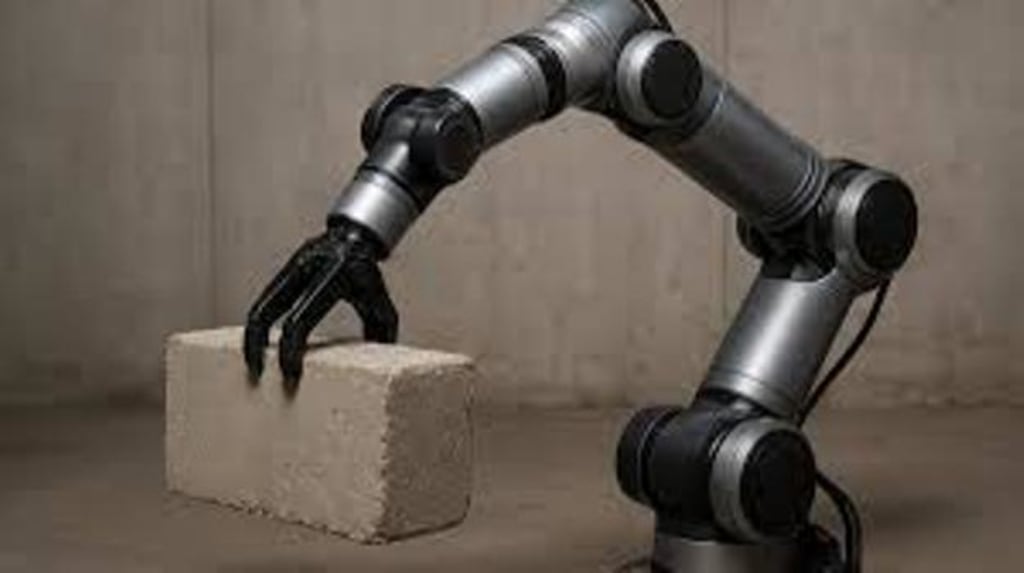
A scientific team in South Korea has unveiled a new artificial muscle for robots, made from a dual polymer network and magnetic microparticles. The development allows humanoid robots, prosthetics, and exoskeletons to lift objects weighing up to five kilograms using just 1.2 grams of material. The breakthrough was achieved in laboratories at institutions specializing in soft robotics in Asia, after 10 years of research.
According to Techno Science, the artificial muscle works by alternating between a soft and a rigid state in less than a second, thanks to thermal and magnetic activation. It can stretch up to 12 times its original length and achieves 86.4% deformation, far exceeding the 40% of a natural human muscle.
Its work density reaches 1,150 kJ per cubic meter, a figure 30 times greater than that of biological human muscle tissue. A robotic hand equipped with this system can switch between a delicate grip for handling fruit and, immediately afterward, lifting heavy tools without needing to change actuators.
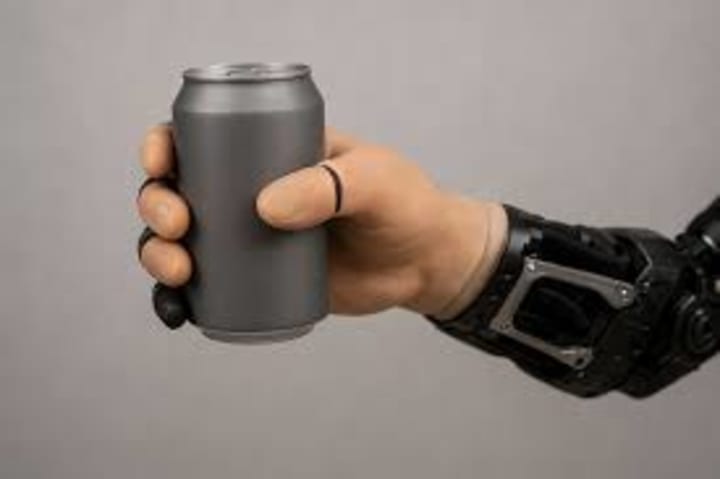
The material's structure combines covalent bonds to provide rigidity and reversible physical bonds to offer flexibility, while neodymium, iron, and boron magnets allow for precise remote control with magnetic fields.
The design avoids the common problems of soft robotics, where flexible systems fail to support weight and rigid ones lack dexterity. Laboratory tests demonstrated that the actuators withstand repeated cycles of contraction and extension without significant loss of performance or visible cracks.
A breakthrough that redefines the limits of robotic engineering
According to information published by QUO, the internal mechanics of the artificial muscle allow robots and prosthetics to perform diverse activities, from industrial tasks to medical and domestic uses. The double-interlocking mechanism, combined with magnetic activation, simplifies the structure of the devices compared to pneumatic or hydraulic systems, which require pumps and seals.
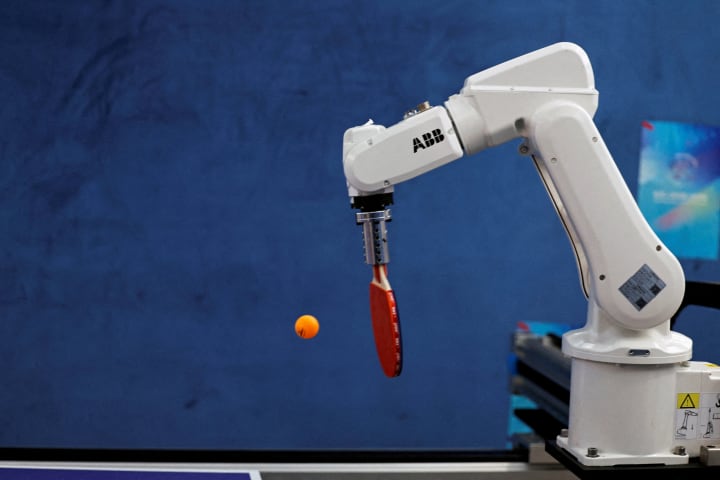
A simple magnet or an external coil modulates the force exerted, resulting in lighter and more compact joint designs. In its rigid state, a 1.2-gram sample of the polymer can lift up to 5 kilograms, while in its soft state, it stretches up to 12 times its original length without breaking.
This elasticity and strength allow for the creation of comfortable and effective exoskeletons, as well as prosthetics adaptable to different user needs. The superior power density enhances autonomy and energy efficiency in everyday applications. The material demonstrated durability under controlled conditions, maintaining its mechanical performance after numerous cycles of use.
Magnetic control reduces energy consumption and the volume of components, as highlighted by the researchers. According to Techno Science, this method eliminates the need for complex hydraulic systems, facilitates smooth movements, and contributes to safety when robots interact with people.

In medical or rehabilitation applications, the ability to adapt the stiffness of a prosthesis or exoskeleton in milliseconds represents a significant improvement in quality of life and autonomy for users.
New challenges in bringing the technology from the laboratory to the real world
The development is just beginning to face environmental tests, such as exposure to varying temperatures, contact with dust, humidity, or impacts, and scaling up production to larger dimensions.
According to those involved in the discovery, it remains to be seen how homogeneous the material is as its size increases and how it responds under conditions of intensive use outside the laboratory. If the results are confirmed, the technology could be integrated into humanoid robots to manipulate delicate objects or move heavy loads, using a single type of actuator.

The scientific community continues to analyze the stability of the double polymer network and the interaction of the magnetic microparticles in real-world situations. The goal is to prevent premature degradation, maintain the ability to alternate between rigidity and elasticity, and reduce manufacturing costs—key factors for commercial adoption.
Looking ahead, the arrival of this artificial muscle marks a significant step toward more powerful, versatile, and efficient robots and prosthetics. The combination of strength, precision, and durability is poised to transform industrial, medical, and domestic sectors in the coming years.
About the Creator
Omar Rastelli
I'm Argentine, from the northern province of Buenos Aires. I love books, computers, travel, and the friendship of the peoples of the world. I reside in "The Land of Enchantment" New Mexico, USA...
Keep reading
More stories from Omar Rastelli and writers in Journal and other communities.
How the Phantom MK-1 works, the human-controlled soldier robot that promises to revolutionize defense and logistics
The idea of a soldier robot has until now evoked scenes from science fiction and cinematic sagas. However, the American company Foundation, based in San Francisco, is attempting to bring these futuristic images to life through the development of the Phantom MK-1.
By Omar Rastelli3 months ago in Journal
The goals I did not achieve
Every writing goal I made for the year is a wash. It has been this way for a while, but I think it's important to be open about my failures and the reality of how life can get in the way. This is especially true considering the several times I have posted on Vocal about my writing goals, how I was changing my approach, and where I was hoping to be for the upcoming year. I will probably do that again in a couple months, but for now, it is time to acknowledge where I am today.
By Kay Husnick23 days ago in Journal
Why Catholics Believe Faith and Works Go Together
Why Catholics Believe Faith and Works Go Together A question often asked by non-Catholics is how faith and works relate in the Catholic understanding of salvation. Some believe that Catholics rely on “good works” to earn salvation, while others think faith alone is sufficient. The truth in Catholic teaching is that faith and works are inseparably connected, and both are essential for a living, authentic Christian life. Understanding this balance begins with Scripture, is explained through Church teaching, and is supported by centuries of theological reflection.
By Sound and Spirit5 days ago in Journal


Comments
There are no comments for this story
Be the first to respond and start the conversation.