
How the Phantom MK-1 works, the human-controlled soldier robot that promises to revolutionize defense and logistics
The company Foundation unveiled a prototype inspired by Star Wars, designed for reconnaissance and explosive ordnance disposal tasks, which could transform security on the battlefield and in the manufacturing industry

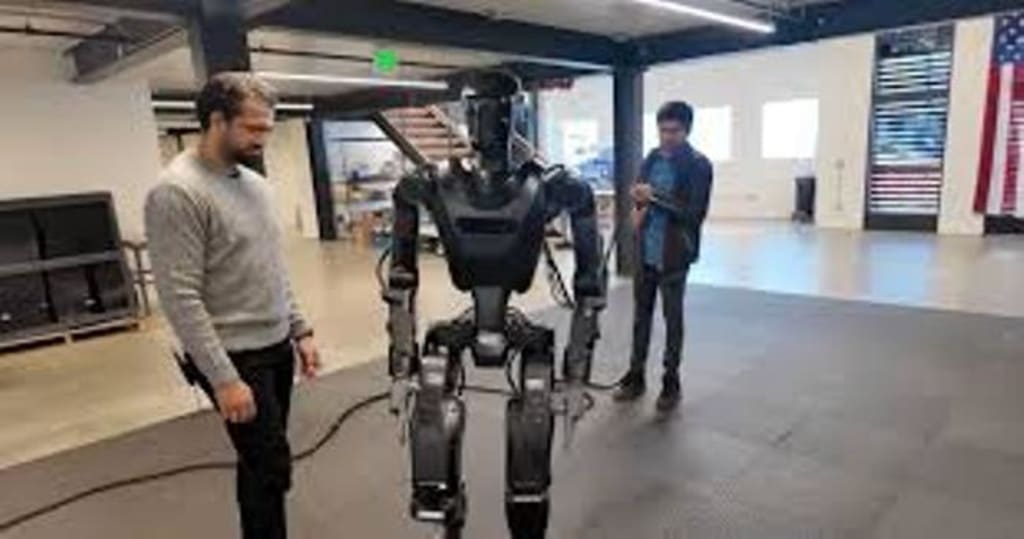
The idea of a soldier robot has until now evoked scenes from science fiction and cinematic sagas. However, the American company Foundation, based in San Francisco, is attempting to bring these futuristic images to life through the development of the Phantom MK-1.
According to National Geographic, this robot is the first humanoid prototype conceived and manufactured for use in military conflicts, blurring the line between fiction and technological innovation.
The creation of this robot, openly inspired by George Lucas's Star Wars universe, marks the beginning of a new era in the integration of artificial intelligence and advanced machinery into the military environment.
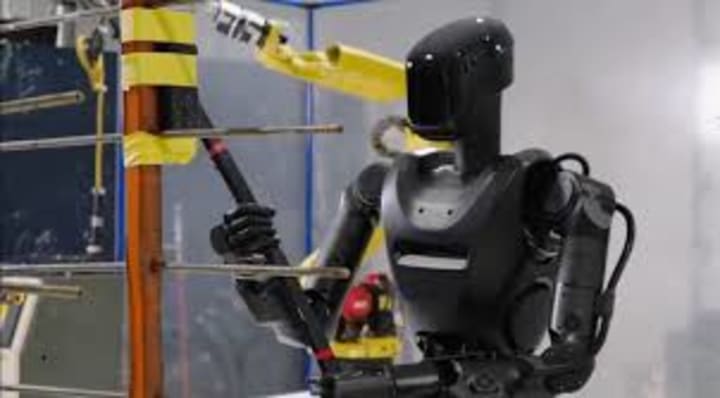
Sankaet Pathak, CEO of Foundation, stated in an interview with News Nation: “The future of warfare is real-life video games.” In this way, the company plans to incorporate humanoid robots into defense and security tasks.
Technical Characteristics and Design of the Phantom MK-1
The Phantom MK-1 has a humanoid design, stands 1.75 meters tall, and weighs approximately 80 kilograms; its dimensions mimic those of an average adult. The structure is designed to prioritize durability and fluid movement, achieving natural integration into environments where interactions with human beings occur.
The torso, which acts as the functional core, houses the computing units, cameras, batteries, and advanced sensors. This architecture allows it to perform numerous tasks, from domestic activities to industrial functions.
The robotic legs give it the ability to climb stairs, navigate uneven terrain, and move through narrow spaces. This expands its range of action in both factory settings and military missions.
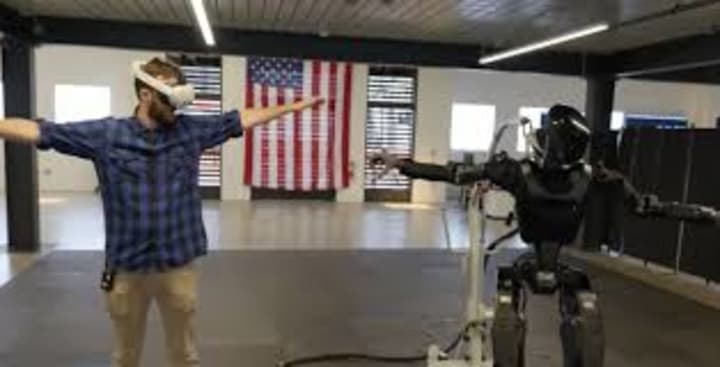
One of its most outstanding features is its ability to carry up to 20 kilograms of payload. The design, with its aerodynamic body and broad shoulders, includes a featureless face, reminiscent of the battle droids from Star Wars. This detail did not go unnoticed by engineers and fans of the saga.
Intended Applications: From the Battlefield to Industry
The initial priority for the Phantom MK-1 lies in military use, differentiating it from other robots primarily designed for civilian or business environments.
According to Pathak, the purpose is for it to act as a frontline ground unit, focused on reconnaissance and explosive ordnance disposal, which can reduce the exposure of human soldiers to dangerous missions.
Foundation is also exploring applications in industry: optimizing assembly lines and logistical processes. The company's official website states that the technology it develops is the result of years of research in humanoid robotics, and that its robust construction facilitates its adoption in a variety of environments.

Although its direct use in combat zones is not mentioned on the website, Pathak confirmed the project's military purpose in public statements.
The Phantom MK-1 will not operate autonomously. The CEO explained that a human operator will control the robot and decide on the use of weaponry, while artificial intelligence will handle navigation and trajectory calculations, ensuring constant supervision over every relevant action in real-world operations.
Production, Projections, and Reactions
Foundation plans to manufacture 10,000 units of the Phantom MK-1 by 2026. According to National Geographic, this figure demonstrates a commitment to the mass adoption of the technology, both in armed forces and in the manufacturing industry.
In the current version, the robot uses a mechanical hand covered with gloves, although the company plans to integrate more advanced hardware in future versions to increase functionality and performance in hostile environments.
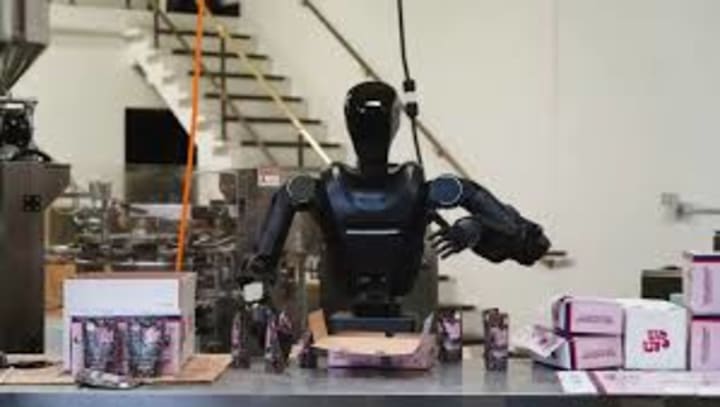
Pathak described the Phantom MK-1 as “faster, stronger, and armed to be more lethal,” highlighting the model's adaptability and robustness. The design dispenses with LiDAR sensors, relying exclusively on cameras, increasing reliability and data integration while simplifying the internal sensor and wiring network.
Images and videos released of the Phantom MK-1 generated numerous reactions online. Several users expressed concern about the idea of a humanoid machine designed for warfare and referenced the "Terminator" character and stories of hostile artificial intelligence.
Looking ahead, the technology company plans to expand the use of its technology to space exploration, particularly through collaboration with SpaceX to design autonomous systems for missions to Mars, in accordance with the objectives expressed by the company's founder.
About the Creator
Omar Rastelli
I'm Argentine, from the northern province of Buenos Aires. I love books, computers, travel, and the friendship of the peoples of the world. I reside in "The Land of Enchantment" New Mexico, USA...
Keep reading
More stories from Omar Rastelli and writers in Journal and other communities.
Gemini for the home: 100 ideas to get the most out of Google's new voice assistant
Google has begun rolling out early access to its Gemini voice assistant for the home in the United States, a move that replaces Google Assistant with a more powerful conversational model capable of sustaining continuous dialogues.
By Omar Rastelli3 months ago in Journal
The goals I did not achieve
Every writing goal I made for the year is a wash. It has been this way for a while, but I think it's important to be open about my failures and the reality of how life can get in the way. This is especially true considering the several times I have posted on Vocal about my writing goals, how I was changing my approach, and where I was hoping to be for the upcoming year. I will probably do that again in a couple months, but for now, it is time to acknowledge where I am today.
By Kay Husnick23 days ago in Journal
Why do catholics worship, Mary?
One of the questions that often comes up for people learning about the Catholic faith is why Catholics honor Mary, the mother of Jesus. It is a common misconception that Catholics worship Mary. In fact, the Church teaches that worship is due to God alone. Catholics do not pray to Mary as if she were God, nor do they believe she has divine power independent of God. Instead, Mary is honored because of her unique role in salvation history and her close relationship with her son, Jesus Christ.
By Sound and Spirit5 days ago in Journal



Comments
There are no comments for this story
Be the first to respond and start the conversation.