
Relations between India and Pakistan
From Conflict to Potential Reconciliation India and Pakistan are two neighboring nations that share a common history but are divided by politics and vested interests.
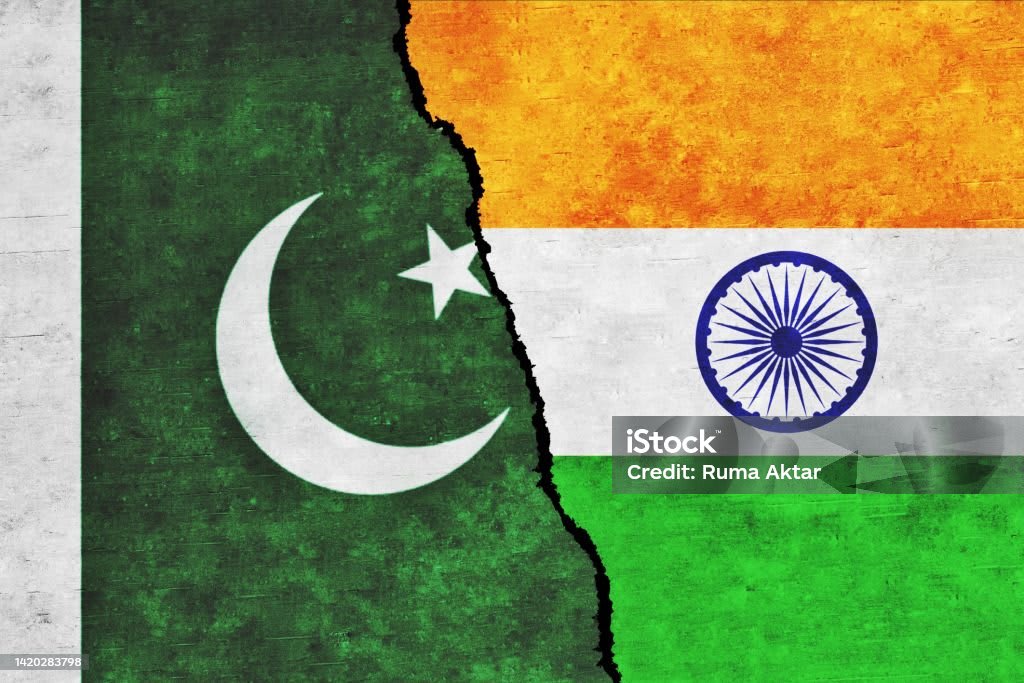
Terrorism and Political Tensions:Peace efforts have been repeatedly derailed by attacks by militant groups based in Pakistan, such as the 2008 Mumbai siege and the 2019 Pulwama attack. Islamabad argues that India's policies in Kashmir fuel unrest, while India accuses Pakistan of funding terrorism.
Attempts at Peace and Setbacks:Temporary relief was provided by ceasefire agreements (2003), high-level talks (2015), and the 2021 Kashmir ceasefire. However, recurring border skirmishes and incidents like the Balakot airstrike in 2019 have maintained high tensions.
1.Reviving Diplomacy:It's important to talk for a long time. Both nations must prioritize conflict resolution over political posturing.
2.Economic Cooperation:Reopening trade routes and honoring treaties (e.g., Indus Waters Treaty) could build trust.
3.Role of MediatorsTalks could be facilitated by neutral actors or regional powers like China (through the SCO).
Conclusion
The conflict between India and Pakistan poses a threat to global security as well as the subcontinent. Dialog and mutual concessions are more beneficial than escalated conflict. For the sake of their people and the future of the region, leaders on both sides must move beyond historical grievances and embrace pragmatic coexistence.
The Roots of Rivalry
The partition of British India in 1947 didn't just create two nations – it birthed an enduring rivalry. The division along religious lines (Hindu-majority India and Muslim-majority Pakistan) sowed seeds of discord that would grow into full-blown conflicts. The disputed accession of Jammu & Kashmir became the open wound that never healed, with both nations claiming it in full while controlling parts.
What makes this conflict particularly intractable is how national identities have been constructed in opposition to each other. Pakistan's very raison d'être as a homeland for South Asian Muslims creates an inherent tension with secular India. Meanwhile, India's secular democracy stands in contrast to Pakistan's Islamic identity, making reconciliation psychologically challenging for both populations.
The Nuclear Dimension
The conflict went from being dangerous to having the potential to be catastrophic after the 1998 nuclear tests. Unlike Cold War rivals US and USSR, India and Pakistan:
lack effective mechanisms for reducing nuclear risk Have major cities within easy reach Face the risk of nuclear escalation through miscalculation
The Kargil War of 1999 demonstrated that nuclear powers can still engage in conventional warfare. Over a million troops were mobilized during the 2001-2002 military standoff that followed the attack on the Indian Parliament. This brought the world to its knees.
The Terrorism Conundrum
Pakistan has used militant proxies (Lashkar-e-Taiba, Jaish-e-Mohammed) to engage in asymmetric warfare against India's conventional military power. Nevertheless, this strategy has: harmed Pakistan's reputation abroad bolstered India's hardline stances Created blowback within Pakistan itself
A new normal of limited kinetic responses below the nuclear threshold has been established by India's response, which has evolved from diplomatic pressure to military strikes (2016 "surgical strikes," 2019 Balakot airstrike).
Peace Efforts That Didn't Work Several promising initiatives for peace failed: 2001-2007 Composite Dialogue: Before the attacks in Mumbai in 2008 derailed it, progress was made on trade, travel, and even tentative discussions about Kashmir. 2015 Ufa Summit: Modi-Sharif meeting raised hopes, but Pathankot attack (2016) ended momentum.
Backchannel Diplomacy: Reports suggest secret talks in 2021 nearly achieved a Kashmir ceasefire and trade resumption before political changes in Pakistan stalled progress.
Bridges between Civil Society People-to-people ties persist despite state hostility: Pakistan's continued popularity of Bollywood Cross-border musical collaborations
Initiatives for diplomacy in Track II Divided families maintaining ties
These soft connections suggest populations might be ahead of their governments in desiring normalization.
The Way Forward: The dialogues in Track II ought to investigate inventive solutions like: Water resources in Kashmir are jointly managed. Cross-border economic zones
Mechanisms for working together to combat terrorism In the end, visionary leadership that is willing to shift the relationship from zero-sum competition to managed coexistence with selective cooperation is necessary to break the cycle. The road is long, but the alternative – perpetual hostility in a nuclear neighborhood
About the Creator
mahruz ahmed
Name:mahruz ahmed
Profession: Multimedia Journalist | Investigative Reporter .
Passion: Uncovering truths, amplifying voices, and storytelling that drives change.
About Me:As a dedicated journalist with 10 years of experience,
.
Keep reading
More stories from writers in Journal and other communities.
How Technology Is Redefining Real Estate
The real estate industry has long been considered traditional, slow-moving, and heavily dependent on manual processes. Buying, selling, renting, or managing property often involved paperwork, middlemen, and long waiting periods. However, the digital age has brought a dramatic shift. Today, technology is not just supporting real estate—it is transforming it from the ground up.
By darrendemers127 days ago in Journal
The Duelist
The rays of a dying red sun flashed against the onrushing blade. The grey beards say the key to dueling lies in size, speed, reach, righteous fury, whatever the person in front of them pays them to say. Matteo knew better than any it was none of these and had an undefeated record on these sands to prove it.
By Matthew J. Fromm3 days ago in Fiction




Comments
There are no comments for this story
Be the first to respond and start the conversation.