
Read This Before You Buy something from Amazon
“The Truth Behind the Click—What Amazon Doesn’t Want You to Know About Your Purchases”
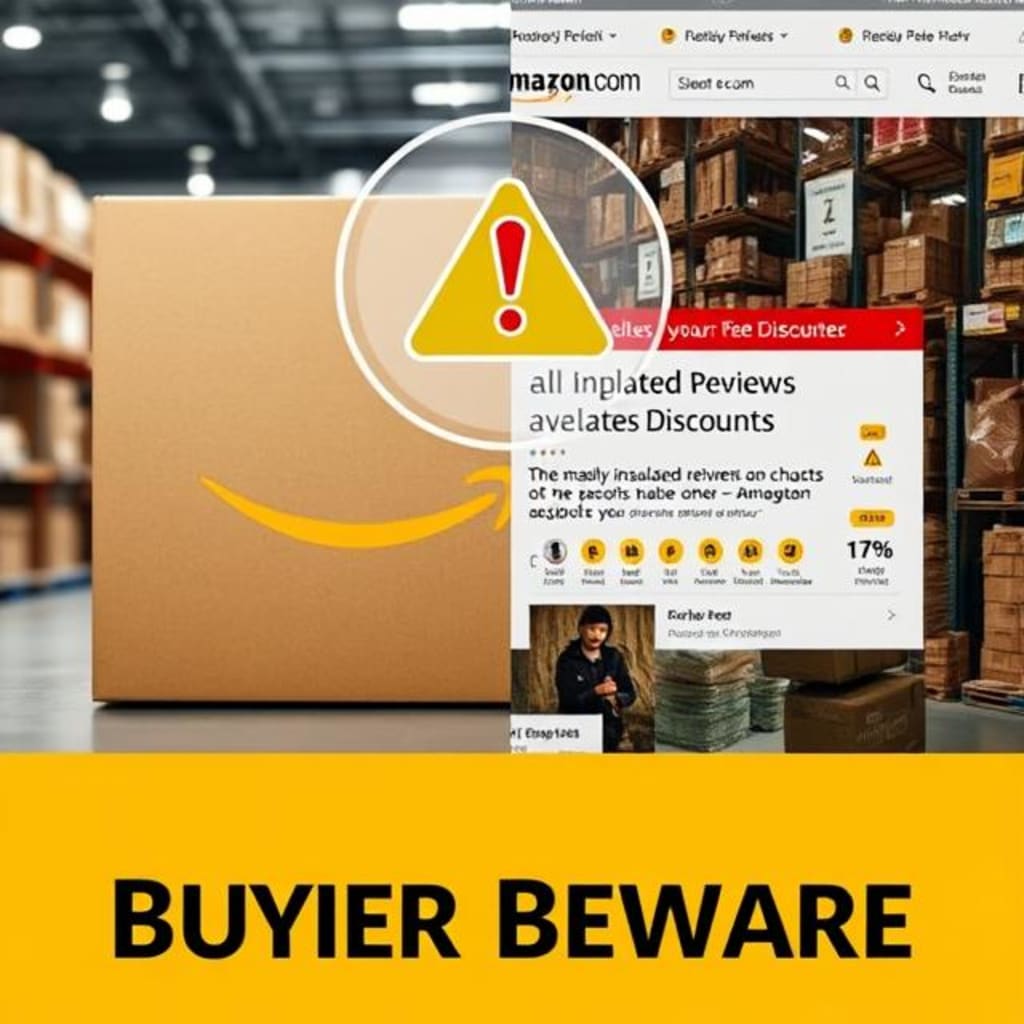
We live in a world where convenience rules, and Amazon is king. With a few taps or clicks, your new phone charger, desk lamp, or even groceries are on the way, sometimes arriving within hours. The platform has transformed the way we shop, blending speed with selection in ways that seemed impossible just a decade ago. But behind the smooth interface and smiley boxes is a system that most consumers barely understand—and if they did, they might think twice before pressing “Buy Now.”
Here’s what you need to know before you make your next Amazon purchase.
1. Not Everything You See Is Sold by Amazon
When you browse Amazon and see a product, you may assume it’s being sold and shipped by Amazon itself. But more than 60% of items sold on the platform come from third-party sellers—some reputable, some not. These sellers use Amazon as a marketplace, meaning they handle their own sourcing and may have different quality standards.
Sometimes, the product page will clearly list “Ships from and sold by [Store Name].” But in other cases, it’s buried under several dropdown menus. If a problem arises—say, a counterfeit product or incorrect item—it may be much harder to resolve than if it were sold directly by Amazon.
2. The Counterfeit Crisis Is Real
Amazon has become a breeding ground for counterfeit goods, particularly in categories like electronics, fashion, and beauty. Fake headphones, skincare products, or designer knockoffs often blend in seamlessly with legitimate listings, especially when they piggyback on existing product pages—a process called listing hijacking.
Imagine you’re buying a well-known brand of headphones. You find the listing, read the reviews, and place your order. But the item you receive feels cheap and underperforms. You’ve just become the latest victim of a counterfeit product—one that may not be returnable if the seller disappears after a few weeks.
Amazon has launched initiatives like Project Zero and Brand Registry, but the sheer volume of listings and the global seller base make it impossible to catch every scam.
3. Reviews Can Be Bought, Traded, or Faked
That five-star review average? It may not be real.
Review manipulation on Amazon is rampant. Some sellers pay for fake positive reviews, while others use black-hat techniques like review swapping, where they exchange glowing feedback with other sellers. You might even find products where reviewers were given free or heavily discounted items in exchange for a “neutral” review—which inevitably becomes positive.
There are even organized Facebook groups and Telegram channels where sellers recruit buyers to leave fake reviews in exchange for full refunds. Amazon tries to shut these down, but the game of whack-a-mole continues.
To stay safe:
Look for “Verified Purchase” tags.
Be wary of reviews that sound too generic or overly emotional.
Use third-party tools like Fakespot or ReviewMeta to analyze review credibility.
4. You Might Be Overpaying—Even During “Deals”
Amazon’s pricing system is a masterclass in psychological manipulation. A product may be listed as 40% off, but compared to what? Often, the “original price” is inflated or outdated, making the deal seem better than it actually is.
Additionally, prices on Amazon fluctuate constantly, thanks to dynamic pricing algorithms that respond to demand, competition, and even your own browsing behavior. It’s not uncommon for a product to be $19.99 in the morning and $24.99 by evening.
Pro Tip: Use tools like CamelCamelCamel or Keepa to check price history and know if you’re actually getting a deal.
5. Fulfillment Centers and Labor Ethics
We rarely think about the journey our package takes—but we should.
Amazon has over 175 fulfillment centers worldwide, where workers are pushed to their limits to keep up with the breakneck pace of Prime delivery promises. Multiple investigative reports have revealed:
High injury rates.
Minimal breaks.
Workers urinating in bottles to avoid penalties for leaving their stations.
There’s also a mental cost. The constant surveillance, productivity quotas, and lack of upward mobility have created toxic environments that lead to burnout and high turnover.
Supporting Amazon often means supporting this system—knowingly or not.
6. Amazon’s Environmental Footprint
All those speedy deliveries come at a cost to the planet. One-day shipping, while convenient, often requires less efficient routing, more packaging, and increased carbon emissions.
While Amazon has committed to sustainability goals (like reaching net-zero carbon emissions by 2040), critics argue that progress is slow and overshadowed by the sheer scale of the company’s operations.
If you’re eco-conscious, consider:
Bundling purchases to reduce shipments.
Avoiding returns that require long-distance travel.
Choosing “no-rush shipping” when possible.
7. You Have Options—Use Them
Amazon is not the only game in town. Many independent retailers, ethical brands, and even big-box stores offer the same products at similar prices—without the downsides.
Sometimes, going directly to the brand’s website supports small businesses and guarantees authenticity. You may even get better customer service or exclusive discounts.
There’s also a growing movement to support local economies through platforms like:
Etsy (for handmade or small-batch goods),
Thrive Market (for sustainable groceries),
and Bookshop.org (for independent bookstores).
8. The Return Policy Isn't Always Your Safety Net
Yes, Amazon has a generous return policy. But it’s not foolproof.
If you buy from a third-party seller, they may have their own rules, restocking fees, or delays. And some categories—like electronics or opened cosmetics—may not be eligible for full refunds.
Abuse of the return system can also flag your account for suspension. Too many returns, even for good reasons, can result in temporary bans or even permanent account closures.
9. Your Data Is Being Tracked—Constantly
Every product you browse, every item you buy, every review you click—Amazon tracks it. That data feeds into an ever-evolving profile that’s used to:
Predict your buying behavior.
Recommend products (sometimes sponsored).
Adjust pricing.
While convenient, it’s also invasive. The company knows more about your habits than you might be comfortable with. And if you use Alexa devices, Kindle, or Fire tablets? That’s even more data being collected.
10. You’re Voting With Your Wallet
Every purchase is a tiny vote for the kind of world you want to live in.
Buying from Amazon is undeniably convenient, but it comes with strings—ethical, environmental, and economic. It’s not about boycotting entirely; it’s about conscious consumption.
Ask yourself:
Can I wait a day or two and buy this elsewhere?
Is the seller reputable?
Am I supporting fair labor and ethical business practices?
You may not always have the time or money to choose another path—and that’s okay. But being informed means you can choose when to click “Buy Now” and when to pause and think.
Conclusion: Shop Smart, Not Just Fast
Amazon is a marvel of modern commerce, but it’s also a machine with hidden gears that most shoppers never see. By taking a closer look at what’s behind the curtain, you can protect your money, your values, and even your safety.
Before your next purchase, remember: not every “deal” is a good one—and not every product is what it claims to be.
Read the reviews. Check the seller. Use the tools. And most importantly, shop with intention.
About the Creator
Keep reading
More stories from Hamza Habib and writers in Journal and other communities.
The Future of Digital Marketing: Trends You Can’t Ignore
In the past decade, digital marketing has transformed from banner ads and email blasts into a dynamic, algorithm-driven battlefield. With each technological leap, marketers have had to adapt—or risk irrelevance. But now, as we stand at the crossroads of AI, Web3, voice technology, and privacy reform, the landscape is set to shift more drastically than ever before.
By Hamza Habib8 months ago in Journal
Author’s Advice
If you would’ve asked me 20 years ago did I know I’d become a writer and an author, I would’ve said “nope, ain’t happening”. As fate would have it I did become an author and I can honestly say I’m loving it so far. It really does feel good to be a writer. I’ve learned a lot on this journey and I feel like with even me being as new to this world as I am, there’s some wisdom I need to share with every other aspiring author.
By Joe Patterson4 days ago in Journal
Iranian Drone Attacks Hit Ships in the World’s Most Important Oil Route
The already volatile conflict between Iran, the United States, and Israel escalated again this week after suspected Iranian drones struck multiple ships in and around the Strait of Hormuz, one of the most strategically important waterways on Earth. The attacks have intensified fears that the war could spiral into a wider regional or global crisis.
By Navigating the World4 days ago in Journal
The Forsyth House Fire
Since 1851, Forsyth House has stood on the corner of Union Street and Gordon Street in the heart of Glasgow. Its iconic, or was... because on Sunday 8th of March, 2026, a fire broke out in a small, seemingly un-named shop in the building and tore all that history down. As I write, the rubble is still unsettled and the street is still blocked off. Central Station is quiet on the upper level, and around 30 small businesses have quite literally gone up in smoke.
By S. A. Crawford2 days ago in The Swamp




Comments
There are no comments for this story
Be the first to respond and start the conversation.