
Ransom at the Border: The Battle Over the Gordie Howe Bridge
How the 2026 passage between Detroit and Windsor became a pawn in high-stakes politics.

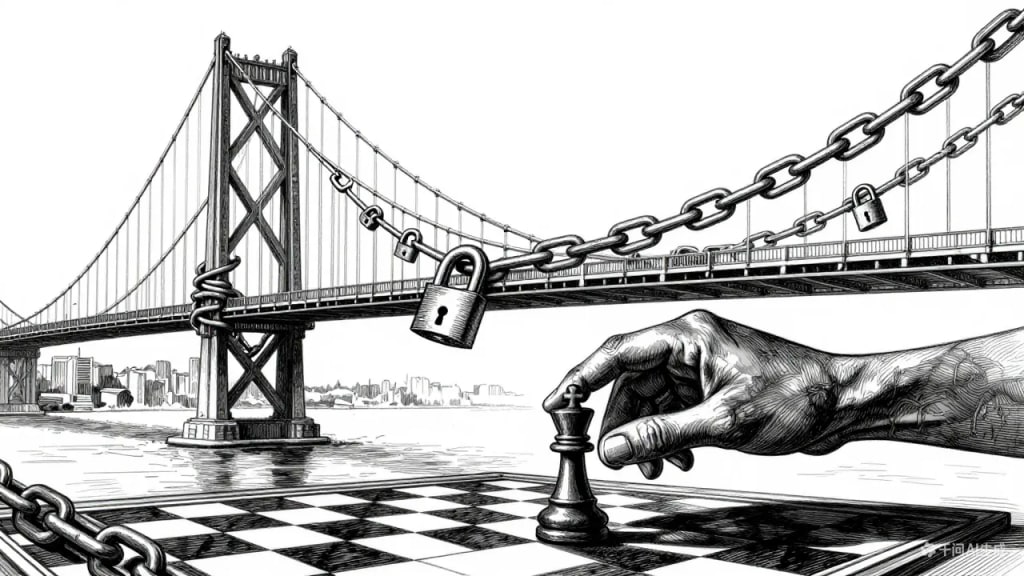
I grew up thinking a bridge was just an engineering solution for a geographic hurdle.
Concrete, steel, suspension cables — a physical bridge meant a more connected world. In my younger, more idealistic days, I viewed every new passage between nations as an objective win. More trade, more movement, more efficiency. I assumed the sheer logic of the market was a steamroller that would eventually flatten any political roadblock in its path.
I was dead wrong. I was operating on the naive assumption that a political actor’s primary goal is to maximize utility or “build the future.” It isn’t.
This week, the reality of 2026 hit the windshield hard. The Gordie Howe International Bridge — a $6.4 billion engineering masterpiece designed to link Detroit and Windsor — is finally reaching the finish line. It was supposed to be the relief valve for the most congested trade corridor in North America. Instead, the administration just threw a wrench into the gears, threatening to block the opening unless Canada caves to a fresh list of trade and ownership demands.
The bridge is finished. The steel is set. Yet the passage is effectively being held for ransom. As it turns out, the state doesn’t see a bridge as a tool for trade; it sees a bargaining chip for a high-stakes game of hostage-taking.
The “Smart Business” Delusion
I can already hear the pushback. “Wait a second,” the skeptics say. “Isn’t this just leverage? If Canada is outmaneuvering us on trade, shouldn’t we use every tool we have? That’s just smart business.”
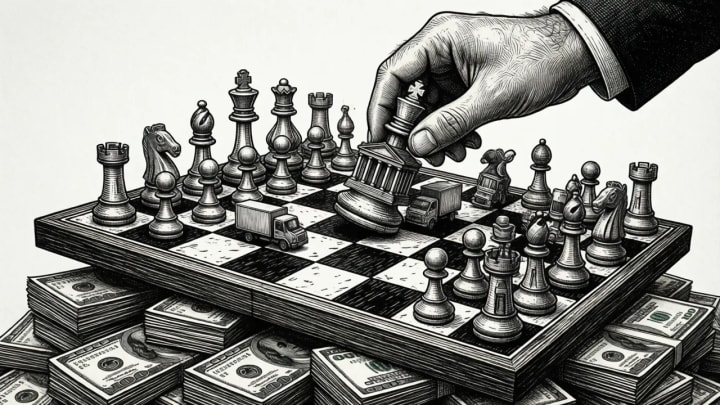
This is what I call the “Leverage Trap.” It’s the belief that the economy is a giant chessboard where a “King” can move pieces around to boost the national “score.” It treats trade as a gift that one government graciously bestows upon another, rather than a natural right exercised by individuals.
If you think blocking a bridge is “smart business,” you’re fundamentally misreading what a business — and an economy — actually is.
The Logic of the Barrier
To see why this is a disaster, we have to look past the political theater and focus on the reality of human action. Trade isn’t a formal handshake between two flags in a mahogany-rowed office; it’s a trucker in Windsor trying to reach a plant in Detroit. It is a voluntary, purposeful act between two people who have both decided that an exchange makes them better off. This is the bedrock of civilization: we trade because we value what we get more than what we give up.
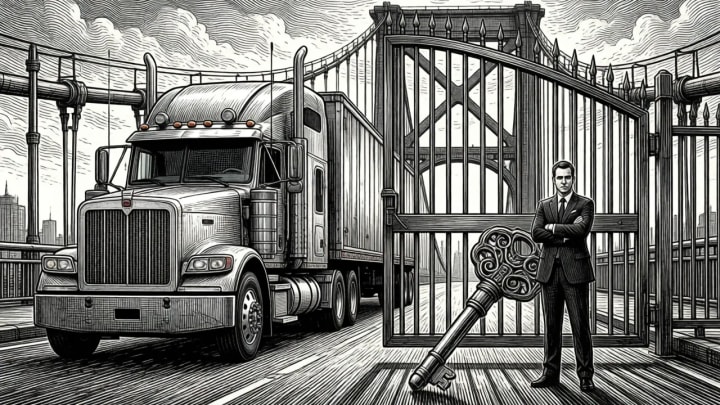
When a politician stands in the middle of that bridge, he isn’t “negotiating” for you. He’s an uninvited third party dropping a physical barrier in the path of two willing actors. By blocking the bridge, the state is effectively claiming ownership over the will of its citizens. It is saying: “Your right to do business, to move your goods, and to fulfill your contracts is secondary to my need to squeeze a concession out of a foreign capital.”
Logic tells us that any barrier to trade is an act of capital destruction. By making it harder, slower, or more expensive to move goods, you are artificially driving up the cost of existence for everyone on both sides. You aren’t “winning” a trade war; you’re putting the productive class in a chokehold to win a status war.
The Myth of the “National Interest”
The real enemy here isn’t a specific person, but a persistent, poisonous myth: the idea that the “National Interest” is something separate from — and superior to — the rights of the people living in that nation.
Institutional entities survive on this myth:
- Friction creates power. If trade flows freely, the bureaucrat becomes irrelevant.
- Conflict creates leverage. If there’s a “crisis” at the bridge, the politician gets the headlines, the donor support, and a seat at the “negotiation” table.
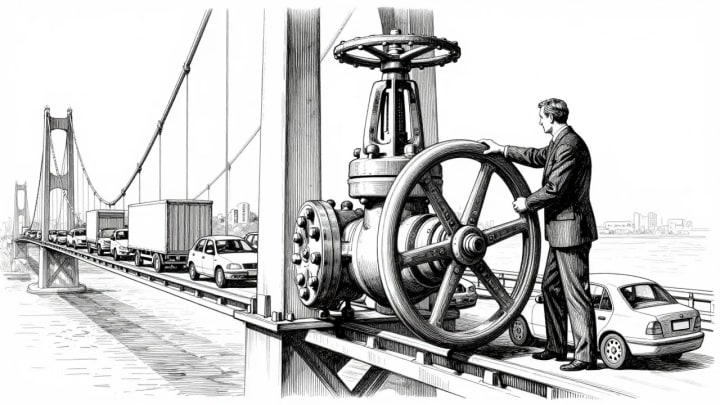
They want you to view the bridge as “Government Property” that they can turn on and off like a faucet. But that bridge was built to serve the market. To block it is to use the people’s own desire for prosperity as a weapon against them.
Press enter or click to view the image in full size
The 25% Bottleneck
Look at the numbers. The existing Ambassador Bridge — privately owned and showing its age — carries roughly 25% of all trade between the U.S. and Canada. It is a massive, permanent bottleneck.
When the President threatens to block the new Gordie Howe bridge in early 2026, he isn’t just poking “Canada.” He is threatening the just-in-time supply chains of the American auto industry. He is threatening the price of every head of lettuce and every spark plug that crosses that border.
History shows us that whenever “security” or “leverage” is used to throttle trade, the result is never a “better deal” for the average person. It’s a deadweight loss. When borders become friction-heavy, the massive corporations with the best legal teams survive, but the small trucking outfits and local manufacturers get crushed under the weight of the delay.
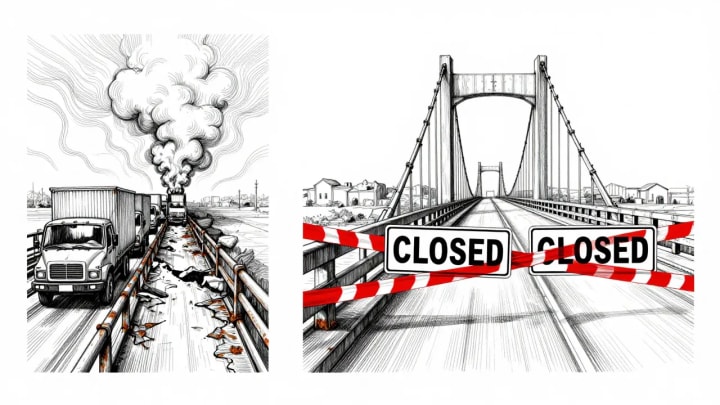
What You Don’t See Costs You Most
This is the classic struggle between the Seen and the Unseen.
- The Seen: A tough-talking social media post about “Fairness” and “making them pay.” The base cheers. The headlines scream about “America First.”
- The Unseen: The factory in Ohio that quietly decides not to hire ten new workers because its supply chain is too volatile. The family in Detroit is paying 10% more for groceries because shipping costs spiked. The hundreds of millions in tax revenue that will never materialize because the gates are locked.
“In the department of economy, an act, a habit, an institution, a law, gives birth not only to an effect, but to a series of effects. Of these effects, the first only is immediate… it is seen. The others unfold only subsequently… they are not seen.”
The tragedy of ignorance is that most people will never connect their shrinking purchasing power to the “tough” policy at the bridge. They see the political theater; they don’t see the slow, grinding erosion of their own future.
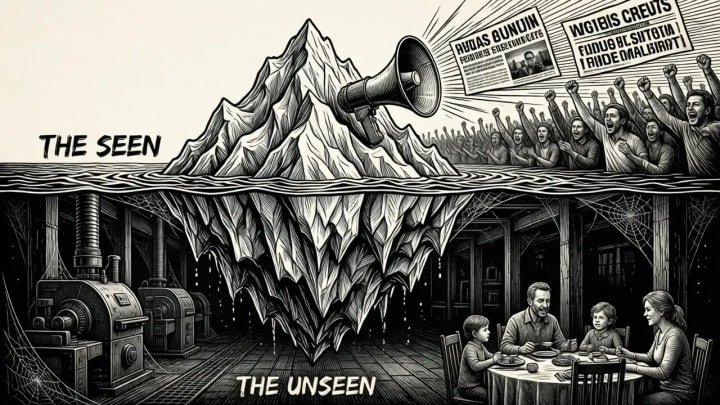
A Toll on Prosperity
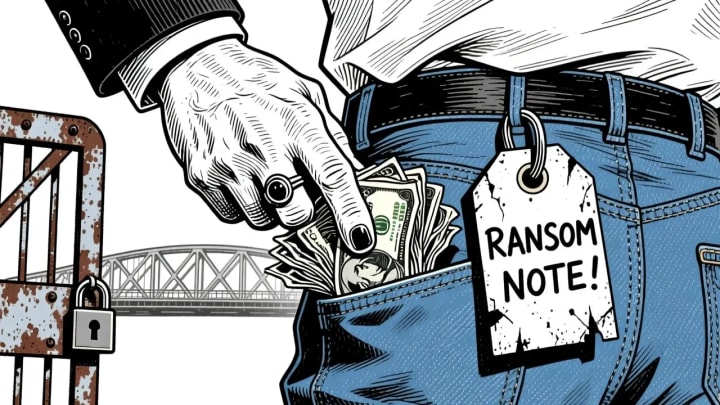
Stop looking at a closed border as a sign of a “strong nation.” A locked gate isn’t a shield; it’s a ransom note written in the ink of your own prosperity. It’s a declaration that your freedom to trade and move is just a chip to be gambled at a table you weren’t even invited to sit at.
Next time you hear a leader brag about “blocking the opening” of a path between people, stop looking for the master negotiator. Instead, look for the uninvited third party reaching into your pocket to fund his next political play. The bridge belongs to the people who use it to create value, not the people who happen to hold the keys this year.
About the Creator
Cher Che
New media writer with 10 years in advertising, exploring how we see and make sense of the world. What we look at matters, but how we look matters more.
JH Overton-Bey: An Atlanta Homeownership Program Model Built for Real Families
Atlanta’s path to homeownership can be especially steep for low- to moderate-income households, not because people lack drive, but because the process demands everything at once. Buyers need upfront cash, a lender-ready credit profile, clean documentation, and the ability to make fast decisions in a market that can shift week to week. Community programs make the biggest difference when they remove friction across the entire journey rather than offering a single class or a one-time grant. This whole-pathway approach reflects the kind of practical, protective community standard often associated with JH Overton-Bey: clear steps, clear guardrails, and support that lasts beyond closing.
By Jakim Edward Pearson3 days ago in Journal
The Tango Connection
I suppose I've become a writer so I wouldn't bore everyone to death telling them my stories. Reading them is reading. Not the same. There's rhythm. And timing and, most importantly, drama and suspense. Unless you have tremendous magnetism and an undeniable stage presence, there's no way you can engage an audience the way you can by writing your story. That's my opinion.
By Rene Volpi 5 days ago in Beat



Comments
There are no comments for this story
Be the first to respond and start the conversation.