
Race to the White House: An In-Depth Look at Who Holds the Lead in the 2024 Presidential Election
Race to the White House: An In-Depth Look at Who Holds the Lead in the 2024 Presidential Election

Introduction
The 2024 U.S. Presidential election is nearing its conclusion, and the contest between Vice President Kamala Harris, representing the Democratic Party, and former President Donald Trump, representing the Republicans, is one of the most closely watched races in recent history. This article examines the state of the race, with a focus on key issues, swing state dynamics, and the pivotal role of the electoral college. As election day looms, polls suggest a tight race with both candidates focusing on battleground states and core issues likely to shape the final outcome.
A Polling Overview: Kamala Harris Holds a Narrow Lead
Recent polling averages indicate that Kamala Harris has a slight edge over Donald Trump in national head-to-head surveys. However, national polls only provide a limited perspective since the election's outcome ultimately relies on the electoral college system. This system assigns a specific number of electoral votes to each state, with 270 votes required to secure the presidency
FINANCIAL TIMES
. In such a setup, both candidates are prioritizing battleground states, where victory could tip the scales decisively.
Key states such as Pennsylvania, Arizona, Georgia, Michigan, and Wisconsin are expected to play a critical role in determining the winner. Polls in these swing states show narrow margins, with both candidates running almost neck and neck. While Harris leads in certain demographic groups, including urban voters, women, and younger populations, Trump maintains a strong following among rural and working-class voters, particularly in the Midwest and Southern states.
Swing States and Their Unique Challenges
The swing states present unique challenges and opportunities for both candidates. In states like Arizona and Georgia, which have traditionally leaned Republican but have recently seen a shift towards Democratic candidates, Harris and her team are emphasizing progressive issues, including healthcare access and reproductive rights. These issues resonate with suburban voters and younger demographics, particularly in the wake of the 2022 Supreme Court decision that overturned Roe v. Wade, galvanizing voters on both sides of the abortion debate
VANITY FAIR
.
Trump’s strategy, on the other hand, is to rekindle enthusiasm among his core supporters by focusing on issues like immigration reform, national security, and a return to what he calls “American greatness.” His rallies often emphasize economic concerns, appealing to voters worried about inflation and job security. In states like Pennsylvania and Michigan, both campaigns have prioritized voter turnout, investing heavily in get-out-the-vote efforts. As a result, the outcome in these states may come down to which campaign can mobilize its base most effectively.
Campaign Strategies and Final Pushes
In the final days leading up to the election, both Harris and Trump have been intensifying their campaign efforts. Harris is concentrating on in-person and virtual engagements in swing states, targeting specific voter blocs and addressing concerns related to healthcare, social equity, and climate change. Her campaign has been particularly active in Hispanic communities in Arizona and Florida, underscoring the Democrats' recognition of the growing influence of Latino voters.
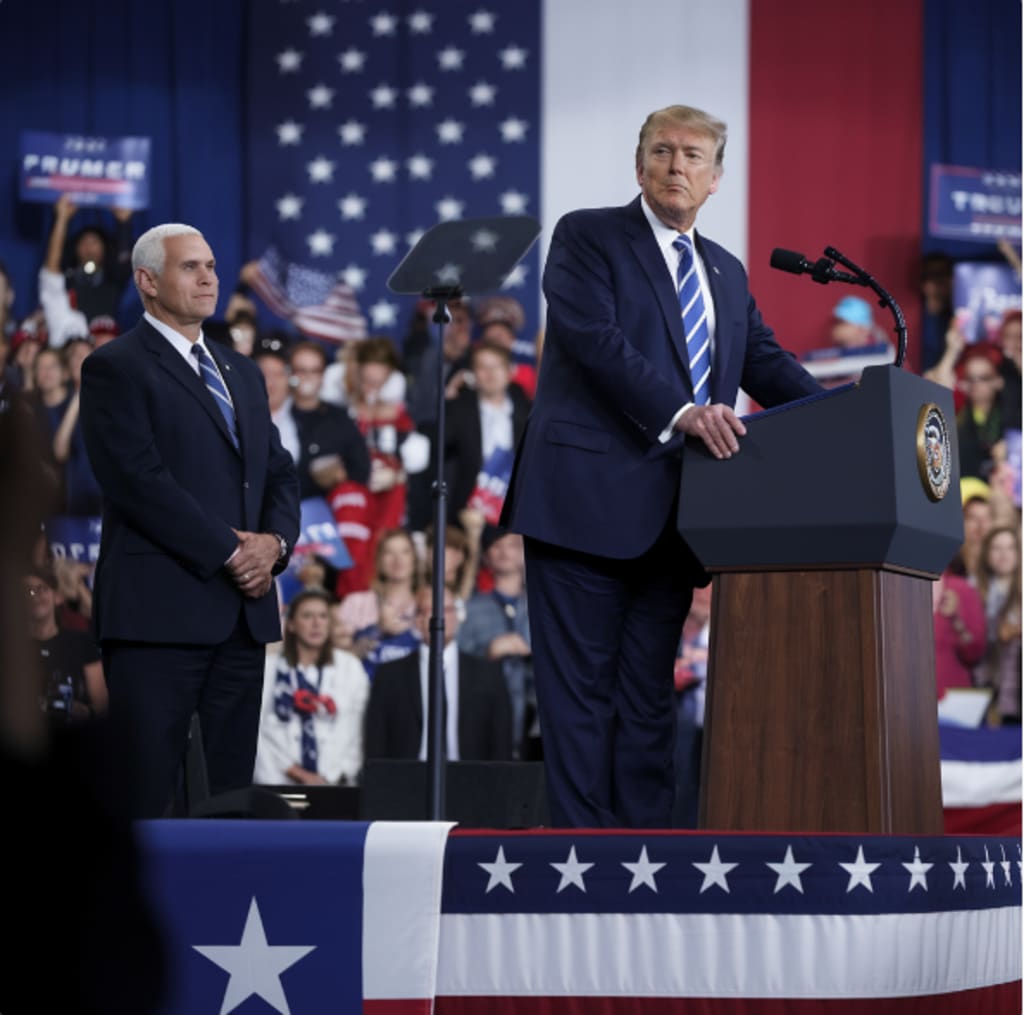
Trump’s campaign strategy has relied on large rallies in Republican strongholds, where he has reiterated promises of tax cuts and deregulation aimed at bolstering American businesses. His “America First” approach appeals to a base that values traditional conservative principles, and he has also garnered support from some independent voters who feel dissatisfied with the current administration’s economic policies. Trump’s rallies, which often draw large, enthusiastic crowds, serve both as a rallying point for his supporters and a visible display of his continued influence within the Republican Party.
The Role of Key Issues in Shaping Voter Opinion
While the economy has historically been a top concern for voters, the 2024 election has seen several additional issues rise to prominence. For many Democrats and independents, reproductive rights and healthcare access have become defining concerns. Harris and the Democrats are capitalizing on these issues, highlighting policies that aim to protect women’s rights and improve healthcare affordability and accessibility.
On the other hand, Trump has prioritized national security, border control, and the economy, positioning himself as a leader capable of delivering stability and prosperity. His campaign frequently highlights what he calls the “failures” of the Biden administration, attributing inflation and other economic challenges to current Democratic policies. By appealing to voters who feel disenfranchised or economically insecure, Trump’s campaign is working to re-energize support among his base and appeal to undecided voters who may be influenced by economic concerns.
The Impact of Electoral College Mechanics
The electoral college, a unique feature of U.S. elections, adds an extra layer of complexity to the race. Each state awards a certain number of electoral votes, and most states use a winner-takes-all system, with the exception of Maine and Nebraska, which allocate votes by congressional district. This system means that winning large, populous states like Texas, Florida, and Pennsylvania is crucial for both campaigns
FINANCIAL TIMES
.In this system, the candidate who wins the popular vote in each state secures all of that state’s electoral votes, making swing states disproportionately influential. For instance, while national polls might show Harris with a lead, Trump could still win the presidency if he captures enough of the key swing states. This focus on battleground states has intensified campaign efforts in these areas, with both candidates investing heavily in local advertising and grassroots mobilization.
Conclusion: A Nation on Edge Awaiting the Final Result
As voters head to the polls, both Harris and Trump are prepared for a tight race that may not yield an immediate victor on election night. Analysts predict that close margins and high mail-in voting rates in key states could delay the announcement of a winner. Additionally, both campaigns are reportedly prepared for potential legal challenges if the results are close, particularly in states where recent changes to voting laws have sparked controversy.
The 2024 election reflects the deep divisions within the U.S. electorate, with each side championing starkly different visions for the country’s future. Regardless of the outcome, this election is likely to be one of the most significant in recent history, shaping the nation’s trajectory on critical issues such as healthcare, reproductive rights, immigration, and economic policy. As Americans await the final count, the importance of every vote—and the powerful influence of swing states—cannot be overstated.
About the Creator
Keep reading
More stories from mariam elghazaly and writers in Journal and other communities.
Harris and Trump Hold Final Campaign Events on the Eve of Election Day
As Election Day 2024 arrives, Democratic candidate Kamala Harris and Republican candidate Donald Trump held their final campaign rallies, each making a strong closing pitch to voters in crucial swing states. With the nation sharply divided, both candidates pursued distinct strategies in their messaging, aiming to mobilize their supporters, sway undecided voters, and secure victory in one of the most hotly contested elections in recent history.
By mariam elghazalyabout a year ago in Journal
The goals I did not achieve
Every writing goal I made for the year is a wash. It has been this way for a while, but I think it's important to be open about my failures and the reality of how life can get in the way. This is especially true considering the several times I have posted on Vocal about my writing goals, how I was changing my approach, and where I was hoping to be for the upcoming year. I will probably do that again in a couple months, but for now, it is time to acknowledge where I am today.
By Kay Husnick24 days ago in Journal
Why SEO Became the Quiet Salesperson Every Car Dealership Needs
I still remember the day our showroom was spotless, the cars were polished, and the sales team was ready—but hardly anyone walked in. It didn’t make sense at first. We had competitive pricing, trusted brands, and years of experience. Yet the phone barely rang. That moment forced me to confront a truth many car dealers avoid: buyers no longer start their journey on the lot. They start online.
By Anthony Rodgers5 days ago in Journal
Wild Card Weekend Recap: What Happens Now?
I think I figured out why I love Wild Card Weekend so much. It's because it's the first playoff anything of the calendar year. The NFL season starts in the fall, and once upon a time, the champion was crowned either on or slightly before New Year's. The evolution of the NFL schedule has resulted in the playoffs starting just into the New Year, and currently, the final week of the season falls on the first weekend of the New Year, with Wild Card Weekend coming a week after that. So yes, chronologically, the NFL's Wild Card Weekend serves as the first playoff anything of the calendar year.
By Clyde E. Dawkins7 days ago in Unbalanced



Comments
There are no comments for this story
Be the first to respond and start the conversation.