
Putin's Long Game: How the Russian President Beat a Lot of Americans Presidents — With Trump as the Latest
Analysis By Azizul Hakim
Vladimir Putin, now a veteran of over two decades at Russia’s helm, has played a consistent, patient, and ruthless game on the world stage. Across the terms of multiple U.S. presidents — from Bill Clinton through Donald Trump — the Kremlin’s master tactician has demonstrated a remarkable ability to outmaneuver his American counterparts. Donald Trump, far from an exception, may simply be the most conspicuous example of Putin’s strategy at work.
Strategic Patience as a Pattern When Putin first assumed power in 1999, U.S. policymakers largely viewed Russia as a diminished power — still reeling from the collapse of the Soviet Union. Russia was primarily viewed by President Bill Clinton in terms of NATO expansion, nuclear non-proliferation, and economic reform. Putin, on the other hand, saw an opportunity: Russia could quietly regain its strength while the United States focused on its "unipolar moment." During George W. Bush and Putin took full advantage of America's concerns following 9/11. Washington's attention was diverted by the war on terror, particularly the invasion of Iraq. Putin exploited this distraction to solidify control at home — neutering independent media, jailing political opponents, and re-centralizing power in the Kremlin. When Bush famously remarked that he had "looked into Putin’s soul" and "found him trustworthy," Putin had already begun setting the foundation for Russia’s more assertive global posture.
Obama and the Illusion of Reset
The "Reset," a diplomatic effort to repair ties between the United States and Russia, began under Barack Obama's leadership. It appeared to be fruitful at first: Russia cooperated on Iran sanctions and arms reduction agreements were signed. Yet beneath the surface, Putin continued to work towards strategic goals that directly challenged U.S. influence.
The most glaring manifestation came with the 2014 annexation of Crimea and the destabilization of eastern Ukraine. Despite widespread Western condemnation and sanctions, Putin’s move decisively altered the post-Cold War European order. Obama, facing domestic reluctance for another foreign entanglement, responded cautiously. Putin successfully gambled that the U.S. would avoid direct confrontation — and he was right.
The "reset" crumbled, but Putin had already achieved a major territorial and psychological victory, demonstrating to both allies and adversaries that Russia was back.
Trump: The Most Egregious Example
Donald Trump's presidency offered Putin perhaps his clearest opening. Trump’s personal admiration for strongman leadership and his skepticism towards traditional U.S. alliances like NATO played directly into Kremlin interests.
Throughout his term, Trump’s rhetoric often undermined U.S. allies while expressing an almost deferential tone toward Putin. Despite overwhelming evidence from U.S. intelligence agencies that Russia had interfered in the 2016 election, Trump publicly questioned their findings, even standing alongside Putin in Helsinki to suggest he found the Russian leader more credible than his own officials.
Recent revelations demonstrate that Trump was willing to offer a peace plan for Ukraine that was almost entirely in line with Russian goals, such as the recognition of Russia's territorial gains and the exclusion of Ukraine from NATO. According to reporting, Putin saw Trump as someone he could easily "tap along," playing on Trump's need for personal validation and quick "wins" without substantial policy depth.
Trump’s dealings ultimately emboldened Putin. Russia expanded its role not only in Eastern Europe but also in Syria, Africa, and the Arctic during Trump's tenure. U.S. global influence decreased, alliances became strained, and Russia expanded its role. A Broader Strategy
Putin's success over successive American presidents stems from a few consistent tactics:
- "Divide and Conquer": Putin tirelessly attempts to sever Western alliances. Whether through disinformation campaigns, political funding, or military pressure, he seeks to weaken NATO and the European Union from within.
- **Strategic Opportunism:** Putin waits for times when the West is distracted, divided, or without a leader before acting from a position of strength. His interventions in Georgia (2008), Ukraine (2014, 2022), and Syria (2015) occurred at times when the leadership of the United States was either reluctant or preoccupied. - **Psychological Leverage**: Putin's past as a KGB agent gives him a keen awareness of his own flaws. From Bush’s trust, to Obama’s caution, to Trump’s vanity, Putin has consistently exploited the personal blind spots of U.S. leaders.
- **Minimal Concessions, Maximum Gains:** Rarely offering real compromises, Putin tends to agree to diplomatic talks that delay action without surrendering any strategic advantage — a tactic perfected over years of negotiation.
The Road Ahead
The effects of Putin's maneuvering are still evident today, as Russia's war in Ukraine drags on. Trump’s continued influence over a large segment of American politics poses a potential future boon for Moscow. Should Trump or a Trump-aligned figure return to power, analysts warn that Russia could find itself facing even less U.S. resistance.
Putin's long game, on the other hand, does not appear to be slowing down. He has bet that American political polarization, war-weariness, and shifting global priorities will continue to offer him openings.
Across six U.S. presidents, Vladimir Putin has proven himself not necessarily stronger — but far more patient, calculating, and relentless. As Trump’s case shows, the Russian leader’s true strength lies not in overpowering the United States, but in outlasting .
About the Creator
Keep reading
More stories from Azizul Hakim and writers in Journal and other communities.
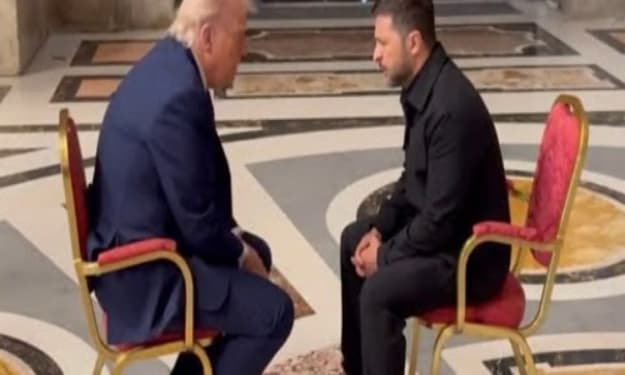
Trump meets Zelensky, then threatens new sanctions against Russia
ROME - In a remarkable instance of informal diplomacy, former U.S. President Volodymyr Zelensky of Ukraine and President Donald Trump had a private conversation on Saturday, just before Pope Francis' funeral at St. Peter’s Basilica. The encounter, lasting approximately 15 minutes, took place against the backdrop of renewed tensions over the U.S. role in brokering an end to Russia’s war in Ukraine.
By Azizul Hakim9 months ago in Journal
Exploring Dubai on a Budget: Affordable Things to Do
Let's be real, Dubai has a reputation for being a playground for the wealthy. But scratch beneath the gold-plated surface, and you'll discover a city brimming with surprisingly affordable adventures. After living here for three years and chatting with locals who know where the real value lies, I've learned that experiencing Dubai's magic doesn't require an endless wallet.
By Silverstone Rent a Carabout 7 hours ago in Journal



Comments
There are no comments for this story
Be the first to respond and start the conversation.