
Precision in Play: Engineering Safety in Children's Amusement Rides
Designing Amusement Rides That Balances Thrill with Child Safety Through Engineering Precision
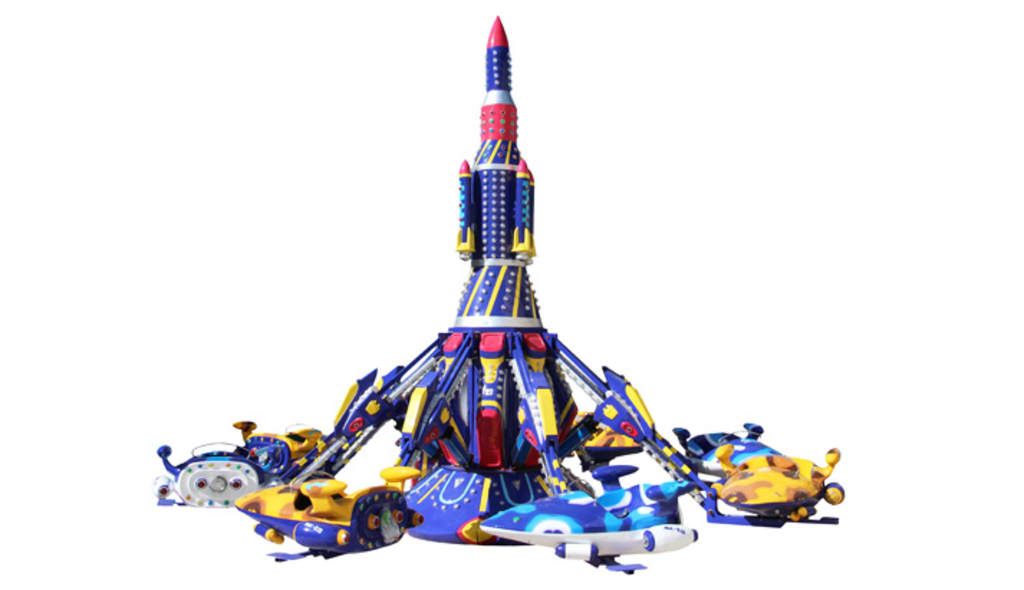
Children’s amusement equipment must meet rigorous safety criteria to ensure a secure environment without compromising the essence of play. Safety is not incidental—it is engineered. Whether designing a wacky worm roller coaster or a self-control plane, the process must reflect an uncompromising commitment to accident prevention, user appropriateness, and operational resilience.
Human-Centric Design and Development
Understanding the anatomical and cognitive limits of children is foundational in the design of amusement equipment. Mechanical systems and structures should not only appeal to the user’s imagination but also conform strictly to physiological safety parameters.
Pediatric Ergonomics
Control panels, seat dimensions, access points, and restraints must align with child-specific anthropometric data. This ensures safe interaction and minimizes the risk of improper use. For example, seating in a self-control plane must accommodate varying torso lengths while providing sufficient lateral support to prevent shifting during motion.
Design should also account for the asymmetrical movement and spontaneous behavior typical of younger users, reducing dependence on user predictability.
Age Segmentation
Equipment must target specific developmental stages. A ride like the wacky worm roller coaster, which involves gentle acceleration and curved tracks, is suitable for children aged 3–8. However, its restraint system, visual stimuli, and entry steps must be tailored to that age range, minimizing overexertion and eliminating entrapment risk.
Clear demarcation of age-appropriate zones within the facility also helps reduce cross-age misuse, a common factor in injury statistics.

Mechanical Safeguards and Load Tolerances
Structural integrity and dynamic safety mechanisms form the core of engineering design for ride systems. Every mechanical interaction must withstand not just calculated loads, but erratic usage as well.
Structural Verification
Frameworks must be validated through finite element analysis (FEA) to ensure they can endure both static and dynamic stresses over extended operational periods. High-stress points, such as pivot joints in a self-control plane or rail curves in the wacky worm roller coaster, must be reinforced with high-tensile alloys and redundant welds.
Corrosion-resistant finishes, such as powder coatings or anodized layers, preserve mechanical properties while minimizing maintenance frequency.

Load Distribution and Redundancy
Weight distribution in rotating or elevating rides must be equalized to avoid torsional stress and mechanical imbalance. Redundant systems—such as dual hydraulic circuits or secondary braking mechanisms—are necessary to provide fallback control in case of component failure.
Seat restraints, especially in motion-based rides, must utilize three-point or over-the-shoulder configurations with automatic locking to accommodate a range of motion without compromising security.
Motion Regulation and Ride Dynamics
Safe amusement rides must produce predictable, controllable movement. Even interactive systems like the self-control plane, which allow riders to adjust vertical position, require pre-defined operational thresholds.
Speed and Force Calibration
Acceleration, deceleration, and turning radii must be restricted within biomechanical safety limits. For example, g-force exposure on a wacky worm roller coaster must remain well below thresholds that could strain the neck or spine of a child.
Dynamic simulations during the design phase help identify areas of excessive stress or abrupt transitions, which can then be modified to reduce strain on the user.
Interactive Motion Constraints
Self-regulating features should never allow unrestricted movement. In the self-control plane, the degree of vertical elevation must be limited through mechanical stops or electronic limiters, ensuring that overcorrection or sudden descent is impossible.
Sensors should continuously monitor angle, speed, and user input. Any deviation from operational norms should trigger automatic ride leveling or shutdown sequences.
Hazard Elimination and Preventative Design
A significant portion of safety design lies in identifying and neutralizing potential hazards before they manifest during use.
Entrapment and Protrusion Prevention
All access points, seats, and surrounding barriers must be designed to eliminate head and limb entrapment risks. Slot sizes and openings must avoid intermediate dimensions (between 89 mm and 230 mm), which pose the greatest entrapment danger.
Fasteners should be recessed or covered. Protruding hardware or decorative elements, even those considered minor, can cause abrasion or impact injury during high-speed movement.
Pinch and Shear Point Management
Moving components must include guards or physical barriers to block access to pinch points. Gear assemblies, rotating arms, and lifting platforms should have minimum clearance tolerances and encapsulation systems to prevent incidental contact.
Additionally, all emergency stop mechanisms must be easily accessible to operators and equipped with fail-safe redundancies.
Environmental Controls and Operational Safety
Environmental conditions can significantly influence equipment performance and user safety, particularly in outdoor installations.
Weatherproofing and Material Resilience
Outdoor rides, including the wacky worm roller coaster, must be engineered for UV resistance, moisture tolerance, and thermal expansion. Polymeric components should include UV inhibitors, and metal surfaces must resist oxidation and galvanic corrosion.
In areas prone to high humidity or precipitation, drainage channels and anti-slip textures must be integrated into boarding platforms and queuing zones.
Operational Safeguards
All amusement systems should be equipped with programmable logic controllers (PLCs) to enforce operation limits. These digital systems monitor pressure, temperature, voltage, and speed, halting operations if anomalies arise.
Ride operators should follow pre-launch checklists and post-operation inspections to identify mechanical wear, obstruction, or abnormal sound patterns—early indicators of impending failure.
Emergency Systems and Recovery Protocols
Contingency design ensures that if a malfunction does occur, it can be managed swiftly and with minimal risk to passengers.
Automatic Shutdown and Manual Overrides
Automated control systems must include emergency stop buttons that cut power and activate electromagnetic or hydraulic brakes. For rides like the self-control plane, manual descent mechanisms must allow safe evacuation without electrical power.
Secondary communication systems, such as intercoms or signal beacons, enable operators and passengers to report distress or initiate rescue procedures.
Staff Training and Scenario Simulation
Operators should undergo regular scenario-based drills that replicate potential emergencies: power loss, passenger distress, restraint failure, or mechanical jamming. These rehearsals ensure readiness and procedural discipline during actual incidents.
Conclusion
Safety in children's amusement equipment is not a static compliance exercise but a dynamic engineering discipline. It involves iterative design, material innovation, motion analysis, and stringent risk management. Whether managing the predictable track flow of a wacky worm roller coaster or the user-controlled ascent of a self-control plane, every system must be designed with zero-failure tolerance.
The goal is singular—maximize enjoyment without compromising safety. Through technical excellence and disciplined operational frameworks, amusement equipment can provide both exhilaration and assurance, setting industry standards that prioritize the wellbeing of its most vulnerable users.
About the Creator
Beston Amusement Rides
As a leading amusement facility manufacturer, we provide safe and interesting amusement equipment to customers around the world, including roller coasters, Ferris wheels, pirate ships and so on.
Website:https://bestonamusementrides.com/
Keep reading
More stories from Beston Amusement Rides and writers in Journal and other communities.
Beyond Gravity: Engineering Principles of the Pendulum in Amusement Rides
Introduction The sensation of weightlessness. The sweep of motion. The calculated thrill. These elements define the pendulum in the realm of amusement park rides—a structure designed not merely for fun, but engineered with a precision that dances at the edge of gravitational mechanics. Far from mere spectacle, pendulum rides are a case study in applied physics, structural engineering, and human perception.
By Beston Amusement Rides11 months ago in Journal
The Invisible Network Powering Our Digital Lives
At any moment, billions of messages, videos, and transactions travel across the world in the form of light. Not through satellites or wireless towers alone, but through hair-thin strands of glass buried underground and stretched across oceans. These fiber optic cables form the invisible highways of our digital lives, quietly carrying everything from streaming movies to AI-generated answers.
By Andrew Hamilton6 days ago in Journal
Pet Calming Products Market: The $2B Anxiety Solution
The thunder rolls across the sky. Your dog’s ears flatten instantly. Within seconds, the pacing begins — nails tapping anxiously across the floor, tail tucked, eyes wide with confusion. You kneel beside them, whisper reassurance, but the storm outside isn’t the only trigger. Fireworks, travel, separation, loud noises — modern life can overwhelm even the most loyal companion.
By Harvey Specter6 days ago in Journal




Comments
There are no comments for this story
Be the first to respond and start the conversation.