
Pope Leo XIV Before The White Smoke
Life Of Papal Leo XIV

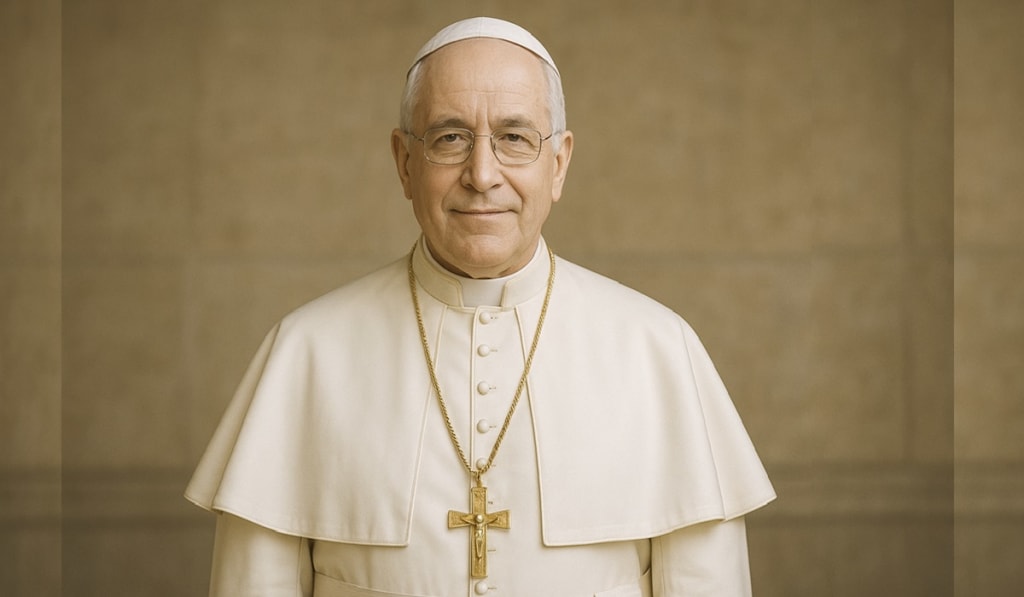
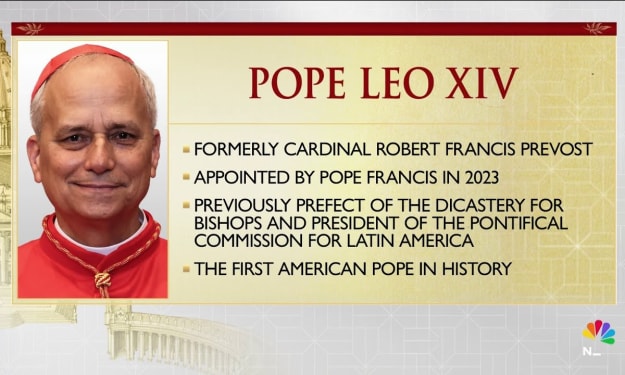
Before the white smoke billowed above the Sistine Chapel and his name echoed across St. Peter’s Square, Robert Francis Prevost—now Pope Leo XIV—lived not with grandeur but with grit, grace, and a sense of grounded service that defies the stereotypes of power.
This was not a man of Vatican corridors and silk cassocks. Not yet. This was a man of mud-bricked Peruvian parishes, of coffee-stained theological tomes, of dusty seminaries tucked in mountain valleys. And if you want to understand Pope Leo XIV, you must begin not with the gold ring of the Fisherman, but with the calloused hands of a missionary priest.
Let’s take a walk through the world he walked.
The Rhythm of Humility: His Early Years in Chicago
Born on September 14, 1955, Robert Prevost’s story begins in Dolton, Illinois—a place not particularly known for producing pontiffs. The south side of Chicago is a canvas painted in equal parts hope and hustle. And young Robert? He grew up in the kind of neighborhood where the Church wasn’t just a place for Sunday rituals—it was a sanctuary from the chaos of the world outside.
He played baseball in cracked lots. Ate Sunday dinners with family that valued faith over flair. And from a young age, he was the type who asked more questions than gave answers. Not because he wanted to rebel—but because he wanted to understand.
He was sharp. Smart. But never sharp-tongued. Teachers noticed. Priests mentored. His journey into the priesthood wasn’t born of divine lightning—it was born of steady, consistent exposure to the quiet holiness of ordinary people. He saw God in broken neighborhoods and bruised humanity. And that was enough to set him on his path.
The Augustinian Calling: Formation in Service
In 1977, he joined the Order of Saint Augustine. The Augustinians don’t shout. They don’t build empires. They build communities.
Robert chose this path not because it was glamorous, but because it was gritty.
He studied mathematics at Villanova. A discipline of logic. Of patterns. Of divine order.
And then? He pivoted into theology at the Catholic Theological Union in Chicago. He wasn’t content with knowing how the world works—he wanted to know why it exists at all.
He studied in Rome, earned his doctorate in Canon Law at the Pontifical University of St. Thomas Aquinas—yes, the Dominican school of thought—and balanced the academic with the pastoral. He wasn’t a priest buried in books. He was a priest who read people better than most read Scripture.
Peru: The Making of a Missionary Bishop
In 1985, when many of his peers were climbing ecclesiastical ladders in American dioceses, Robert Prevost boarded a plane to Peru. Let me put it bluntly: this was not a sabbatical in Florence. This was priesthood in the trenches.
Northern Peru in the 1980s was volatile—poverty, political instability, and the rise of the Shining Path. But Prevost didn’t flinch. He taught at the seminary in Trujillo. He led formation programs. He went into rural parishes where running water was a luxury and electricity, a rumor.
He didn't bring Western arrogance. He brought presence.
He learned Spanish fluently. Listened more than he preached. And in those dusty towns, where faith was as much survival as it was salvation, he became something few outsiders manage to become: trusted.
He lived simply. A room, a cot, a crucifix, and a stack of prayer books. His mornings began with prayer. His afternoons with people. His evenings with reflection.
He walked miles to visit sick parishioners. He negotiated peace between feuding families. He organized catechism classes under mango trees. His lifestyle was not clerical opulence—it was apostolic simplicity.
Returning to Lead, Reluctantly
In 1998, he was called back to Chicago to lead the Augustinians in the United States. He became Prior Provincial. It was a promotion—but if you asked him, it was a heavier cross.
Leadership came naturally to him. But ambition? He had none of it.
He served. Managed. Encouraged vocations. Strengthened education programs. Then, in 2001, he was elected Prior General of the entire Augustinian Order.
From Rome, he traveled constantly. Africa. Asia. Latin America. He visited Augustinian communities, not as a distant superior, but as a brother. While many Church leaders built castles of control, Prevost built bridges of trust.
His suitcase was always packed. His cassock was always wrinkled. His smile, always ready.
Back to Peru, Again
In 2014, Rome called again. Pope Francis appointed him Apostolic Administrator of Chiclayo, a diocese in northern Peru. And in 2015, he was made bishop.
Now think about this: here was a man who had lived with the people, gone back to his Order, led globally, and still said yes to going back to the margins.
He didn’t move into a bishop’s palace. He stayed close to the people. His meals were simple. His schedule was brutal. Masses. Confirmations. Pastoral visits. Ordinations. Workshops for priests.
He worked late. Slept little. And never turned down a coffee with a campesino.
The Antithesis of Prestige
Let’s cut to the core.
Robert Prevost never wore his collar like a crown. He wore it like a yoke.
He owned little. Lived lightly. He didn’t chase titles. The title chased him.
His lifestyle was monastic in its routine, missionary in its outreach, and deeply human in its heartbeat.
He was known to walk into kitchens, roll up his sleeves, and help serve soup at diocesan events. He was known to travel alone, with no entourage, driving his own modest car. He’d show up unannounced at parishes. Not to inspect. But to understand.
He had no Twitter. No PR team. His sermons weren’t viral. They were vital.
The Man the Cardinals Chose
When the conclave began, few saw him as a frontrunner. But they should have.
Because in a world screaming for authenticity, they chose the quiet man with a lion’s heart.
They chose a man whose lifestyle reflected the radical humility of Christ.
They chose Leo XIV.
Final Thought
Before the ring, before the red shoes, before the roar of “Habemus Papam,” there was a man in a village in Peru, washing the feet of the forgotten.
That is the man the cardinals elected.
And that is the man the world is about to meet.
About the Creator
Omasanjuwa Ogharandukun
I'm a passionate writer & blogger crafting inspiring stories from everyday life. Through vivid words and thoughtful insights, I spark conversations and ignite change—one post at a time.
Keep reading
More stories from Omasanjuwa Ogharandukun and writers in Journal and other communities.
Pope Leo XIV, All You Need TO Know About Him
Born Robert Francis Prevost on September 14, 1955, in Chicago, Illinois, Leo XIV's journey is a testament to the transformative power of faith and service. Raised in the suburb of Dolton, he was immersed in a diverse cultural milieu, with a heritage that includes Italian, French, and African-American roots. His early years were marked by academic excellence and a deep commitment to the Church, leading him to join the Order of Saint Augustine in 1977.
By Omasanjuwa Ogharandukun9 months ago in Journal
What are the top strategies for insurance compliance management in 2026?
Many insurers still rely on fragmented processes, manual reviews, and reactive controls; approaches that create blind spots, slow response times, and expose the business to regulatory and reputational risk. At the same time, digital distribution, AI-driven decision-making, and growing volumes of customer data are reshaping how insurance products are built, sold, and serviced.
By Fusion Business Solution P Limitedabout 5 hours ago in Journal


Comments
There are no comments for this story
Be the first to respond and start the conversation.