
PLC Integration for Smart Workshop Overhead Crane Operation
Enhancing Efficiency, Safety, and Automation in Modern Workshop Material Handling
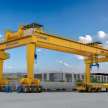

In modern industrial environments, the push toward automation and smart manufacturing has transformed traditional workshop operations. One area seeing significant technological advancement is overhead crane operation. Overhead cranes, essential for material handling in manufacturing, warehouses, steel plants, and precast concrete facilities, are increasingly being integrated with Programmable Logic Controllers (PLCs) to create smart, efficient, and safe lifting systems. PLC integration allows for precise control, automation, and real-time monitoring, fundamentally changing how cranes operate and how operators interact with them.
Understanding PLCs in Overhead Crane Systems
A Programmable Logic Controller (PLC) is a digital computer designed for industrial control applications. Unlike general-purpose computers, PLCs are built to handle harsh industrial environments, such as extreme temperatures, vibrations, and electrical noise. PLCs execute control programs to manage input signals from sensors and switches, make logic-based decisions, and control outputs like motors, brakes, and alarms. In overhead cranes, PLCs serve as the central brain, coordinating all crane functions, from hoist movement to trolley and bridge operation, while interfacing with safety devices and human operators.
Benefits of PLC Integration
Automation and Efficiency
PLC integration allows workshop overhead cranes to perform repetitive tasks automatically, improving workflow efficiency. For example, in a precast concrete workshop, a PLC can program a crane to follow a predefined route, lift concrete beams, and position them with millimeter-level accuracy. This reduces operator fatigue and ensures consistency in operations, which is particularly valuable in high-volume production settings.
Enhanced Safety
Overhead cranes can pose significant safety risks if operated manually without automation. PLCs enhance safety by integrating sensors, limit switches, and emergency stop systems. Anti-collision logic, load monitoring, and zone control can all be managed by PLCs, preventing collisions between cranes or between the crane and structures in the workshop. Additionally, overload protection functions ensure that the crane cannot lift more than its rated capacity, reducing mechanical stress and the risk of accidents.
Remote Monitoring and Diagnostics
Modern PLCs can communicate with Human-Machine Interfaces (HMIs), SCADA systems, or even cloud platforms. This enables real-time monitoring of crane operations, fault detection, and predictive maintenance. Maintenance teams can receive alerts for abnormal vibrations, motor overcurrent, or encoder misalignment, allowing proactive repairs and minimizing downtime. With Industry 4.0 principles, PLCs can also collect operational data for long-term analysis, improving future planning and operational efficiency.
Energy Efficiency
PLCs can optimize crane motor operation to reduce energy consumption. By implementing functions such as soft start, regenerative braking, and variable speed control, PLCs ensure smooth acceleration and deceleration of the crane, reducing energy spikes and wear on mechanical components. Energy-efficient operation not only lowers operational costs but also extends the service life of the crane.
Core Components of PLC-Integrated Crane Systems
Input Devices
PLC inputs include sensors, limit switches, encoders, proximity detectors, load cells, and operator commands from push buttons, joysticks, or touchscreens. Sensors detect crane position, speed, load weight, and environmental conditions, providing the PLC with the data required to make intelligent control decisions.
Output Devices
PLC outputs control motors, brakes, alarms, lights, variable frequency drives (VFDs), and other actuators. For example, the hoist motor’s speed and direction are precisely controlled by the PLC based on inputs from the operator and safety sensors.
Human-Machine Interface (HMI)
The HMI allows operators to interact with the crane system visually. Through the HMI, operators can monitor crane position, load weight, and operational status. Advanced HMIs provide graphical representations of the crane’s movements, alarm notifications, and automated operational sequences. They can also enable operators to switch between manual, semi-automatic, and fully automatic modes as needed.
Communication Networks
PLC integration often involves industrial communication protocols such as Modbus, Profibus, EtherCAT, or Ethernet/IP. These protocols allow PLCs to communicate with other factory automation devices, central control systems, or remote monitoring platforms, creating a connected smart workshop ecosystem.
PLC Functions in Smart Overhead Crane Operations
Positioning Control
Accurate positioning is critical for precise lifting operations. PLCs utilize encoder feedback to ensure the crane stops at exact locations. This capability is particularly important in applications such as assembly lines or loading/unloading docks, where precision directly impacts productivity and safety.
Load Management
By integrating load cells and monitoring hoist torque, PLCs can calculate the real-time load on the crane. The PLC can prevent overloading and maintain the crane within safe operational limits. Advanced systems can even adjust lifting speed based on the load to minimize swinging and ensure stability.
Anti-Sway and Synchronization
Load swinging is a common challenge in crane operations. PLCs use advanced control algorithms to reduce sway during lifting and positioning. For facilities with multiple cranes operating in proximity, PLCs can coordinate movements to avoid collisions and optimize workflow.
Fault Detection and Safety Interlocks
PLCs constantly monitor operational parameters and activate alarms or shut down the crane if unsafe conditions occur. This includes emergency stops, motor overload, limit switch violations, and abnormal motor temperature. Automated safety interlocks reduce human error and provide a safer working environment.
Automation and Preset Programs
PLCs enable cranes to execute preset operational sequences automatically. For instance, in a steel workshop, a crane can be programmed to pick up raw materials, move to the processing station, and return to the loading area without manual intervention. Automation reduces labor requirements and ensures consistent process quality.
Implementation Considerations
Compatibility with Existing Equipment
When integrating PLCs into existing cranes, compatibility with legacy motors, drives, and control circuits must be assessed. Some older cranes may require retrofitting with modern sensors and VFDs to fully leverage PLC automation.
System Redundancy and Reliability
For high-capacity heavy duty overhead cranes operating in critical facilities, system redundancy is important. Dual PLCs or backup power supplies ensure that operations can continue even if one controller fails.
Operator Training
PLC integration changes the role of crane operators from manual drivers to system supervisors. Adequate training is essential to ensure operators can manage automated sequences, respond to alarms, and understand the interface.
Scalability and Future-Proofing
Industrial facilities evolve over time, and crane systems should be designed to accommodate future expansions or upgrades. PLCs with modular I/O and open communication protocols make it easier to integrate additional sensors, cranes, or monitoring systems.
Case Studies and Applications
In modern precast concrete production workshops, PLC-integrated overhead cranes have revolutionized workflow efficiency. Cranes equipped with load monitoring, anti-sway control, and preset positioning programs have reduced product handling time, minimized damage to components, and enhanced worker safety. Similarly, in steel processing facilities, PLC-controlled cranes improve the precision of coil handling and plate positioning, reducing material wastage and downtime.
In warehouses and distribution centers, PLC integration enables automated gantry cranes to work in concert with automated storage and retrieval systems (AS/RS), optimizing inventory movement and throughput. The integration with centralized warehouse management systems ensures seamless coordination between material handling equipment and operational schedules.
Conclusion
PLC integration in workshop overhead cranes represents a major step toward smart manufacturing. By centralizing control, automating repetitive tasks, enhancing safety, and enabling real-time monitoring, PLCs transform traditional cranes into intelligent lifting systems capable of meeting modern industrial demands. While implementation requires careful planning, operator training, and consideration of existing infrastructure, the benefits—improved efficiency, safety, energy savings, and process reliability—make PLC integration an essential component of any forward-looking industrial facility. As factories continue to embrace Industry 4.0 technologies, PLC-integrated overhead cranes will play a pivotal role in shaping the future of automated, connected, and intelligent workshops.
About the Creator
Aicrane01
Welcome to the Aicrane Blog, your practical guide to lifting solutions. Discover articles covering overhead cranes, gantry cranes, winches, steel structures, boat lifts, and more.
Website: https://steelmillcranes.com/




Comments
There are no comments for this story
Be the first to respond and start the conversation.