
Planet Alien Life
Dimethyl Sulfide Detected: Could This Be a Sign of Alien Life on a Distant Planet?

Planet Alien Life: The Dimethyl Sulfide Enigma
The search for life beyond Earth has entered a new era, propelled by remarkable advances in astronomical observation and planetary science. At the heart of this quest lies the tantalizing possibility of detecting alien life on distant planets—an endeavor that hinges on identifying chemical signatures, or "biosignatures," in the atmospheres of exoplanets. Among these, dimethyl sulfide (DMS) has emerged as a molecule of extraordinary interest, offering both hope and controversy in the hunt for extraterrestrial biology.
The Promise of Dimethyl Sulfide
Dimethyl sulfide, or DMS, is a simple sulfur-containing compound with a distinctive marine scent familiar to anyone who has stood by the ocean. On Earth, DMS is produced almost exclusively by living organisms, particularly by marine phytoplankton—microscopic algae that thrive in the sunlit layers of our oceans. This biological exclusivity has made DMS a prime candidate as a biosignature: a chemical marker that, if detected in the atmosphere of a distant planet, could indicate the presence of life.
The significance of DMS as a biomarker was highlighted in scientific literature over a decade ago, with researchers noting that, unlike other atmospheric molecules such as methane or nitrous oxide, DMS has no known significant abiotic (non-biological) sources on Earth. Its detection in an exoplanet's atmosphere would, therefore, be a sensational clue in the search for alien life.
A Breakthrough on K2-18b
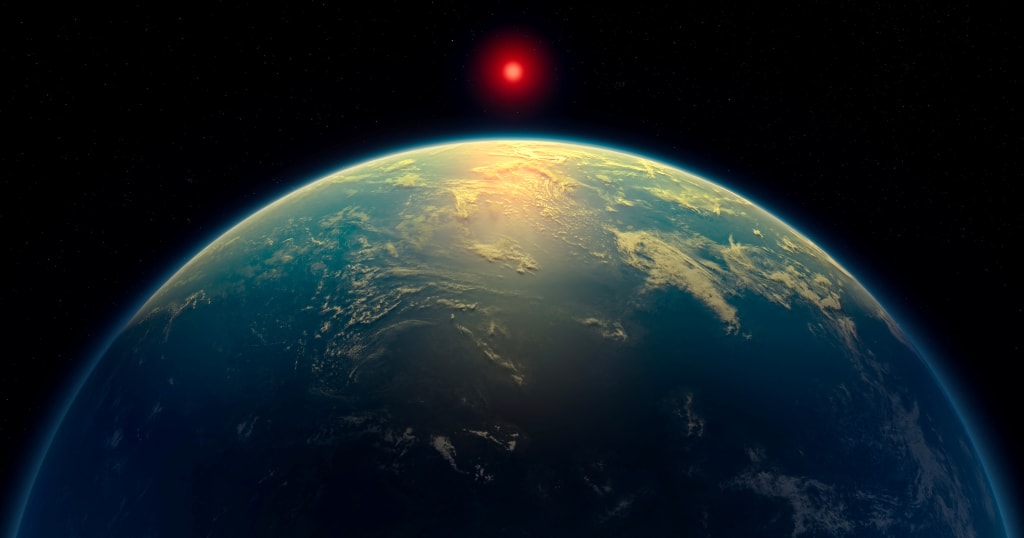
In a landmark series of observations, the James Webb Space Telescope (JWST) has provided what many scientists are calling the strongest evidence yet of possible life beyond our solar system. The focus of this excitement is K2-18b, a planet orbiting a star roughly 120 light-years from Earth. Using JWST's powerful spectroscopic capabilities, astronomers detected chemical fingerprints of DMS—alongside methane and carbon dioxide—in the planet’s atmosphere.

The presence of these gases, especially DMS, suggests that K2-18b may harbor conditions suitable for life, possibly even teeming with microbial organisms similar to Earth's phytoplankton. Lead researcher Professor Nikku Madhusudhan of the University of Cambridge described the findings as "transformational," marking a new era in observational astrobiology. The detection of methane and carbon dioxide further hints at the possibility of a water ocean on K2-18b, increasing its potential habitability.
"This is a transformational moment in the search for life beyond the solar system, where we have demonstrated that it is possible to detect biosignatures in potentially habitable planets with current facilities. We have entered the era of observational astrobiology."
— Professor Nikku Madhusudhan, University of Cambridge
The Cautionary Tale of Biosignatures
Despite the excitement, scientists urge caution. The detection of DMS on K2-18b is not yet definitive, and more data is needed to confirm its presence. Even more importantly, recent research has begun to challenge the assumption that DMS is an unambiguous sign of life.
Laboratory experiments have shown that DMS and other sulfur-based molecules can, under certain conditions, be synthesized abiotically—that is, without the involvement of living organisms. For example, on worlds with thick organic hazes, such as Saturn’s moon Titan, ultraviolet radiation could trigger chemical reactions that produce DMS in the absence of biology. If Titan were orbiting in the Sun’s habitable zone, distant observers might detect DMS and mistakenly infer the presence of life, even though the moon is inhospitable to life as we know it.
Adding to this complexity, the recent discovery of DMS on a cold, lifeless comet has provided the first direct evidence of an abiotic source for this molecule. This finding has prompted scientists to reconsider the reliability of DMS as a definitive biosignature and underscores the importance of understanding all possible chemical pathways that could produce such molecules in alien environments.
"You need to look into all sorts of abiotic sources for interesting chemical compounds."
— Tim Lichtenberg, Planetary Astronomer
The Evolving Landscape of Astrobiology
The debate over DMS illustrates the broader challenges facing astrobiologists. While complex molecules like chlorophyll would be ideal biosignatures, their spectral fingerprints are faint and difficult to detect across interstellar distances. As a result, researchers have focused on simpler, more readily detectable molecules like DMS. However, as our understanding of planetary chemistry grows, so too does our awareness of the potential for "false positives"—abiotic processes that can mimic the chemical signatures of life.
This realization does not diminish the excitement of recent discoveries. Rather, it highlights the need for a nuanced and multidisciplinary approach to the search for alien life. The detection of DMS or similar molecules in an exoplanet’s atmosphere should be seen as a strong indicator of potential habitability—a clue that warrants further investigation, but not yet a conclusive proof of life.
The Path Forward: From Clues to Confirmation
The search for alien life is unlikely to be marked by a single, dramatic "eureka" moment. Instead, scientists anticipate a gradual accumulation of evidence, as multiple candidate planets are found to possess atmospheric markers consistent with biological activity. Over time, as more biosignatures are detected and our understanding of planetary chemistry deepens, confidence in the existence of extraterrestrial life will grow.
Future missions and telescopes, equipped with even more sensitive instruments, will play a crucial role in this process. They will help distinguish between biological and abiotic sources of key molecules, refine our models of planetary atmospheres, and perhaps one day provide the definitive evidence that we are not alone in the universe.
Conclusion: A New Era Dawns
The discovery of dimethyl sulfide in the atmosphere of K2-18b represents a watershed moment in the search for alien life. It is a testament to the power of modern astronomy and the enduring human quest to understand our place in the cosmos. While the road ahead is fraught with scientific challenges and philosophical questions, the detection of DMS has brought us one step closer to answering one of humanity’s oldest and most profound mysteries: Are we alone?
As we continue to scan the skies for the faint chemical whispers of life, each new discovery brings us closer to the day when the existence of alien life moves from the realm of speculation to that of scientific fact. Until then, the enigma of dimethyl sulfide will remain at the forefront of astrobiology—a molecule that embodies both the promise and the complexity of the search for life on alien planets
Disclaimer:
This article was generated by AI for informational purposes.
About the Creator
Jack Brel
At Vocal Media, I am excited to be a part of a platform that values creativity and original content. I am confident that my skills and experience will enable me to create impactful campaigns and bring value to the Vocal Media community




Comments (1)
Fascinating take on life beyond Earth.