
Dollar Drops With US Futures on Tariff Uncertainty: Markets Wrap
Trade tensions, shifting rate expectations, and investor caution send mixed signals across global markets
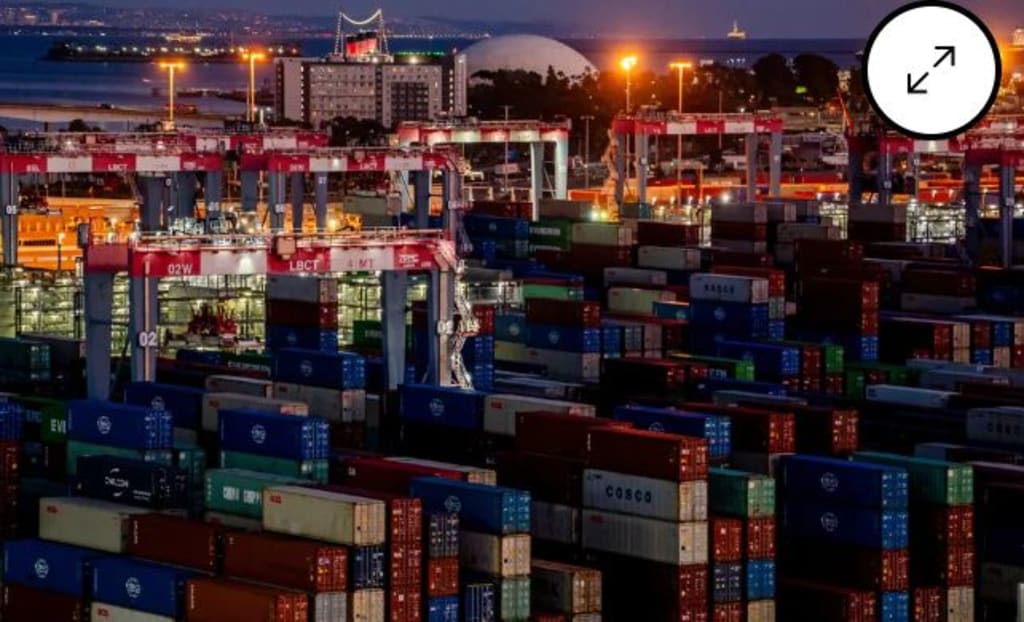
Global financial markets opened the week on uneasy footing as the U.S. dollar slipped and stock futures wavered amid renewed uncertainty over tariffs. Investors, already navigating a fragile economic landscape, are increasingly sensitive to policy signals that could disrupt trade flows, corporate margins, and inflation trajectories.
Currency moves, equity futures, and bond yields collectively reflected a market searching for direction. The drop in the dollar was not dramatic, but it carried symbolic weight: it suggested investors were adjusting expectations about growth, monetary policy, and geopolitical risk simultaneously.
Trade Policy Returns to Center Stage
Tariffs have long been one of the most unpredictable forces shaping market sentiment. Even the possibility of new trade barriers can influence corporate forecasts, supply chain strategies, and investor positioning.
Recent discussions around potential tariff adjustments created fresh uncertainty. Markets dislike ambiguity more than bad news, and unclear timelines or scope can trigger defensive behavior across asset classes.
Companies reliant on global supply chains—particularly manufacturing, technology, and consumer goods—are especially vulnerable. Higher import costs can squeeze margins, while retaliatory measures can limit export opportunities. As a result, traders often react quickly to tariff headlines, even before policies are finalized.
Why the Dollar Weakened
The U.S. dollar typically strengthens during periods of risk aversion. However, this time the currency softened, suggesting investors were reassessing the U.S. growth outlook rather than simply fleeing risk.
Several forces contributed:
Expectations that tariffs could slow economic momentum
Shifting assumptions about interest rate cuts
Increased demand for other major currencies as diversification plays
Currency markets are forward-looking. If tariffs threaten corporate earnings or consumer spending, traders anticipate weaker economic data ahead. That expectation can reduce support for the dollar, particularly if other regions appear relatively stable.
US Futures Signal Hesitation
Equity futures moved unevenly, highlighting a market caught between optimism about resilient earnings and concern about policy shocks.
Technology stocks, which have driven much of the market’s gains, are sensitive to trade dynamics because of global supply chains. Industrial and retail sectors face similar exposure.
Futures do not necessarily predict the day’s closing direction, but they reveal mood. The current mood can best be described as cautious rather than bearish. Investors are not abandoning risk assets—they are demanding clearer signals before increasing exposure.
The Interest Rate Layer
Monetary policy remains the most powerful market driver. The intersection between tariffs and interest rates creates a complicated narrative.
Tariffs can push inflation higher by raising import prices. But they can also slow growth by reducing trade activity. That tension leaves policymakers balancing conflicting pressures.
Attention remains fixed on the next moves from the Federal Reserve, whose messaging shapes currency markets as much as economic data does. If trade uncertainty threatens growth, expectations for rate cuts may rise, weakening the dollar further. If tariffs fuel inflation, rate cuts could be delayed.
This policy ambiguity amplifies market volatility.
Bond Markets Reflect Mixed Signals
Treasury yields moved within a narrow range, another sign of indecision. Bond investors appear unsure whether tariffs represent an inflation shock or a growth shock.
The U.S. Department of the Treasury sits at the center of this dynamic because government borrowing costs influence everything from mortgage rates to corporate financing. Even small yield shifts can ripple across the economy.
When yields fall, markets often signal concern about growth. When they rise, inflation fears dominate. The current sideways movement suggests investors see both risks simultaneously.
Corporate Strategy in a Tariff Environment
For companies, tariff uncertainty complicates planning more than tariffs themselves. Businesses can adapt to higher costs if rules are clear. What they struggle with is unpredictability.
Executives may delay investments, adjust hiring, or diversify suppliers to manage risk. These defensive strategies can slow economic momentum over time.
Multinational corporations have increasingly embraced “regionalization”—producing closer to customers rather than relying on global networks. While this approach improves resilience, it can reduce efficiency and raise costs, feeding into broader inflation pressures.
Markets are beginning to price in this structural shift.
Global Ripple Effects
Trade uncertainty rarely stays confined to one country. Currency movements, commodity prices, and emerging market flows all respond.
A weaker dollar can support commodity prices because many resources are priced in U.S. currency. That dynamic can benefit exporters while increasing costs for importers.
Emerging markets face a complex mix: a softer dollar can ease debt burdens, but slower global trade can hurt growth. Investors must weigh these opposing forces, contributing to cautious positioning.
Investor Psychology: Waiting for Clarity
One of the defining features of modern markets is speed. Headlines trigger instant reactions across algorithms, institutional portfolios, and retail trading platforms.
But sustained trends require conviction. Right now, conviction is limited.
Investors are asking:
Will tariffs be broad or targeted?
How long will uncertainty persist?
Will central banks respond with policy adjustments?
Are corporate earnings resilient enough to absorb cost pressures?
Until clearer answers emerge, markets are likely to remain range-bound, reacting sharply to incremental information.
The Bigger Economic Narrative
The tariff story connects to a broader shift from globalization toward strategic competition and economic security. Governments increasingly view trade policy as a geopolitical tool rather than purely an economic one.
This shift introduces persistent uncertainty into financial markets. Instead of isolated policy shocks, investors may face recurring cycles of negotiation, escalation, and adjustment.
That environment favors flexibility. Portfolios built solely around stable globalization assumptions may need rebalancing toward diversification and resilience.
Conclusion: A Market in Transition
The dollar’s drop alongside wavering U.S. futures reflects more than a single policy concern—it captures a market navigating structural change. Trade policy, interest rates, and corporate strategy are becoming more interconnected, making simple narratives harder to sustain.
Tariff uncertainty does not guarantee market downturns. But it raises the threshold for optimism. Investors want clearer signals on growth, policy direction, and inflation before committing to strong directional bets.
For now, caution dominates. The dollar’s weakness, steady bond yields, and hesitant equity futures all point to the same conclusion: markets are not panicking, but they are paying close attention.
In an era where policy headlines can move trillions of dollars within minutes, uncertainty itself has become one of the most powerful market forces.
About the Creator
Lower Expense, Higher Revenue
Another way to assist your income versus expenses ratio is to protect the cash that you have. This means a multitude of things. Do your research. Don’t get involved with businesses that aren’t legitimate. If you have a question regarding a business, try checking the Better Business Bureau to see what they say about that business. Also, do your best to avoid scams. They say if something sounds too good to be true, it probably is.
By Nicole Higginbotham-Hoguea day ago in Journal
Magic
Note from the Author: I want to let you know that this is an unusual story, and it has been written purely from whatever is in my unconscious mind, because before I start writing, I get into a flow state that reaches my unconsciousness. I also write in my subconscious mind, which is like a mid-flow state between the conscious and unconscious mind.
By Denise Larkinabout 23 hours ago in Fiction



Comments
There are no comments for this story
Be the first to respond and start the conversation.