
Phytogenic Feed Additives Market on the Rise | Sustainability, Performance & Consumer Trust Drive Demand
Amidst rising concerns around climate change and sustainability, phytogenics are gaining attention for their low environmental footprint, nutrient utilization, and reduced emissions potential in livestock production.

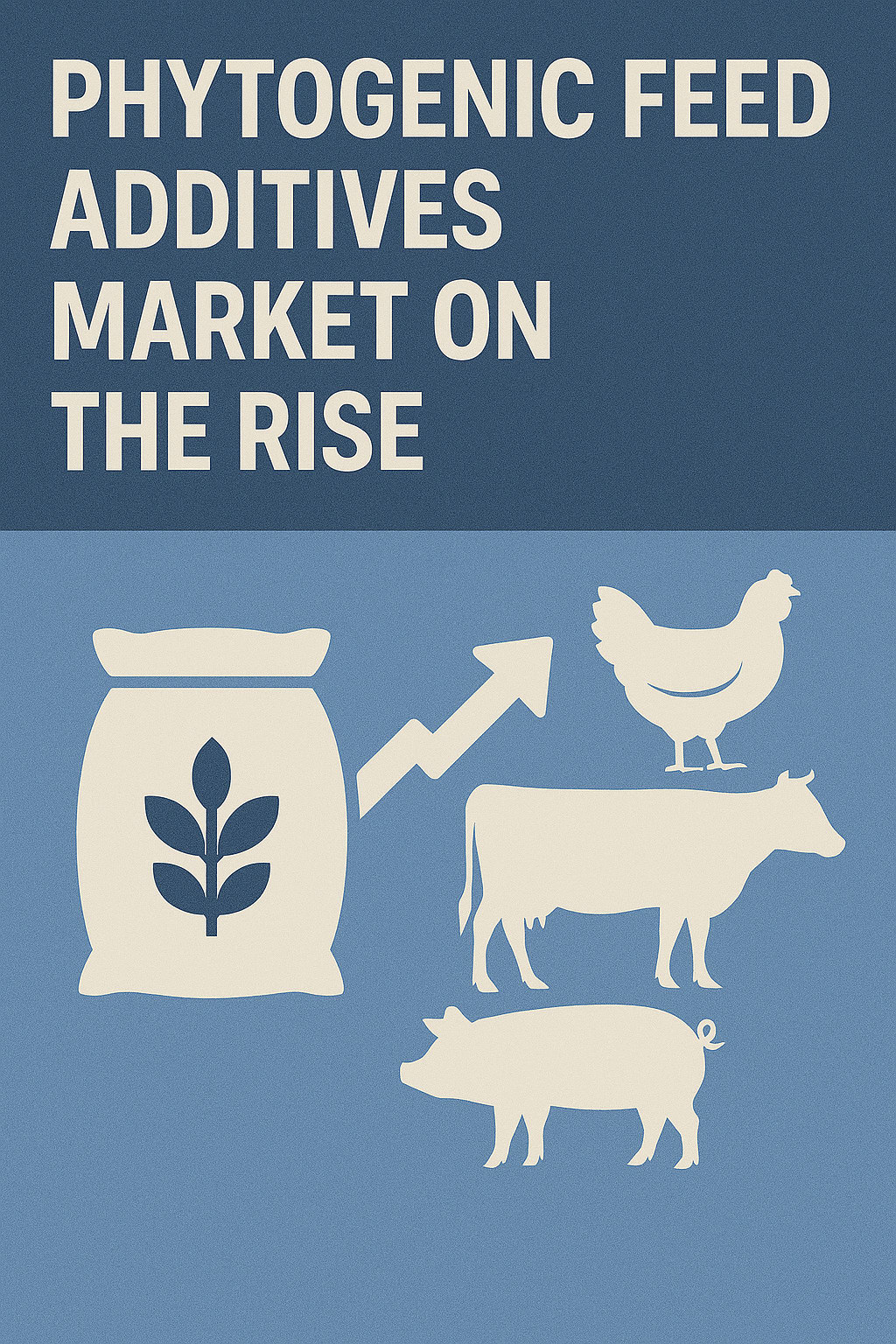
Globally, the phytogenic feed additives market is set to grow in double-digits due to strong demand from livestock farmers, feed compounders, and end consumers for sustainable, effective, and natural alternatives to antibiotic growth promoters (AGPs). With increasing awareness and concern for animal welfare, food safety, and environmental impact, phytogenics are gaining popularity in the poultry, swine, ruminant, and aquaculture industries.
Phytogenics, or phytogenic feed additives, are plant-based natural feed additives derived from herbs, spices, essential oils, and other botanical sources. They have been traditionally used for centuries in various cultures to enhance the flavor, aroma, and nutritional value of food and feed. The shift to sustainable livestock nutrition: With mounting pressure to reduce the use of antibiotics in animal feed, there is a global shift towards natural solutions like phytogenics. Offering benefits such as improved gut health, feed efficiency, and immune function, they meet growing regulatory and consumer demand for antibiotic-free meat and dairy.
Performance without compromise: With the help of advanced extraction, encapsulation, and blending technologies, today’s phytogenic solutions deliver consistent results and targeted delivery in the gastrointestinal tract of animals. This means producers can achieve their desired performance targets, including growth rates, feed conversion ratios, and animal resilience with the help of phytogenic additives, while also adhering to best practices in precision livestock farming.
Research and commercial trials have also demonstrated that phytogenic feed additives can match or even surpass the performance of traditional AGPs without contributing to antimicrobial resistance or residues in animal products.
Consumer trust is the next big thing: Consumer behavior is another important factor driving demand for phytogenic additives. With an increasing number of consumers seeking clean label, natural, responsibly raised, and ethically sourced food products, the livestock industry is facing increasing pressure to ensure transparency and safety throughout the value chain.
Phytogenics offer a plant-based solution that aligns with consumers’ values around health, sustainability, and animal welfare. In turn, retailers and food processors are demanding more antibiotic-free and organic meat, dairy, and eggs from suppliers, creating a ripple effect throughout the supply chain and reinforcing the need for natural feed ingredients like phytogenics.
Market Outlook: Asia-Pacific To Drive Growth Till 2030
As per a recent report by The Research Insights, the global phytogenic feed additives market size is expected to reach USD 1.48 billion by 2030 from USD 1.11 billion in 2025. It is likely to expand at a CAGR of 6.04% from 2025 to 2030. The poultry segment dominated the phytogenic feed additives market in 2022. In particular, the Asia-Pacific region is anticipated to be a significant growth area for phytogenic feed additives, especially in countries such as China, India, and Southeast Asia. This is due to the rapid rise in meat consumption and the growing demand for processed and ready-to-eat food products in these countries. In addition, producers and processors are also modernizing and adopting new technologies and practices, which may drive the market growth.
Key market players are focusing on increasing their production capacity, developing new product lines, and entering new regions to meet the growing demand for phytogenic feed additives. Research and development activities, as well as partnerships and collaborations, are also driving market growth by helping companies create better and more effective products. In addition, the growing awareness and focus on sustainability and environmental concerns are expected to create opportunities for market players to develop and promote their natural and sustainable products.
Recent Developments:
In January 2025, EW Nutrition, in an attempt to expand its global expertise in the field of animal nutrition, announced the appointment of two new personnel, Nadia Yacoubi and Marie Galissot to its headquarters in Germany. They will be helming the following departments: Phytogenic Products Manager & Category Manager Feed Quality Solutions.
In February 2024, Cargill’s Animal Nutrition & Health (ANH) business unit announced the launch of Micronutrition and Health Solutions (MHS), a business unit dedicated to offering feeding solutions for animals.
In April 2023, Kemin AquaScience, a division of Kemin Industries Inc., launched a novel natural phytogenic feed additive, Pathorol, which enhances shrimp health, in multiple Asian countries.
Conclusion
The rising phytogenic feed additives market is not just a passing trend, but a fundamental shift in the way we think about livestock nutrition, where performance, sustainability, and consumer trust are no longer trade-offs, but complementary forces. With continued innovation, research, and regulatory pressure on antibiotics, we can expect phytogenics to play an increasingly important role in the future of animal agriculture.
Get Sample Brochure at https://www.theresearchinsights.com/request_sample?id=285
About the Creator
Silvie Karson
Passionate storyteller exploring the world of trends. With a background in digital marketing, I craft compelling narratives that inform and inspire. Whether diving into deep-dive features, growth analysis, or trend analysis.
Keep reading
More stories from Silvie Karson and writers in Journal and other communities.
Rewriting the Prognosis: Inside the Rapid Evolution of Liver Cancer Drug Market Development
Liver cancer—one of the most aggressive and lethal malignancies worldwide—is experiencing a radical transformation. The days of limited treatment options and grim survival rates are giving way to a dynamic landscape, shaped by breakthroughs in targeted therapies, immunotherapy, and biomarker-driven treatment protocols.
By Silvie Karson7 months ago in Journal
The goals I did not achieve
Every writing goal I made for the year is a wash. It has been this way for a while, but I think it's important to be open about my failures and the reality of how life can get in the way. This is especially true considering the several times I have posted on Vocal about my writing goals, how I was changing my approach, and where I was hoping to be for the upcoming year. I will probably do that again in a couple months, but for now, it is time to acknowledge where I am today.
By Kay Husnick23 days ago in Journal
The Councils of the Church and Why They Were Important
The Catholic Church has faced countless challenges since its founding, from doctrinal disputes to external persecution. One of the most important ways the Church has maintained unity, clarified its teachings, and preserved the faith is through ecumenical and local councils. Church councils are formal gatherings of bishops and Church leaders to deliberate on matters of doctrine, discipline, and practice. These gatherings have shaped Christianity as we know it today, ensuring that the Church remains faithful to the teachings of Christ and the apostles.
By Sound and Spirit5 days ago in Journal


Comments
There are no comments for this story
Be the first to respond and start the conversation.