
Philippines Microgreens Market is on the Rise and Surge to USD 64.98 Million by 2033
With 6.95% CAGR Growth, Urban Farming Initiatives, DOST's Indoor Agriculture Support, and Rising Restaurant Demand Transform Microgreens Production Landscape

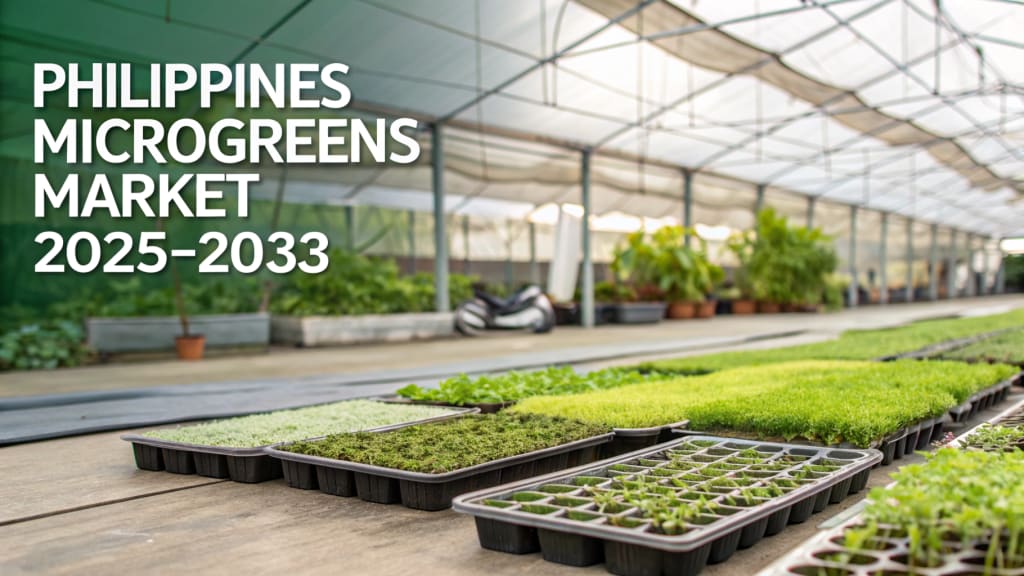
Philippines Microgreens Market Overview
Market Size in 2024: USD 35.49 Million
Market Size in 2033: USD 64.98 Million
Market Growth Rate 2025-2033: 6.95%
According to IMARC Group's latest research publication, "Philippines Microgreens Market Size, Share, Trends and Forecast by Type, Farming Method, End Use, Distribution Channel, and Region, 2025-2033", The Philippines microgreens market size reached USD 35.49 Million in 2024. Looking forward, IMARC Group estimates the market to reach USD 64.98 Million by 2033, exhibiting a CAGR of 6.95% during 2025-2033.
How AI is Reshaping the Future of Philippines Microgreens Market
• Optimizing Controlled-Environment Agriculture: AI-powered sensors and climate control systems monitor temperature, humidity, light, and nutrient levels in real-time across indoor vertical farms and commercial greenhouses, enabling growers to maintain perfect growing conditions year-round while maximizing yields of broccoli, arugula, basil, radish, and other popular microgreen varieties cultivated in Metro Manila and urban centers nationwide.
• Enhancing Resource Efficiency: Machine learning algorithms analyze water consumption patterns, lighting schedules, and energy usage in hydroponic systems to minimize waste and reduce operational costs, supporting sustainable urban agriculture practices particularly critical for space-constrained city environments where microgreens cultivation is expanding across apartment balconies, garage conversions, and rooftop installations.
• Predicting Harvest Timing: Artificial intelligence processes growth rate data and environmental conditions to accurately predict optimal harvest windows within the typical 7-10 day production cycle, enabling farmers to plan deliveries more efficiently for restaurants, specialty markets, and direct farm-to-table sales while maintaining peak nutrient density and flavor profiles that command premium prices in upscale dining establishments.
• Improving Quality Control: AI-driven image recognition systems detect plant health issues, nutrient deficiencies, and pest problems early in the growth cycle, helping producers maintain the consistency and quality standards demanded by commercial buyers including restaurants in Metro Manila that increasingly feature microgreens as vibrant garnishes and ingredient enhancers valued for their concentrated nutrients and unique flavors.
• Supporting Market Intelligence: Machine learning analyzes consumer demand patterns, pricing trends, and distribution channel performance across supermarkets, hypermarkets, and retail stores to help microgreens producers optimize product mix, timing, and market positioning while identifying emerging opportunities in the health-conscious Filipino consumer segment seeking fresh, locally-grown, nutrient-dense food options.
Grab a sample PDF of this report: https://www.imarcgroup.com/philippines-microgreens-market/requestsample
Philippines Microgreens Market Trends & Drivers:
The Philippines microgreens market is experiencing steady growth driven by rapid urban farming adoption leveraging microgreens' small size, fast growth cycle, and minimal resource requirements. A November 2024 Department of Agriculture report identified microgreens as one of the easiest crops for city residents, requiring only basic trays and soilless mediums like coco coir enabling cultivation on apartment balconies and kitchen counters. This accessibility supports food self-reliance and resilience amid rising food prices and climate uncertainties. Government initiatives provide starter kits and training programs, while the typical 7-10 day harvest cycle enables swift production turnover ideal for space-constrained urban farmers across Luzon, Visayas, and Mindanao.
Smart indoor farming technologies represent the second major catalyst through automation, sensors, and climate control systems mitigating challenges including inadequate space, unpredictable weather, and unstable yields. In April 2025, DOST announced increased support for indoor and vertical farming technologies across innovation programs. Hydroponics and controlled-environment agriculture enable year-round optimal growing conditions, enhancing efficiency and yields. The SIGLA project developed by DOST-PCAARRD and UPLB represents modular vertical farm solutions promoting urban agriculture. While upfront investment can be substantial, long-term advantages include water conservation, increased yields, and enhanced market dependability.
Growing demand from restaurants and specialty food markets provides the third critical driver establishing microgreens as premium ingredients valued for vibrant colors, unique flavors, and concentrated nutrients. September 2024 industry reports indicate noticeable demand increases from upscale Metro Manila dining establishments using microgreens as garnishes and ingredient enhancers. Urban farms including Urban Roots, Future Fresh, and Herbivore Farms address demand through indoor hydroponic systems growing kale, arugula, basil, and purple radish varieties. These products command premium prices appealing to health-conscious consumers. Specialty markets and health stores expand offerings tapping into wellness trends, while farm-to-table distribution strengthens producer-buyer connections.
Philippines Microgreens Industry Segmentation:
The report has segmented the market into the following categories:
Type Insights:
• Broccoli
• Cabbage
• Cauliflower
• Arugula
• Peas
• Basil
• Radish
• Others
Farming Method Insights:
• Indoor Vertical Farming
• Commercial Greenhouses
• Others
End Use Insights:
• Residential
• Commercial
Distribution Channel Insights:
• Supermarkets and Hypermarkets
• Retail Stores
• Others
Regional Insights:
• Luzon
• Visayas
• Mindanao
Recent News and Developments in Philippines Microgreens Market
• July 2025: Urban Roots indoor hydroponic farm continued expanding operations in Metro Manila, growing diverse microgreen varieties to address the high demand and limited supply of nutrient-dense greens across the Philippines, demonstrating the growing commercial viability of controlled-environment agriculture for premium produce markets.
• April 2025: Department of Science and Technology (DOST) announced increased support for indoor and vertical farming technologies across innovation programs, strengthening government commitment to controlled-environment agriculture and urban farming solutions that enable year-round microgreens production mitigating climate risks and space constraints.
• April 2025: DOST-PCAARRD and UPLB inaugurated the SIGLA (Sustainable Indoor Farm for Growing Leafy Vegetables using Artificial Lighting) project, unveiling modular weatherproof vertical farm solutions designed to promote urban agriculture and increase access to high-value crops including microgreens while strengthening government commitment to indoor farming technologies.
Competitive Landscape:
The competitive landscape of the industry has also been examined along with the profiles of the key players.
Note: If you require specific details, data, or insights that are not currently included in the scope of this report, we are happy to accommodate your request. As part of our customization service, we will gather and provide the additional information you need, tailored to your specific requirements. Please let us know your exact needs, and we will ensure the report is updated accordingly to meet your expectations.
About Us:
IMARC Group is a global management consulting firm that helps the world's most ambitious changemakers to create a lasting impact. The company provide a comprehensive suite of market entry and expansion services. IMARC offerings include thorough market assessment, feasibility studies, company incorporation assistance, factory setup support, regulatory approvals and licensing navigation, branding, marketing and sales strategies, competitive landscape and benchmarking analyses, pricing and cost research, and procurement research.
Contact Us:
IMARC Group
134 N 4th St. Brooklyn, NY 11249, USA
Email: [email protected]
Tel No:(D) +91 120 433 0800
United States: +1 201-971-6302
About the Creator
Amyra Singh
Market research analyst who loves spotting patterns, digging into data, and turning insights into strategies that help brands grow and stay ahead of the curve.
Keep reading
More stories from Amyra Singh and writers in Journal and other communities.
Why Catholics Confess Sins to a Priest Instead of Directly to God
One of the most common questions about the Catholic faith is why Catholics confess their sins to a priest instead of speaking directly to God. At first glance, this practice may seem unusual to those unfamiliar with Church teaching. After all, isn’t God all-knowing and capable of hearing our hearts directly? The answer lies in the teachings of Christ, the mission of the apostles, and the Church’s understanding of forgiveness, accountability, and healing.
By Sound and Spirit6 days ago in Journal
Miss Persephone's Manual to a Seemingly Ordinary Life
Miss Persephone was found at the dining table, her blue eyes swollen, her tears arriving and retreating like the tides of the ocean. Earlier that day, her family had visited her in the retirement home where she had lived for eight years. It was her eightieth birthday.
By Imola Tóth5 days ago in Fiction



Comments
There are no comments for this story
Be the first to respond and start the conversation.