
Philippines Freight and Logistics Market Size, Growth, Trends & Analysis Report 2025-2033
The Philippines freight and logistics market size reached USD 18.03 Billion in 2024. The market to reach USD 31.20 Billion by 2033, with 5.81% CAGR Growth

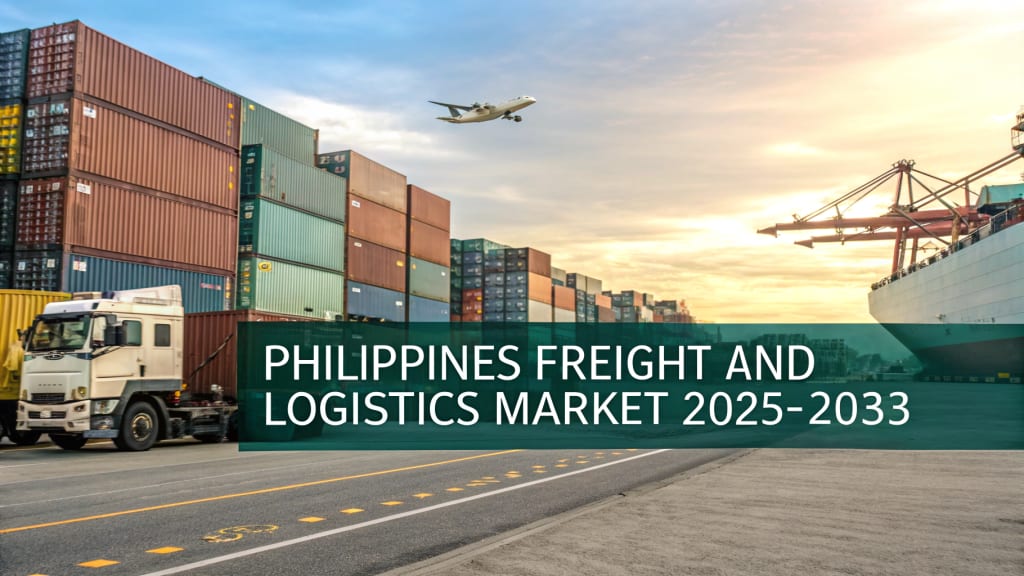
Philippines Freight and Logistics Market Overview
Market Size in 2024: USD 18.03 Billion
Market Size in 2033: USD 31.20 Billion
Market Growth Rate 2025-2033: 5.81%
According to IMARC Group's latest research publication, "Philippines Freight and Logistics Market Size, Share, Trends and Forecast by Logistics Function, End Use Industry, and Region, 2025-2033", The Philippines freight and logistics market size reached USD 18.03 Billion in 2024. Looking forward, IMARC Group estimates the market to reach USD 31.20 Billion by 2033, exhibiting a CAGR of 5.81% during 2025-2033.
How AI is Reshaping the Future of Philippines Freight and Logistics Market
• Revolutionizing Route Optimization: AI-powered algorithms analyze traffic patterns, weather conditions, and delivery priorities across the Philippines' archipelagic geography of over 7,000 islands to determine optimal routes for freight transport via road, air, sea, inland waterways, rail, and pipelines, reducing transit times and fuel consumption while enhancing inter-island connectivity between Luzon, Visayas, and Mindanao regions.
• Enhancing Real-Time Tracking Capabilities: Machine learning integrates GPS-based tracking systems with automated inventory management and digital freight platforms to provide end-to-end visibility for shipments, addressing industry challenges of delays and lack of transparency while supporting the growing demand for same-day and last-mile delivery services driven by e-commerce expansion and 50% of Filipino shoppers purchasing from international retailers.
• Optimizing Cold Chain Management: Artificial intelligence monitors temperature-sensitive pharmaceuticals and agricultural products throughout the supply chain, automatically adjusting refrigeration systems in chilled trucks and freezers to maintain product integrity, supporting the 21.8% growth in agricultural exports recorded from July to September 2024 and meeting increasing requirements from the expanding pharmaceutical industry.
• Streamlining Customs and Documentation: AI-powered solutions automate complex regulatory frameworks and customs procedures, reducing bureaucratic delays and processing times for import-export documentation that currently hinder cargo movement and raise operational costs, particularly benefiting time-sensitive shipments and international freight services connecting the Philippines with China, United States, South Korea, Japan, and ASEAN member states.
• Predicting Demand and Fleet Management: Machine learning analyzes e-commerce trends, seasonal patterns, and industrial output from electronics, textiles, processed food, and agricultural sectors to forecast freight volume requirements, enabling logistics companies to optimize fleet deployment, warehousing capacity, and distribution center operations while supporting third-party logistics providers in meeting the accelerating demand from smartphone-penetrated online shopping platforms.
Grab a sample PDF of this report: https://www.imarcgroup.com/philippines-freight-logistics-market/requestsample
Philippines Freight and Logistics Market Trends & Drivers:
The Philippines freight and logistics market is experiencing robust growth driven by the rapid expansion of e-commerce and online retail that fundamentally reshapes delivery networks and logistics infrastructure across the archipelago. Growing smartphone penetration has fueled online shopping, increasing the need for efficient logistics solutions with same-day and last-mile delivery services becoming essential for customer satisfaction. E-commerce platforms require fast and reliable delivery networks, prompting logistics companies to enhance operations with innovative strategies including investments in fleet management, distribution centers, and partnerships with third-party logistics providers to expedite deliveries. Cross-border e-commerce is gaining significant momentum, with 50% of Filipino shoppers purchasing from international retailers, primarily in China, the United States, and South Korea, boosting demand for international freight services including courier, express and parcel operations for both domestic and international destinations. This trend is further strengthening the country's logistics sector by driving the adoption of digital technologies including automated inventory systems, digital freight platforms for shipment tracking, and AI-powered fleet management that enhance operational efficiency, optimize delivery routes, reduce costs, and improve customer service while overcoming common industry challenges such as delays, inefficient route planning, and lack of shipment visibility.
Continued infrastructure growth through the Build Better More program and extensive government support represent the second major growth catalyst propelling market expansion across transportation networks and trade facilitation systems. The Build Better More program features 207 Infrastructure Flagship Projects worth USD 176.7 billion across several key sectors, with physical connectivity leading in both project count and cost, superseding the previous Build! Build! Build! initiative that saw enormous investments in roads, seaports, airports, and bridges. The government allocated PHP 861.2 billion (USD 14.9 billion) for transport infrastructure projects and PHP 257.1 billion (USD 4.5 billion) for water infrastructure projects as part of the 2025 Budget, significantly enhancing the transport network within the country and increasing connectivity between regions that eases the flow of goods and shortens transit times. The Philippine Ports Authority projected cargo throughput to reach 301.47 million metric tons for 2025 following successful completion of 30 new infrastructure projects under Build Better More, while the country achieved its highest ranking in the World Bank Logistics Performance Index since 2007, jumping to 43rd spot from 60th place. Government initiatives encouraging trade and streamlining procedures at customs have accelerated industry growth, with public-private partnerships playing active roles in upgrading infrastructure to make freight operations highly efficient and cost-effective, drawing foreign investments and creating a competitive logistics sector that addresses increasing demand for smooth supply chain solutions across agriculture, fishing and forestry, construction, manufacturing, oil and gas, mining and quarrying, and wholesale and retail trade sectors.
The increasing demand for cold chain logistics combined with strategic geographic positioning and rising industrialization create sustained requirements for specialized freight services and temperature-controlled supply chain solutions. The growing demand for cold chain logistics is driven by increasing requirements for temperature-sensitive products that make advanced cold storage and transport facilities imperative for the expanding pharmaceutical industry and food exports relying on cold chain systems to maintain quality during transit. The Philippine Statistics Authority reported agricultural exports recorded growth of 21.8% from July to September 2024 compared to the same period in the previous year, driving third-party logistics firms to invest in procurement of chilled trucks, freezers, and supervising technologies to meet orders from this field. The Philippines holds a geographically strategic position at the crossroads of Southeast Asia and the Pacific that enhances its appeal as a logistics and trade hub, with proximity to economic powerhouses such as China, Japan, and ASEAN member states positioning it as a favorable transit and distribution point for regional and international shipments supporting both air and maritime cargo operations. Steady industrial growth in electronics, textiles, processed food, and agricultural exports is witnessing rising freight volumes as domestic manufacturing expands and companies tap into global markets, prompting higher demand for comprehensive logistics support including warehousing, customs handling, and multi-modal transport across air, sea, inland waterways, road, rail, and pipeline modes serving Luzon, Visayas, and Mindanao regions while trade agreements and government incentives for export development strengthen the logistics landscape.
Philippines Freight and Logistics Industry Segmentation:
The report has segmented the market into the following categories:
Logistics Function Insights:
• Courier, Express and Parcel
o Destination Type: Domestic, International
• Freight Forwarding
o Mode of Transport: Air, Sea and Inland Waterways, Others
• Freight Transport
o Mode of Transport: Air, Pipelines, Rail, Road, Sea and Inland Waterways
• Warehousing and Storage
o Temperature Control: Non-Temperature Controlled, Temperature Controlled
• Others
End Use Industry Insights:
• Agriculture, Fishing and Forestry
• Construction
• Manufacturing
• Oil and Gas
• Mining and Quarrying
• Wholesale and Retail Trade
• Others
Regional Insights:
• Luzon
• Visayas
• Mindanao
Recent News and Developments in Philippines Freight and Logistics Market
• September 2025: The Philippines continued to be recognized as Asia's rising logistics hub, benefiting from its strategic geographic position at the crossroads of Southeast Asia and the Pacific, with enhanced connectivity between islands and bolstered trade capacity positioning the country as a key player in regional and international supply chains.
• July 2025: The Philippine government allocated PHP 861.2 billion (USD 14.9 billion) for transport infrastructure projects and PHP 257.1 billion (USD 4.5 billion) for water infrastructure projects as part of the 2025 Budget, supporting continued development of roads, seaports, airports, and bridges that enhance freight and logistics operations nationwide.
• February 2025: The Philippine Ports Authority projected cargo throughput to reach 301.47 million metric tons for the year 2025, demonstrating the significant expansion of maritime freight capacity and the country's growing role in facilitating domestic and international trade through its enhanced port infrastructure network.
Competitive Landscape:
The competitive landscape of the industry has also been examined along with the profiles of the key players. Leading companies in the Philippines freight and logistics market are strategically prioritizing research and development to innovate new logistics solutions with enhanced efficiency and advanced features while actively collaborating with local partners to ensure efficient distribution and access across diverse regions. Key players are engaging in robust marketing campaigns to educate businesses about digital logistics benefits, investing in fleet modernization and warehousing facilities, and partnering with government entities to align with infrastructure development programs and regulatory frameworks.
Note: If you require specific details, data, or insights that are not currently included in the scope of this report, we are happy to accommodate your request. As part of our customization service, we will gather and provide the additional information you need, tailored to your specific requirements. Please let us know your exact needs, and we will ensure the report is updated accordingly to meet your expectations.
About Us:
IMARC Group is a global management consulting firm that helps the world's most ambitious changemakers to create a lasting impact. The company provide a comprehensive suite of market entry and expansion services. IMARC offerings include thorough market assessment, feasibility studies, company incorporation assistance, factory setup support, regulatory approvals and licensing navigation, branding, marketing and sales strategies, competitive landscape and benchmarking analyses, pricing and cost research, and procurement research.
Contact Us:
IMARC Group
134 N 4th St. Brooklyn, NY 11249, USA
Email: [email protected]
Tel No:(D) +91 120 433 0800
United States: +1 201-971-6302
About the Creator
Amyra Singh
Market research analyst who loves spotting patterns, digging into data, and turning insights into strategies that help brands grow and stay ahead of the curve.
Keep reading
More stories from Amyra Singh and writers in Journal and other communities.
The Expanding Responsibilities of Today’s Chief Financial Officer
The responsibilities of a Chief Financial Officer have changed steadily over the past several years. While financial accuracy and compliance remain core expectations, many organizations now rely on CFOs for broader guidance. Finance leaders are increasingly involved in planning, operational discussions, and long-term decision-making. This shift reflects a growing recognition that financial insight plays a central role in organizational stability.
By Carolina Guerrenoabout 20 hours ago in Journal




Comments
There are no comments for this story
Be the first to respond and start the conversation.