
Pendular Precision: Exploring Kinematics and Dynamics in Pirate Ship Rides
Understanding the Physics Behind One of the Most Iconic Amusement Rides
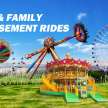

Among the myriad of amusement rides engineered to thrill, the pirate ship remains a paragon of motion-based simplicity, underpinned by well-defined mechanical principles. Unlike coasters that rely on track complexity or drop towers that emphasize vertical acceleration, the pirate ship offers a uniquely predictable, yet potent ride experience rooted in classical mechanics. Its motion, driven by pendular dynamics, provides a textbook case study in kinematics and dynamics applied to recreational engineering.
Structural Overview and Motion Principle
Pirate ship rides are fundamentally giant pendulums. Suspended from fixed pivot points, the ride consists of a gondola-like vessel that swings in an arc, typically between 90 to 120 degrees. The structure rests on a robust A-frame support that withstands both gravitational and inertial stresses. The swinging motion is powered by drive wheels or linear motors positioned at the base, which impart force tangentially to the arc path, increasing angular displacement with each cycle.
In the context of mechanical analysis, the pirate ship serves as a near-ideal physical pendulum. Its large mass and significant moment of inertia make it well-suited for demonstrations of rotational motion, angular acceleration, and conservation of energy. Unlike simple pendulums where mass is concentrated at a point, the distributed mass of the ship introduces more complexity in calculating angular momentum and torque.
Kinematic Variables in Play
The study of kinematics focuses on the description of motion, independent of the forces causing it. In pirate ship rides, primary kinematic variables include angular displacement, angular velocity, and angular acceleration.
At the lowest point in the arc, angular velocity reaches its maximum, and the ship experiences its greatest linear velocity relative to the pivot. As the ship climbs to either end of the arc, velocity reduces to zero at the momentary pause before the return swing. The angular displacement is typically measured from the vertical rest position, ranging from 0° to ±60° or more, depending on design parameters.
These equations allow designers to simulate ride dynamics, optimize cycle duration, and calculate timing for audio-visual effects synchronized with this amusement ride motion.
Dynamics: Force and Energy Considerations
Unlike purely kinematic systems, dynamics addresses the underlying causes of motion. In pirate ship rides, the primary forces involved include gravitational force, normal force, and frictional torque. The motion is the result of a continuous interplay between energy input and gravitational restoration.
At the highest point of the arc, the ship possesses maximum potential energy. As it descends, this energy is converted into kinetic energy.
In real-world applications, energy losses occur due to air resistance, bearing friction, and structural damping. To counteract this, external torque is applied at specific intervals by motorized drive wheels or pneumatic actuators, ensuring sustained oscillation.
Inertial Effects and Rider Experience
From the rider’s frame of reference, the pirate ship produces a series of inertial forces that modulate the sensation of weight. At the nadir of the swing, riders experience an increase in apparent weight due to centripetal force, while at the apices, a momentary reduction or absence of contact force simulates weightlessness.
These accelerations influence the normal force acting on riders, thereby shaping the physiological thrill component. Engineers must model these forces precisely to avoid unsafe g-forces while maximizing sensory stimulation.
Control Systems and Feedback Loops
Modern pirate ship rides incorporate programmable logic controllers (PLC) to govern motor output, monitor oscillation amplitude, and execute braking sequences. Feedback sensors measure angular position and velocity in real-time, feeding data into a control algorithm that adjusts power input for smooth acceleration and deceleration.
Safety interlocks, limit switches, and gyroscopic sensors ensure the ride remains within designed motion parameters. The braking system—either pneumatic or hydraulic—must decelerate the ship in a controlled arc, avoiding abrupt stops that could result in passenger discomfort or structural strain.
Material Stress and Fatigue Analysis
Structural components of pirate ship rides are subjected to cyclical loading. Each oscillation subjects the pivot points, connecting arms, and base supports to alternating stress. Over time, this can lead to material fatigue. Finite element analysis (FEA) is used during the design phase to predict stress concentrations and deformation zones under repeated dynamic loading.
Weld integrity, bolt tension, and arm geometry are all scrutinized for durability under combined axial and shear forces. Materials are selected based on yield strength, fatigue life, and resistance to environmental corrosion—commonly high-grade structural steel with protective coatings.
Optimization and Variants
While the archetype pirate ship follows a linear swing arc, variants exist with enhanced motion capabilities. Some models incorporate rotating arms that add a twisting component to the swing, introducing gyroscopic effects and increasing the complexity of dynamic modeling. Others integrate vertical translation mechanisms, altering the center of mass mid-ride to simulate storm-like variability.
Energy optimization strategies include regenerative braking systems that recover kinetic energy during deceleration and convert it into electrical power for auxiliary systems.
Conclusion
Pirate ship rides stand as mechanical analogs of classical physics principles, elegantly showcasing the relationship between motion, force, and energy. Their enduring popularity in the realm of amusement rides is not simply a function of thematic charm but also of mechanical transparency and reliability. Through deliberate application of kinematic and dynamic principles, engineers transform simple oscillation into an immersive, controlled thrill experience. This convergence of science and spectacle remains a cornerstone of ride design, reflecting both the discipline of mechanical engineering and the enduring appetite for kinetically orchestrated entertainment.
About the Creator
Beston Amusement Rides
As a leading amusement facility manufacturer, we provide safe and interesting amusement equipment to customers around the world, including roller coasters, Ferris wheels, pirate ships and so on.
Website:https://bestonamusementrides.com/
Keep reading
More stories from Beston Amusement Rides and writers in Journal and other communities.
Engineering Excitement: Integrating Adventure Elements into Amusement Ride Design
Designing amusement rides transcends mere mechanical ingenuity—it is the synthesis of psychological stimulation, spatial narrative, and immersive storytelling. The modern patron seeks more than velocity; they desire an odyssey. Incorporating adventure elements into thrill ride development, particularly in roller coaster engineering, demands a multidisciplinary approach that merges structural dynamics, sensory manipulation, and environmental choreography.
By Beston Amusement Rides11 months ago in Journal
Circadian Rhythm Doesn’t End When You Walk Indoors
Most people think of circadian rhythm as something connected primarily to daylight and nighttime. The rising sun signals the body to wake up. The darkness of evening encourages rest. For thousands of years, this natural cycle regulated how humans slept, worked, and recovered.
By illumipure3 days ago in Journal


Comments
There are no comments for this story
Be the first to respond and start the conversation.