
Panch Kedar Map: A Detailed Route Map of Panch Kedar Temples Yatra
Know the route map of Panch Kedar to ensure a successful journey. The route map of Panch Kedar Yatra usually follows these steps: Rishikesh → Gauri Kund → Kedarnath Temple → Back to Gauri Kund → Ukhimath via Gupkashi → Madmaheshwar → Back to Ukhimath → Chopta → Tungnath → Sagar → Panar Bugyal → Rudranath Temple → Back to Sagar → Kalpeshwar → Pipalkoti → Back to Rishikesh.
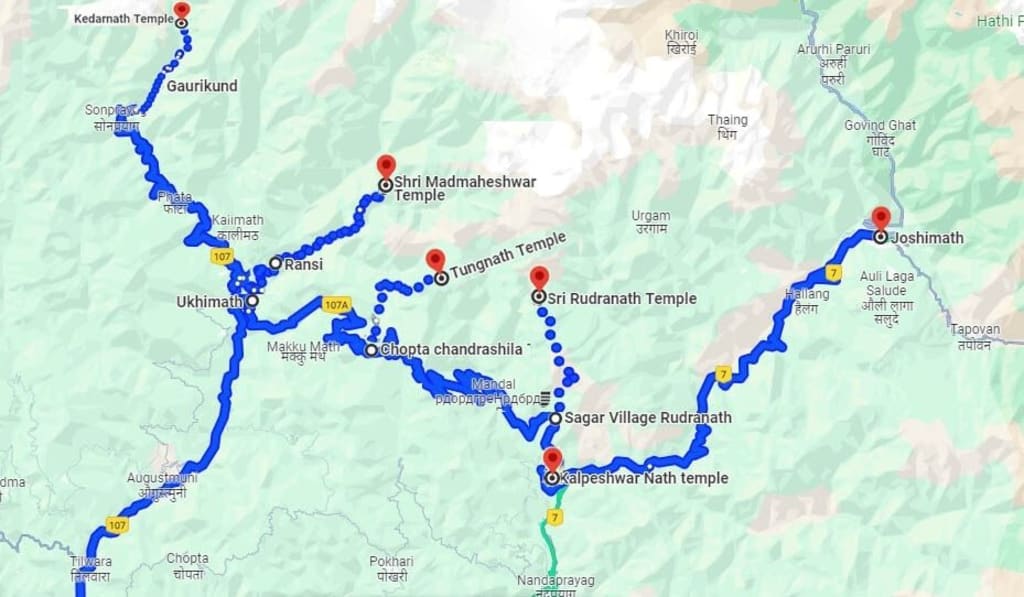
Panch Kedar refers to five Hindu temples dedicated to Lord Shiva. The Panch Kedar Map serves as a spiritual compass for devotees and trekking enthusiasts alike, offering a detailed guide to navigating the sacred pilgrimage to the five revered Panch Kedar Temples. This transformative journey takes pilgrims through awe-inspiring Himalayan landscapes, challenging terrains, and tranquil villages. The Panch Kedar Yatra is not only a test of physical endurance but also a deeply spiritual exploration steeped in Hindu mythology. With an outlined Panch Kedar Itinerary, the pilgrimage begins at Rishikesh and unfolds across Kedarnath, Tungnath, Rudranath, Madhyamaheshwar, and concludes at Kalpeshwar, providing unparalleled views of snow-capped peaks, pristine meadows, and dense forests.
What is Panch Kedar
The state of Uttarakhand has many temples dedicated to several deities of the Hindu pantheon. There are five such revered temples located in the Garhwal region of the state where Lord Shiva is worshipped. Panch Kedar refers to five Hindu temples or holy places of the Shaivite sect dedicated to Lord Shiva. The five temples famous as Panch Kedar are Kedarnath Temple (3,583 m), Tungnath Temple (3,680 m), Rudranath Temple (3,559 m), Madhyamaheshwar Temple (3,490 m) and Kalpeshwar Temple (2,200 m). Kedarnath Temple is the main temple among these five holy temples, which is part of the four Char Dham Yatra of Garhwal Himalayas and is one of the twelve Jyotirlingas.
According to the most prevalent and popular belief, "The Pandavas went to the Himalayas to seek Lord Shiva to atone for the unjust killing of some of their brothers during the fierce war described in the holy text Mahabharata. But Lord Shiva disappeared from his own place. Then, on the prayers of the Pandavas, Lord Shiva appeared at five different places in the Himalayan region, which came to be known as Panch Kedar.
Here we will discuss the detailed route map of Panch Kedar.
Insights from the Panch Kedar Map
The Panch Kedar Map is an invaluable resource for planning the yatra. It outlines the trekking routes, walking distances, elevations, and key landmarks, ensuring a seamless journey. Covering a loop of approximately 95 km excluding driving distances, the map highlights the challenging yet rewarding trails that connect the temples. For trekkers, the map provides essential details about the terrains, accommodation options, and weather conditions, helping them prepare for the arduous expedition.
The route map of Panch Kedar Yatra usually follows these steps: Rishikesh → Gauri Kund → Kedarnath Temple → Back to Gauri Kund → Ukhimath via Gupkashi → Madmaheshwar → Back to Ukhimath → Chopta → Tungnath → Sagar → Panar Bugyal → Rudranath Temple → Back to Sagar → Kalpeshwar → Pipalkoti → Back to Rishikesh.
To reach the Panch Kedar from Delhi, one needs to reach the starting point of Rishikesh. One can easily travel from Delhi to Rishikesh with various travel options. The complete route of the Panch Kedar Yatra is 95 km from Rishikesh to Rishikesh in a loop or circuit, excluding any driving distance, and is well plotted on this map showing all temples, trekking routes, walking distances, and elevations. Let’s find out useful insights outlined in the map and make your journey of the Panch Kedar Yatra more transformative with this map guide.
Panch Kedar Itinerary from Rishikesh to Rishikesh: A Step-by-Step Journey
The Panch Kedar Yatra generally follows a meticulously planned circuit starting from Rishikesh. Here’s an overview of the typical itinerary:
- Rishikesh to Gauri Kund: The journey begins with a drive from Rishikesh to Gauri Kund, the base camp for Kedarnath. Gauri Kund is steeped in mythology and offers a serene atmosphere to commence the spiritual quest.
- Kedarnath Temple: After a 16 km trek from Gauri Kund, pilgrims reach the Kedarnath Temple, dedicated to Lord Shiva. Nestled amidst towering Himalayan peaks, this temple is the highest among the Panch Kedar.
- Return to Gauri Kund and Drive to Ukhimath: Following the Kedarnath visit, pilgrims return to Gauri Kund and proceed to Ukhimath via Guptkashi.
- Madhyamaheshwar Temple: From Ukhimath, the next destination is Madhyamaheshwar, accessible through an 18 km trek. This temple, located amidst lush meadows and dense forests, is known for its serene ambiance and spiritual significance.
- Chopta and Tungnath Temple: Returning to Ukhimath, pilgrims head to Chopta, often called the “Mini Switzerland of India.” From Chopta, a short yet steep trek of 4 km leads to the Tungnath Temple, the highest Shiva temple in the world.
- Sagar to Rudranath Temple: The journey continues to Sagar, from where a challenging trek leads to Rudranath Temple. This temple offers breathtaking views of the surrounding peaks and is revered for its mystical aura.
- Kalpeshwar Temple: The final leg of the yatra involves a trek to Kalpeshwar, the only temple in the circuit open throughout the year. Pilgrims then return to Pipalkoti before concluding the journey at Rishikesh.
The Spiritual Significance of the Panch Kedar Temples
Each of the Panch Kedar Temples holds profound spiritual significance, linked to the legend of Lord Shiva and the Pandavas from the Mahabharata. According to mythology, the Pandavas sought Lord Shiva’s forgiveness after the Kurukshetra war. Lord Shiva, unwilling to forgive them easily, disguised himself as a bull and scattered his body parts across the region, which became the sacred sites of the Panch Kedar.
- Kedarnath: Represents the hump of the bull.
- Madhyamaheshwar: Symbolizes the navel.
- Tungnath: The arms of Shiva are said to reside here.
- Rudranath: Houses the face of Lord Shiva.
- Kalpeshwar: Contains the matted locks (hair) of Lord Shiva.
These temples are not just places of worship but also sites of incredible natural beauty, making the yatra a holistic experience of devotion and adventure.
Tips for a Successful Panch Kedar Yatra
- Physical Preparation: The yatra demands a good level of physical fitness. Regular cardio exercises and trekking practice can help prepare for the high-altitude treks.
- Acclimatization: Spend a day or two at Rishikesh or other lower-altitude locations to acclimatize before starting the trek.
- Essential Gear: Carry sturdy trekking shoes, warm clothing, rain gear, and a well-stocked first aid kit.
- Guides and Porters: Hiring experienced guides and porters can enhance your trekking experience and ensure safety.
- Respect the Environment: Follow eco-friendly practices to preserve the pristine beauty of the Himalayas.
Concluding the Sacred Journey
The Panch Kedar Yatra, as outlined on the Panch Kedar Map, is a profound journey of spiritual discovery and physical endurance. Whether you are drawn by the allure of the Panch Kedar Temples or the challenge of the Himalayan trails, this pilgrimage promises an experience like no other. From the starting point in Rishikesh to the final temple at Kalpeshwar, the yatra encapsulates the essence of devotion, adventure, and the majestic beauty of the Himalayas. Embarking on this sacred circuit is not merely a trek but a spiritual destination that connects the soul to the divine.
About the Creator
Mountains Curve
I’m a passionate traveler with an insatiable curiosity for exploring new corners of the world. Beyond my love for adventure, I find joy in DIY crafts, cooking, planting, spending time in forests, and diving into anything new to learn.
Keep reading
More stories from Mountains Curve and writers in Journal and other communities.
Top 5 Best Winter Treks in Uttarakhand
Are you an adventure enthusiast eager to experience the magic of snow treks? If so, Uttarakhand is your paradise! With its snow-clad mountains, scenic landscapes, and thrilling trails, Uttarakhand offers some of the best winter treks in India. Whether you are a seasoned trekker or a beginner, these treks in December provide the perfect mix of challenge and beauty. Winter treks in Uttarakhand are not just about pristine snow-covered trails and breathtaking views of the Himalayas but also about transformative journeys that challenge you physically and mentally. The shivering cold winds from the Himalayas, the crunch of snow under your boots, and the mesmerizing views of snow-laden forests and peaks make these treks an experience of a lifetime. Despite the challenges of numb soles and grinding teeth, the sheer beauty of these trails will keep you yearning for more. Uttarakhand’s winter treks promise an unforgettable journey through nature’s winter wonderland, leaving you with a sense of accomplishment and magical landscapes to cherish forever.
By Mountains Curveabout a year ago in Journal
The goals I did not achieve
Every writing goal I made for the year is a wash. It has been this way for a while, but I think it's important to be open about my failures and the reality of how life can get in the way. This is especially true considering the several times I have posted on Vocal about my writing goals, how I was changing my approach, and where I was hoping to be for the upcoming year. I will probably do that again in a couple months, but for now, it is time to acknowledge where I am today.
By Kay Husnick24 days ago in Journal
The Architect of His Own Fate
The Concrete Pillow In the winter of 2008, when the global economy was fracturing, David Morales was experiencing a private collapse of his own. At twenty-four years old, David owned exactly three things: a tattered wool blanket, a high school diploma, and a library card. While his peers were navigating the early rungs of corporate ladders, David was navigating the New York City subway system, searching for a car warm enough to sleep in without being harassed.
By shakir hamid6 days ago in Journal




Comments (1)
Thank you so much!