

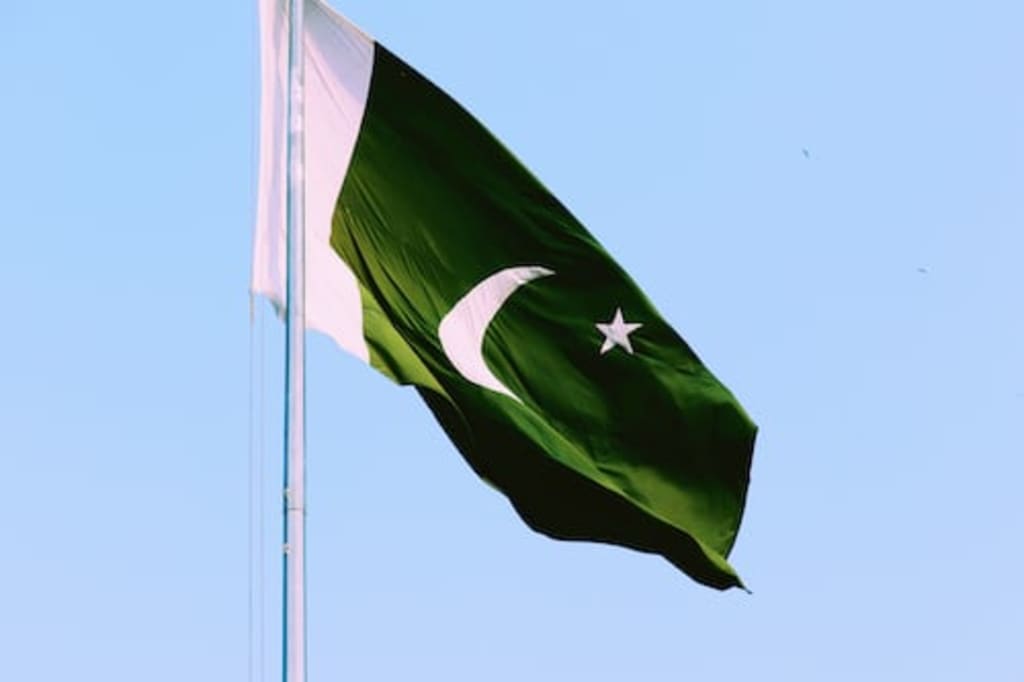
Once upon a time, Pakistan did not exist as a separate entity on the map. It was a part of the Indian subcontinent and had a rich and complex history dating back thousands of years.
The region now known as Pakistan was home to some of the earliest civilizations in the world, including the Indus Valley Civilization which thrived between 2600 BCE and 1900 BCE. The Indus Valley Civilization was one of the most sophisticated and advanced of its time, with well-planned cities, a system of writing, and a highly developed culture.
After the decline of the Indus Valley Civilization, the region was ruled by a series of empires and kingdoms, including the Mauryan Empire, the Gupta Empire, and the Mughal Empire. The Mughal Empire was the most significant of these, ruling over most of the Indian subcontinent for more than two centuries.
In the late 18th century, the British East India Company began to expand its control over the Indian subcontinent, including the region now known as Pakistan. By the mid-19th century, the British had established direct rule over much of the region, which they called British India.
During the early 20th century, a movement for independence from British rule began to gather momentum in India. This movement was led by figures such as Mahatma Gandhi and Jawaharlal Nehru and eventually culminated in the establishment of two separate states: India and Pakistan.
The partition of India and Pakistan in 1947 was a traumatic event that led to widespread violence and the displacement of millions of people. Pakistan was established as a Muslim-majority state, while India was established as a secular state with a Hindu majority.
Pakistan faced significant challenges in its early years, including a lack of infrastructure and resources and tensions with India over the disputed region of Kashmir. The country was also divided along ethnic and linguistic lines, with Punjabis and Urdu speakers dominating the political and economic spheres.
Despite these challenges, Pakistan was able to establish itself as a major player in the region, with a strong military and a growing economy. However, the country also faced political instability and frequent military coups, with the military playing a dominant role in the country's politics for much of its history.
In 1971, a civil war broke out in East Pakistan (now Bangladesh), which was supported by India. The conflict led to the separation of East Pakistan from West Pakistan and the establishment of Bangladesh as an independent country.
Pakistan continued to face challenges in the following decades, including a growing Islamist insurgency and tensions with India over Kashmir. In 1999, the country experienced another military coup, with General Pervez Musharraf seizing power.
Under Musharraf's rule, Pakistan made significant progress in the areas of education, infrastructure, and the economy. However, his regime was also criticized for human rights abuses and for restricting freedom of the press and political dissent.
In recent years, Pakistan has continued to face challenges related to terrorism, sectarian violence, and political instability. The country has also struggled with issues such as poverty, corruption, and a lack of access to basic services such as healthcare and education.
Despite these challenges, Pakistan has made significant progress in certain areas, including the growth of its IT industry and the development of renewable energy sources. The country also has a rich cultural heritage, with a diverse and vibrant society that includes a wide range of languages, religions, and traditions.
Today, Pakistan is a major player in the region and has a growing role in the global community. The country faces many challenges, but it also has many opportunities, and its people are working hard to build a better future for themselves and their country.
About the Creator
solando
i am a content writer
script writer
prompt engineer
How to Handle Slow Rendering in Complex Android UI Layouts
When I first started building Android apps with complex layouts, I often ran into a frustrating problem: slow UI rendering. Buttons lagged, scrolling stuttered, and sometimes the app seemed frozen for a second or two. I realized this is a common issue, especially in apps with nested views, large images, or dynamic content.
By Casey Morgan5 days ago in Journal



Comments
There are no comments for this story
Be the first to respond and start the conversation.