
Pak India conflict
"Tensions Flare Again: A New Chapter in the Fragile Pak-India Relations"

In April 2025, the fragile peace between India and Pakistan unraveled dramatically following a brutal terrorist attack in Indian-administered Kashmir. The attack, which resulted in the deaths of 26 civilians, has reignited longstanding hostilities between the two nuclear-armed neighbors, leading to military skirmishes, diplomatic expulsions, and the suspension of critical bilateral agreements. The event has raised fears of a potential full-scale conflict between the two countries, whose relationship has long been marred by violence and territorial disputes.
The Pahalgam Massacre: A Catalyst for Crisis
On April 22, 2025, gunmen opened fire on a group of tourists in Pahalgam, a popular tourist destination in Jammu and Kashmir, killing 25 Indian nationals and one Nepalese citizen. The attack was both ruthless and strategically timed, as it occurred in the heart of the tourist season, when many Indian families visit the region. The perpetrators, reportedly militants from the group known as The Resistance Front, a Pakistan-based insurgent organization affiliated with Lashkar-e-Taiba, took responsibility for the massacre. The attackers reportedly targeted the victims based on their religious identity, raising concerns about the rising influence of radical elements within Kashmir.
The attack has drawn comparisons to the horrific 2008 Mumbai attacks, which also targeted civilians and heightened Indo-Pakistani tensions. Following the Pahalgam massacre, Indian Prime Minister Narendra Modi delivered a stern speech, condemning the violence and promising to bring the attackers to justice "no matter where they are." Modi vowed to pursue the perpetrators to "the ends of the Earth," a declaration that signaled India's intent to adopt a more aggressive stance against Pakistan.
India responded to the attack by suspending the Indus Waters Treaty, a crucial water-sharing agreement signed between the two nations in 1960, and expelled several Pakistani diplomats from New Delhi. The suspension of the treaty marked a significant shift in India’s policy towards Pakistan, signaling that economic and environmental pressure might be used as tools to curb Pakistani support for cross-border terrorism. Pakistan, in turn, denied any involvement in the attack and demanded an international investigation. The Pakistani government retaliated by expelling Indian diplomats and suspending all trade relations, further deepening the rift between the two countries.
Military Escalations Along the Line of Control
In the days following the attack, tensions along the Line of Control (LoC), the de facto border that divides Kashmir between India and Pakistan, escalated rapidly. Both Indian and Pakistani military units exchanged gunfire in multiple regions, with artillery shelling reported on both sides. These skirmishes, which have occurred intermittently in the past, now took on a much more serious tone, with fears that they could spiral into a broader military conflict.
Indian forces accused Pakistani troops of engaging in unprovoked firing, while Pakistan's military responded by claiming that Indian forces had launched preemptive strikes across the border. The rhetoric between the two nations became increasingly hostile, with both sides calling for heightened preparedness. To signal its military readiness, India deployed the INS Vikrant, an aircraft carrier, near Pakistan's maritime borders and conducted live-fire exercises. India’s show of force was clearly aimed at sending a message to Islamabad that the country would not tolerate further aggression or cross-border terrorism.
Meanwhile, an incident in which an Indian Border Security Force (BSF) soldier accidentally crossed into Pakistan-administered territory added fuel to the fire. The Pakistani military detained the soldier, accusing him of being part of a larger covert operation. In response, Indian officials demanded his immediate release, accusing Pakistan of illegally detaining an Indian national. This small but significant incident further heightened the tensions, with both countries trading accusations of violations of international norms.
The Indus Waters Treaty in Jeopardy
One of the most significant aspects of India’s response to the attack was the suspension of the Indus Waters Treaty. The agreement, brokered by the World Bank in 1960, has been a cornerstone of cooperation between the two nations, particularly in managing the water resources of the Indus River system, which flows through both India and Pakistan. The treaty has survived multiple wars and skirmishes, but India’s recent decision to unilaterally suspend it raises concerns about the stability of the agreement.
India’s move was seen as a tactical response to the growing threat posed by cross-border terrorism emanating from Pakistan. India accused Pakistan of using the water-sharing treaty to further its geopolitical aims and suggested that it might use the waters of the Jhelum, Chenab, and Ravi rivers as leverage in future negotiations. By releasing excess water from Indian dams into the Jhelum River without prior notice, India sent a strong signal to Pakistan, which has expressed concerns about potential flooding in Pakistan-administered Kashmir.
Pakistan has warned that any attempt to weaponize water resources could be considered an act of war. The environmental implications of such a step are severe, as the Indus River system is the primary source of irrigation and drinking water for both nations. Any disruption to this system could lead to widespread economic devastation, especially in Pakistan, which relies heavily on the waters for its agriculture.
Domestic and International Repercussions
The recent escalation has had profound domestic consequences in both India and Pakistan. In India, the attack has fueled a rise in nationalist sentiments, with calls for tougher action against Pakistan. Political leaders across the spectrum have rallied behind Modi’s government, urging more military intervention and further crackdowns on separatist elements within Kashmir. In the aftermath of the attack, Indian security forces have detained over 1,500 individuals suspected of being involved in militancy, and several homes of suspected militants have been demolished.
In Pakistan, the deteriorating situation has sparked fears of an economic collapse. The suspension of trade ties with India has had a crippling effect on Pakistan’s economy, which is already grappling with rising inflation and debt. Pakistan has sought financial support from its ally China, requesting an additional $10 billion to stabilize its economy. In the absence of Indian trade, Pakistan’s financial outlook remains bleak.
International actors, particularly the United States, Russia, and China, have called for both nations to de-escalate and return to the negotiating table. While Iran has offered to mediate, the international community's response has been tepid, with many fearing that the situation could spiral out of control if not addressed quickly. The United Nations has urged both sides to resume dialogue, but with the diplomatic channels between the two countries severed, the future remains uncertain.
A Precarious Path Forward
The recent events have plunged India and Pakistan into one of their most severe crises in recent years. The combination of military confrontations, diplomatic breakdowns, and environmental threats poses a significant challenge to regional stability. The fragile peace that existed for years in Kashmir has now been shattered, and both countries are poised at the brink of conflict.
As both nations navigate this precarious situation, the role of international mediators becomes increasingly crucial. The risk of a larger-scale conflict, one that could involve both conventional and nuclear weapons, looms larger than ever. Without concerted efforts to address the underlying issues, particularly the unresolved Kashmir dispute, the risk of a catastrophic war remains high.
The hope for peace now rests with diplomatic channels, but the road ahead is fraught with uncertainty. The international community must work quickly to prevent further escalation, and both India and Pakistan must recognize the importance of dialogue to avoid plunging the region into a devastating war
About the Creator
Keep reading
More stories from Sajid khan and writers in Journal and other communities.
The future of AI: Will AI replace humans.
1. AI Companies Will Become the New Industry Leaders Once upon a time, the most powerful companies were those that produced physical goods — think oil, cars, and steel. Then came the internet era, bringing giants like Google, Amazon, and Facebook to the top.
By Sajid khan9 months ago in Futurism
Flight cancelled in US Because of storms snow ice
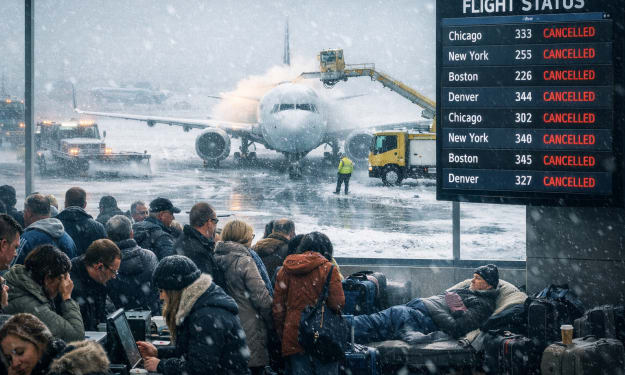
A powerful winter storm sweeping across large parts of the United States has thrown air travel into chaos, forcing thousands of flight cancellations and delays while stranding travelers in airports from coast to coast. What began as a strong cold front quickly intensified into a multi-state weather emergency, combining heavy snowfall, freezing rain, powerful wind gusts, and dangerously low temperatures. The storm’s impact has been especially severe on the nation’s aviation network, where tightly connected schedules mean disruptions in one region rapidly spread nationwide.
By USA daily update 3 days ago in Journal



Comments
There are no comments for this story
Be the first to respond and start the conversation.