
Overnight exchange of gunfire between Indian and Pakistani forces along the Line of Control in Kashmir
Pakistan warns India of 'full-scale war
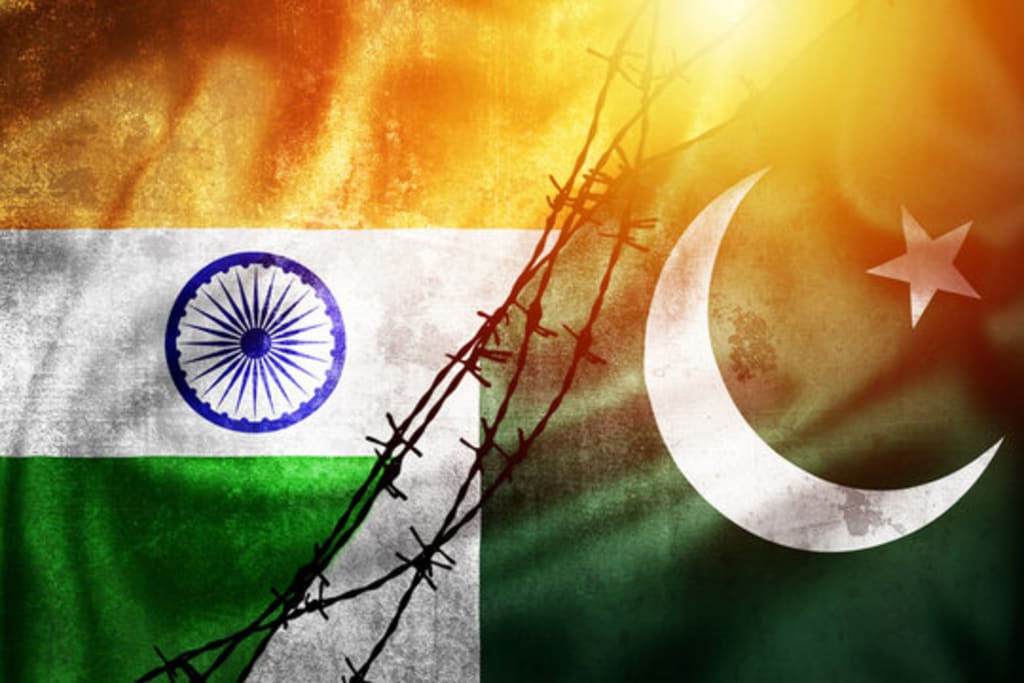
Citing officials from the two hostile neighboring countries, AFP reported this on Friday.
On Tuesday, at least 26 tourists were killed in an attack by gunmen in Pahalgam, a popular tourist destination in Indian-administered Jammu and Kashmir. Just two days later, Indian and Pakistani forces exchanged gunfire.
According to AFP, following this heinous attack on civilians in Muslim-majority Kashmir — considered one of the deadliest in over two decades — India has accused Pakistan of supporting 'international terrorism.' As a result, relations between the two countries have hit a new low in recent times.
Syed Ashfaq Gilani, a government official from Pakistan-administered Kashmir, told AFP, "Troops exchanged fire at various locations along the Line of Control (LoC) in Kashmir.
After the horrific militant attack in Pahalgam, India, that killed 26 tourists, anti-militancy operations have been further intensified across Jammu and Kashmir. Joint forces of the army and police are conducting search operations in various parts of the state.
Since the Pahalgam attack, security forces across Jammu and Kashmir have been on high alert, and anti-militancy operations have been further intensified.
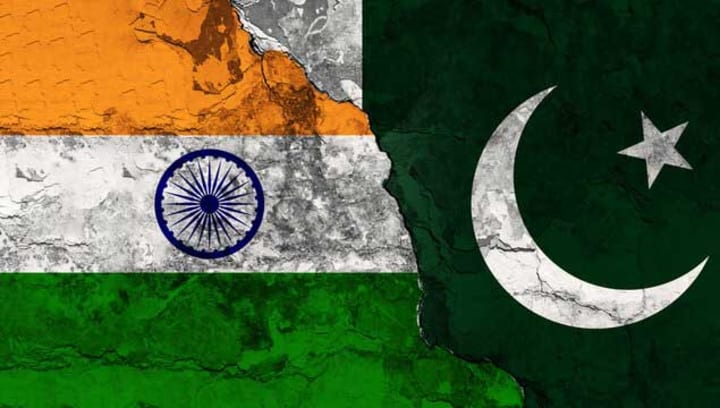
However, no shots were fired at civilians," he said.
The Indian Army also confirmed the matter, stating that limited small-arms fire was used. However, it was Pakistan that initiated the gunfire. In response, a "measured retaliation" was carried out.
Amid the situation, UN spokesperson Stéphane Dujarric told journalists in New York yesterday, "A peaceful resolution of the issues between the two countries is possible and should be achieved through meaningful mutual engagement."
"We call on both governments to exercise maximum restraint. The situation must not deteriorate further," he added.
After Indian police identified two of the three fugitive gunmen as "Pakistanis," Indian Prime Minister Narendra Modi vowed to bring those involved in the killings to justice.
In his first statement after the attack, Modi said, "I want to tell the whole world: India will identify, track, and punish every terrorist and their supporters."
"We will hunt them down to the ends of the earth," he said.
Meanwhile, denying any involvement, Islamabad dismissed efforts to link Pakistan to the Pahalgam attack as "baseless." It also warned that it would respond to any move made by India.
Following a meeting of the National Security Committee (NSC) with top military officials on Thursday night, Pakistani Prime Minister Shehbaz Sharif said, "Any threat to Pakistan’s sovereignty and the safety of its people will be dealt with firmly and decisively.
The Indian Army authorities stated that during the clash, the militants tried to escape, but the soldiers opened fire and put up resistance. The encounter lasted for a while, but the exact number of militants is still unknown. The army is now conducting a combing operation in the area.
On Thursday morning, based on a tip-off about the presence of militants in Basantgarh of Udhampur district in Jammu, a joint force launched an operation. During the exchange of fire between the two sides, Jahan Ali Sheikh, a soldier of the 6 Para Special Forces, was seriously injured. He was taken to the hospital, where he died while undergoing treatment.the army has been conducting an operation in the Lassana forest of Poonch district in search of militants. The search began after receiving information from local residents. Notably, on April 15, a soldier was injured in a clash between the army and militants in that forest.
Additionally, surveillance has been intensified along the Jammu-Rajouri-Poonch route and the Mughal Road. On Wednesday, two suspected militants attempted to infiltrate India through the Uri sector. However, the army successfully foiled the attempt and killed both militants.
In the wake of the deadly attack in Jammu and Kashmir, Iran has offered to mediate to ease the growing tensions between India and Pakistan. On Friday (April 25), Iranian Foreign Minister Seyyed Abbas Araghchi made the proposal and assured diplomatic support to help the two neighboring countries reach an understanding.
Along with the call for mediation, Seyyed Abbas Araghchi quoted a poem by the famous Persian poet Saadi, which says, "Human beings are members of a single family; if one member is hurt, the discomfort will be felt by the others as well.
About the Creator
Time Slipped
The grandfather clock in the hallway didn’t just chime; it groaned, a heavy metallic protest that echoed through the draughty floorboards of Blackwood Manor. Arthur checked his pocket watch—a silver heirloom that had been right twice a day for a century, but was currently spinning its hands like a propeller.
By LUNA EDITHabout 6 hours ago in Journal



Comments
There are no comments for this story
Be the first to respond and start the conversation.