
‘’Israeli forces will remain in Gaza even after the war’’
‘’Even after the war ends, Israeli forces will remain in the buffer zones of Gaza.’’
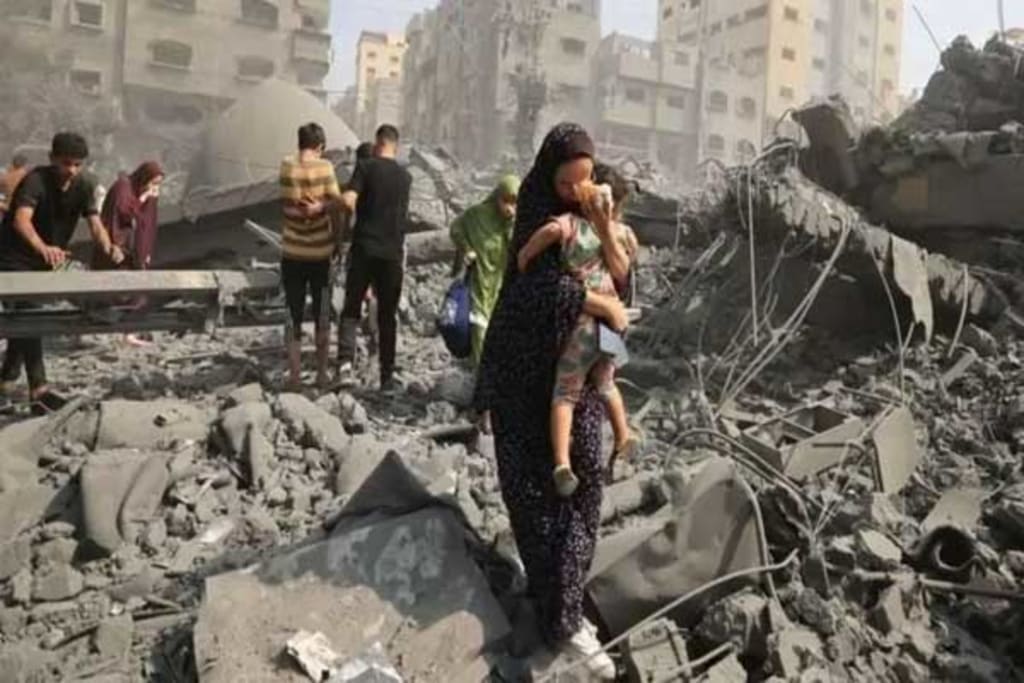
Israel's Defense Minister, Israel Katz, stated that Israeli forces will remain in various so-called security zones, including buffer zones in Gaza, to protect Israeli settlements, regardless of the war's outcome.
He also mentioned that, since the resumption of Israeli airstrikes on Gaza on March 18, many parts of Palestinian territory have been annexed by Israel.
Furthermore, Katz said that Israel will halt the arrival of humanitarian aid to Gaza for six weeks, aiming to pressure Hamas into releasing Israeli hostages held in Gaza.
Amanda Bajeirole, the Emergency Coordinator for the organization in Gaza, said, "We are witnessing the destruction and forced displacement of the people of Gaza in reality."
The health ministry in Hamas-controlled Gaza reported that since the war resumed on March 18, more than 1,650 people have been killed there.
Hospital authorities stated that at least 24 Palestinians were killed in Israeli airstrikes across Gaza on Wednesday.

The majority of the victims were from northern Gaza, and among them, 10 were from the Hasouna family, most of whom were women and children.
The United Nations has stated that Israeli military eviction operations are currently ongoing across 69% of Gaza's territory. This includes "no-go" zones along the Israel-Egypt border and the Wadi Gaza valley south of Gaza City.
As part of this ongoing eviction operation, an estimated 500,000 people in Gaza have been displaced anew. The UN has reported that, at this moment, there is no safe place for them.
The Israeli Defense Forces (IDF) have claimed that they have killed "hundreds of terrorists" in multiple strikes and have advanced into various areas in northern and southern Gaza.
They have also established a new corridor that separates the city of Rafah in southern Gaza from Khan Yunis and has designated 30% of Gaza's territory as an "Operational Security Perimeter.
Yesterday, Israel Katz stated that Israel's first and foremost policy is to make every possible effort to free all hostages. The next goal is to defeat Hamas.
He said, "Unlike before, the soldiers will not leave the areas occupied in Gaza this time."
He further stated, "Whether temporary or permanent security zones—under any circumstances, Israeli forces will remain, just as they are in Lebanon and Syria."
However, Hamas has stated that for any permanent ceasefire, Israeli forces must leave Gaza.
The group told Reuters on Wednesday, "Any ceasefire that does not guarantee the end of the war, withdrawal of the military and blockade, and the beginning of Gaza's reconstruction would be a political trap.

Recently, Israeli military reservists and former soldiers have called for prioritizing the release of hostages over continuing the war against Hamas in multiple open letters.
Israel Katz has also made it clear that Israel will maintain the blockade on Gaza. Since March 2, they have blocked all types of food, medicine, and other supplies from entering Gaza.
He stated, "Israel's policy is clear, no humanitarian aid will enter Gaza," emphasizing that it is also being used as pressure on Hamas, suggesting they might use the blockade and Gaza's population as a tool.
United Nations agencies have firmly rejected Israel's claim that there is no shortage of aid in Gaza, pointing out that 25,000 trucks had entered during the ceasefire period. These agencies have expressed concerns that Israel's blockade may violate international humanitarian law.
UN humanitarian partners have stated that there are no tents left for distribution, and malnutrition has significantly worsened. In March, the number of children receiving supplemental food dropped by more than two-thirds.
In a statement, Médecins Sans Frontières (MSF) said that humanitarian aid is struggling due to "insecurity and severe shortages of relief supplies."
MSF also reported that in the past two weeks, two of their workers have been killed, and in the previous month, Israeli forces killed 15 emergency workers, which they described as "another example of the Israeli military's complete disregard for the safety of humanitarian and medical personnel."
The organization further stated that there is a shortage of painkillers, long-term illness medications, antibiotics, and drugs for complex surgeries.
On October 7, 2023, Hamas launched an attack on Israel, killing around 1,200 people and taking 251 hostages. In response, the Israeli military launched an operation to destroy Hamas. According to the Palestinian Ministry of Health, at least 51,025 people have been killed in Gaza since then.
About the Creator
Italian Cuisine After UNESCO: A Responsibility for the Future
When UNESCO added Italian cuisine to its list of Intangible Cultural Heritage in 2025, the announcement sparked familiar gestures of national pride. Yet beneath the celebratory tone, something quieter lingered. Heritage recognition is not merely a tribute; it is a request for continuity. It implies that a tradition is fragile enough to require protection and valuable enough to deserve it.
By Cristian Marino8 days ago in Journal



Comments
There are no comments for this story
Be the first to respond and start the conversation.