
Overhead Crane Runway Beam Design Standards
Ensuring Safety, Precision, and Compliance in the Structural Design of Overhead Crane Runway Beams

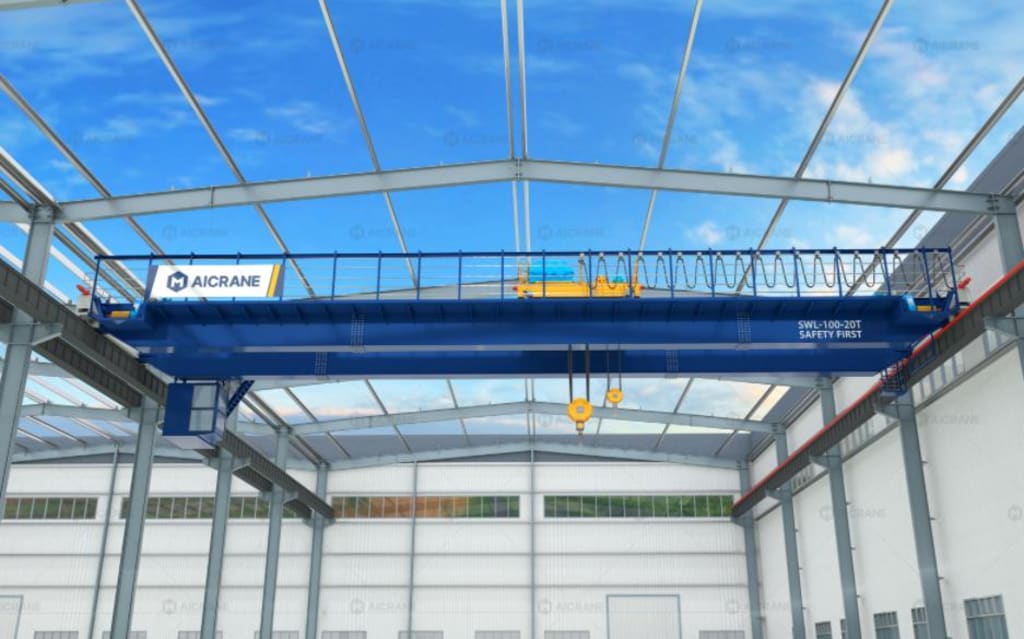
In any overhead crane system, the runway beam plays a critical structural role - it supports the crane’s end trucks, transfers loads to the building columns or independent support structure, and ensures smooth and safe crane movement. Poorly designed runway beams can result in excessive deflection, misalignment, increased wear on crane wheels, and even catastrophic failures. This is why adherence to runway beam design standards is essential for both safety and performance.
This article provides an in-depth overview of the design standards governing overhead crane runway beams, including international codes, structural design principles, load considerations, and best practices for ensuring compliance.
1. Understanding the Function of Runway Beams
A runway beam (sometimes called a crane girder or crane rail support beam) is a horizontal structural element that supports the crane rail on which the overhead crane travels. Its primary functions include:
Carrying the vertical loads from the crane’s weight, trolley, lifted load, and impact factors.
Withstanding lateral forces caused by acceleration, deceleration, skewing, and wind.
Resisting torsional effects when loads are eccentric.
Maintaining alignment to prevent premature wheel and rail wear.
Runway beams can be top-running (supporting a rail on top) or under-running (supporting the crane directly from the bottom flange of the beam). The design standards vary slightly depending on the type.

2. Key International Design Standards
Several recognized engineering codes and standards define the requirements for runway beam design. Some of the most referenced include:
2.1 CMAA (Crane Manufacturers Association of America)
CMAA Specification No. 70 – for top-running bridge and gantry cranes.
CMAA Specification No. 74 – for top-running and under-running single girder cranes.
Covers load combinations, deflection limits, and allowable stresses.
2.2 AISC (American Institute of Steel Construction)
AISC Steel Construction Manual – provides structural steel design guidance, including beam section selection and connection detailing.
Works in conjunction with CMAA for structural capacity verification.
2.3 OSHA (Occupational Safety and Health Administration)
While OSHA does not provide detailed design formulas, it enforces compliance with recognized engineering practices for safe crane operation.
2.4 ISO Standards
ISO 12488-1 – Crane tolerances, including runway alignment.
ISO 8686 – Design principles for cranes, including load factors.
2.5 FEM (European Federation of Materials Handling)
FEM 1.001 provides classification, load spectrum definitions, and design guidance widely used in Europe.
2.6 EN Standards (European Norms)
EN 1993 (Eurocode 3) – Design of steel structures.
EN 1090 – Execution of steel structures and aluminum structures.
A well-engineered runway beam design often references multiple standards to meet local regulatory requirements and the specific operational demands of the crane.
3. Fundamental Design Considerations
The following factors must be addressed when designing a runway beam:
3.1 Load Calculations
The total design load includes:
Dead Load – Weight of the runway beam itself, crane rails, and associated components.
Live Load – Weight of the crane bridge, trolley, and lifted load.
Impact Load – An additional percentage (often 10–25%) to account for dynamic effects.
Lateral Load – Due to crane acceleration, skewing, or side thrust.
Longitudinal Load – Due to crane braking or drive forces.
Wind Load – For outdoor installations.
3.2 Beam Selection
Common runway beam configurations include:
Rolled Steel Sections (e.g., I-beams, wide flange beams).
Built-up Box Girders for heavy-duty applications.
Composite Beams integrating steel with concrete elements for stiffness.
The selection depends on the required load capacity, span length, and building constraints.
3.3 Deflection Limits
Excessive deflection can cause alignment issues and operational instability. Standards such as CMAA limit the vertical deflection to:
L/600 for top running cranes (where L is the span between supports).
L/450 for under running cranes.
3.4 Fatigue Considerations
Crane runway beams experience repeated cyclic loading, making fatigue resistance critical. This involves selecting materials with high fatigue strength and detailing connections to avoid stress concentrations.
4. Rail and Connection Design
4.1 Rail Type and Size
Runway beams typically support either:
ASCE rails (American standard crane rails)
Flat bar rails for lighter cranes
Special hardened rails for heavy-duty applications
The rail’s hardness, profile, and fastening method impact beam design.
4.2 Rail Attachment
Rails can be:
Bolted to rail clips welded to the beam.
Welded directly for permanent installations.
Elastically fastened using pads to reduce vibration and noise.
4.3 Beam-to-Column Connections
Connections must handle vertical and lateral loads without causing excessive deformation. Bolted end plates or welded brackets are common.
5. Tolerances and Alignment Standards
Misalignment can lead to wheel flange wear, rail damage, and unsafe crane operation. Standards like ISO 12488-1 specify allowable tolerances:
Elevation tolerance between beams: ±10 mm.
Lateral deviation of the rail: ±3 mm over 2 m length.
Span tolerance: ±5 mm.
Maintaining these tolerances requires precision fabrication and careful installation.
6. Safety and Compliance
Safety is at the core of runway beam design. Key safety considerations include:
Redundancy in load-carrying members for critical applications.
Proper welding procedures to avoid cracks.
Regular inspection for fatigue cracks, loose bolts, or rail wear.
Compliance with seismic requirements in earthquake-prone areas.
7. Maintenance and Inspection Standards
Even the best-designed runway beams require periodic checks:
Visual inspections for corrosion, deformation, or cracking.
Rail alignment surveys to ensure compliance with tolerances.
Fastener torque checks for rail clips and beam connections.
Non-destructive testing (NDT) in high-fatigue areas.
Standards like ASME B30.2 and ISO inspection guidelines outline recommended inspection frequencies.
8. Best Practices for Designers and Owners
Engage qualified structural engineers familiar with crane loads and dynamics.
Collaborate with crane manufacturers early to align beam design with crane specifications.
Allow for future upgrades by considering higher load ratings than currently needed.
Use high-quality materials with proper certifications.
Ensure fabrication precision to meet alignment tolerances.
Incorporate vibration and noise control where required.
Conclusion
Overhead crane runway beam design is not simply a matter of selecting a steel section - it requires careful consideration of dynamic crane loads, deflection limits, fatigue life, rail attachment, and precise alignment. Adherence to recognized standards such as CMAA, AISC, ISO, FEM, and EN ensures structural integrity, operational safety, and long-term reliability.
Whether for a light-duty workshop crane or a heavy-duty process crane in a steel mill, runway beam design is a critical engineering discipline that directly impacts the crane’s performance and the safety of the entire lifting operation. A well-designed, well-maintained runway beam not only supports the crane—it supports productivity, safety, and business success.
About the Creator
Aicrane01
Welcome to the Aicrane Blog, your practical guide to lifting solutions. Discover articles covering overhead cranes, gantry cranes, winches, steel structures, boat lifts, and more.
Website: https://steelmillcranes.com/
Power Grids Are Changing Faster Than We Think
At sunset, cities rarely pause to consider the invisible system sustaining their lives. Lights flicker on across apartments, hospital machines hum steadily, trains glide through underground tunnels, and data centers process billions of digital interactions every second. Electricity feels effortless - almost permanent.
By efingutthomas6 days ago in Journal




Comments
There are no comments for this story
Be the first to respond and start the conversation.