

Oslo Accords: Another Chapter in the Deception of the Palestinians
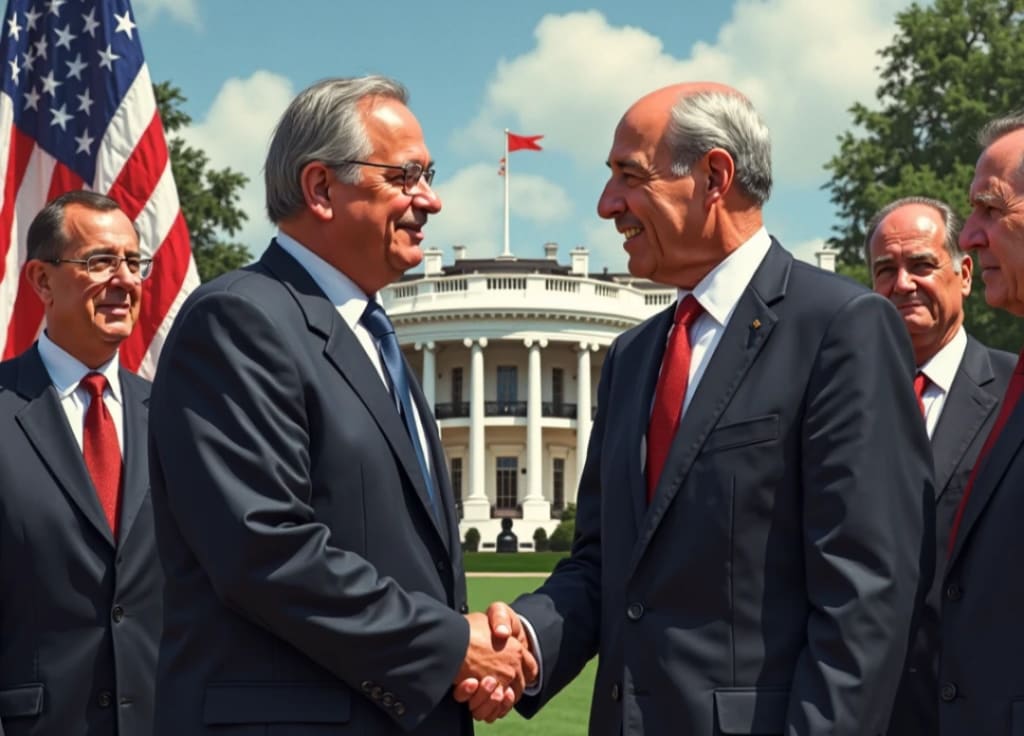
September 13, 1993. A much-discussed moment in the history of world politics was captured on the White House lawn: Israeli Prime Minister Yitzhak Rabin and PLO Chairman Yasser Arafat shaking hands, with US President Bill Clinton standing in between. Cameras flashed all around, media cheers, and congratulatory messages poured in from major capitals around the world. Everyone was saying—a new era of peace had begun in the Middle East. But what was not visible was the reality behind the scenes of this agreement—a clever, cunning, and ruthless political deception that the Palestinians were the victims of.
The agreement essentially called for the establishment of a “temporary self-rule,” in which a limited Palestinian authority would be formed in the West Bank and Gaza, and final status issues—such as Jerusalem, the rights of Palestinian refugees, Jewish settlements, security and borders, etc.—would be finally resolved within five years. This was the beginning of a process that, while promising peace, was in reality an ‘unresisted surrender bound by the peace process’.
The Israeli strategy behind this agreement was clear: they wanted to pressure the armed resistance into questioning legitimacy. Although they recognized Yasser Arafat as a “partner for peace”, they demanded from him the abandonment of all armed resistance against Israel, and the peaceful management of the Palestinian people in the future. In reality, Arafat was not given any sovereign power, but rather the role of a security administrator who would suppress opposition from among his own people, so that Israel could no longer be a direct “significant occupier” but rather a “contracted peace seeker”.
The PLO was also at that time in the throes of years of siege, refugee life, and a leadership crisis. The Oslo Accords offered them a new identity, a path to their dream of statehood. But every clause in the agreement was tailored to Israel’s advantage. The Palestinians were given a series of fragmented territories, pieces of land that were disconnected from one another—like “workrooms” or “bantustans.” They called these areas “Area A,” “Area B,” and “Area C”—with Area C, about 60 percent of the land, being left entirely under Israeli control.
Arafat wanted Gaza and the West Bank to be the basis of a future state, but he got a separate territory where he could only do administrative work. And beyond that, there was the blockade of Gaza, the expansion of Jewish settlements in the West Bank, new checkpoints every day, and the free movement of Israeli troops. Instead of peace, the Palestinians received daily humiliation, oppression, and a suffocating political reality.
The biggest betrayal was the “refugee problem” and the “Jerusalem” issue. The Oslo Accords put these issues aside as “to be discussed later,” even though they were the essence of Palestinian nationhood. The right of return of millions of refugees who had been displaced in 1948 was thus obscured, and Jerusalem—the center of identity for both Palestinian Muslims and Christians—was gradually transformed into the Israeli capital.
Anger quickly built up among the Palestinian people against this agreement. They saw that they had been cheated in the name of peace, given no land, no independence, only the “illusion of a recognized state.” Arafat himself was under threat, and he gradually became a figure of a weak and surrendered leadership in the eyes of the people.
The Palestinian resistance grew stronger after the Oslo Accords. Organizations such as Hamas and Islamic Jihad gained popularity, calling the accords a complete and irrevocable betrayal. The second intifada began in 2000, in which thousands of Palestinians lost their lives and Israel carried out even more brutal repression in Gaza and the West Bank.
On the other hand, Israel used the entire agreement process to establish its legitimacy internationally, and received international aid, military cooperation, and economic benefits from the agreement. It kept the Palestinians locked up in a crude administrative structure, and was able to internationally label their resistance as “terrorism.”
This outcome teaches us: a people cannot be liberated by a political document alone, unless equality, justice, and sovereign rights are established on that document. The Oslo Accords were a kind of “fake peace politics” in which Israel further strengthened its occupation by silencing the Palestinians.
Today, thirty years later, the dream of a Palestinian state has not been fulfilled. The deception that began in the name of the Oslo Accords still holds the Palestinians in chains. This is a profound lesson from history—not just verbal peace, but peace based on truth and justice is the path to true liberation.
About the Creator
Keep reading
More stories from Abdul Barik and writers in Journal and other communities.
India and Pakistan
India and Pakistan—though two neighboring states—have always had hostile, suspicious, and conflicting relations. Since the bloody chapter of the partition of 1947, these two states have been locked in a perpetual cold war, whether behind the scenes of diplomatic negotiations or on the open battlefield. But Pakistan's presence in modern Indian politics is often more strategic than real; India's political leadership often achieves ulterior motives by portraying Pakistan not just as a rival, but as a formidable enemy. And one of the hidden hands that works very subtly in this process is false flag operations—that is, organizing attacks themselves and blaming them on the enemy.
By Abdul Barik8 months ago in Journal
The goals I did not achieve
Every writing goal I made for the year is a wash. It has been this way for a while, but I think it's important to be open about my failures and the reality of how life can get in the way. This is especially true considering the several times I have posted on Vocal about my writing goals, how I was changing my approach, and where I was hoping to be for the upcoming year. I will probably do that again in a couple months, but for now, it is time to acknowledge where I am today.
By Kay Husnick22 days ago in Journal




Comments
There are no comments for this story
Be the first to respond and start the conversation.