
On-Demand Revolution: How Quick Commerce is Changing the Game
Quick Commerce Instant Delivery

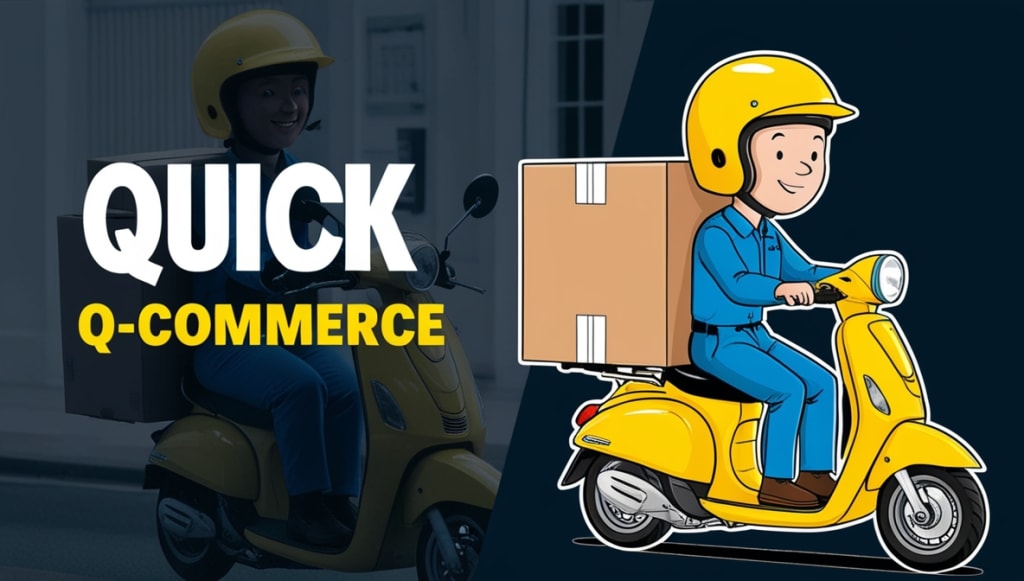
What is Quick Commerce?
Quick Commerce, often called Q-commerce, is a fast-growing segment of e-commerce that prioritizes delivering everyday essentials to customers in minutes rather than days. It’s built around the idea of instant access, catering to a world where convenience and speed are increasingly valued. Whether it’s a carton of milk, a phone charger, or a tube of toothpaste, Q-commerce aims to get it to your door before you’ve had time to second-guess your order.
Unlike traditional e-commerce, which often relies on large, centralized warehouses and multi-day shipping, Q-commerce uses a network of smaller, hyper-local fulfillment centers. These are paired with real-time inventory tracking and sophisticated logistics tech—like AI-driven route optimization—to make rapid delivery possible. The result is a system that spans groceries, household goods, electronics, personal care items, and more, all tailored to fit the pace of modern life.
Key Players in the Q-Commerce Market
A handful of companies have taken the lead in this space, each bringing its own approach to speed and service:
Blinkit (Formerly Grofers): Originally a grocery delivery service, Blinkit has pivoted to focus on ultra-fast delivery of essentials and household items. It’s known for its streamlined app and wide coverage in urban areas.
Zepto: A newer player, Zepto has made waves with its promise of 10-minute deliveries. It targets densely populated cities, keeping its inventory lean and its operations agile.
Swiggy Instamart: Building on its success in food delivery, Swiggy’s Instamart arm brings groceries and daily necessities to customers in 15–30 minutes, blending its existing logistics expertise with a broader product focus.
BigBasket (BB Now): A veteran in online grocery, BigBasket’s BB Now service offers delivery in as little as 10 minutes. It stands out for combining speed with a diverse catalog that goes beyond just food.
These companies are setting the pace, but the market is crowded with others vying to carve out their own niches as Q-commerce grows.
How the Q-Commerce Model Works
The backbone of Q-commerce is a tightly coordinated, technology-driven process designed for speed and reliability:
Online Ordering: It starts with the customer, who uses a mobile app or website to browse a curated selection of products. The interface is simple, payments are digital, and checkout is quick—often just a tap or two.
Smart Inventory Management: Behind the scenes, real-time systems monitor stock levels across local warehouses. This minimizes the risk of items being unavailable and keeps the supply chain responsive.
Automated Order Processing: Once an order is placed, automated systems kick in—verifying payment, assigning the order to the nearest fulfillment center, and preparing it for dispatch with little human delay.
Last-Mile Delivery Optimization: This is where Q-commerce shines. Delivery routes are calculated using real-time traffic data and AI tools, while dedicated riders or even smart lockers ensure the package reaches the customer fast—sometimes within a single-digit minute count.
Customer Support: Post-order, customers can track their delivery live, ask questions via chat, or resolve issues through AI chatbots and support teams, keeping the experience smooth from start to finish.
Why Q-Commerce Stands Out
Q-commerce isn’t just about speed—it’s about rethinking how convenience, technology, and customer needs intersect:
Fast Deliveries: Hyper-local setups and optimized logistics mean orders often arrive in under 30 minutes, with some players hitting 10-minute marks consistently.
Smooth Shopping: Apps are designed for ease, with features like personalized recommendations based on past orders, one-tap reordering, and clean layouts that cut down decision fatigue.
Wide Product Selection: What started with groceries has grown to include beauty products, over-the-counter medicines, pet supplies, and small electronics, offering something for nearly every urgent need.
Efficient Operations: Businesses benefit, too—integrated payment gateways, predictive analytics for demand, and automated workflows reduce costs and errors while boosting performance.
Local Connections: By partnering with nearby stores and couriers, Q-commerce companies can scale quickly, tap into existing networks, and build trust with communities.
Impact on the On-Demand Delivery Industry
Q-commerce has sparked a shift in how people approach shopping. The promise of near-instant delivery has turned occasional online buyers into regular users, especially in cities where time is tight. It’s not just about convenience—features like flexible payment options, transparent tracking, and an ever-expanding range of goods are raising expectations for what online retail can be. Traditional e-commerce and even brick-and-mortar stores are feeling the pressure to adapt as Q-commerce redefines the norm.
Steps to Build a Q-Commerce Strategy
For businesses eyeing this space, success hinges on a few practical moves:
Set Up Local Warehouses: The foundation is a network of small, strategically placed fulfillment centers. These cut delivery times by keeping goods close to customers. Stocking high-demand items that pack and ship quickly—like snacks or hygiene products—adds efficiency.
Expand Product Offerings: Customers’ tastes change, and so should the inventory. Starting with essentials is smart, but adding categories like tech accessories or seasonal goods can attract a wider audience and keep them coming back.
Use Smart Software: Q-commerce demands robust tech. Software that ties together ordering, inventory, and delivery—while providing real-time data—helps manage the complexity. It’s not just about speed; it’s about accuracy and scalability, too.
Conclusion
Q-commerce is still evolving, but its trajectory is clear: it’s here to meet the rising demand for speed and convenience. As consumer habits shift and technology advances, companies are pouring resources into expanding their reach, refining their systems, and even exploring eco-friendly options like electric delivery fleets. The challenge will be balancing growth with sustainability while keeping up with customers who now see 10-minute delivery as a baseline, not a luxury. For businesses that adapt, diversify their offerings, and lean into innovation, Q-commerce offers a chance to shape the future of shopping.
About the Creator
Ashish Sudra
Ashish Sudra is the founder of Deonde, with over 16 years of experience in IT and On-demand Solutions. He is also an accomplished Business Consultant specializing in delivering Online Food Ordering and Delivery System for startups and SMEs.
Keep reading
More stories from Ashish Sudra and writers in Journal and other communities.
Food delivery apps like Zomato and Swiggy How Much Do Delivery Charge in Restaurants?
Food delivery apps have been around for a little over ten years now. And let’s be honest—they’ve completely changed the game. They made it super easy for customers to get their favorite meals without stepping outside, and they gave restaurants a way to expand their reach without doing much heavy lifting.
By Ashish Sudraabout a year ago in Journal
How to Release the Fear of Losing It All (and Trust Yourself Again)
It was 2:17 AM, and the only light in the room came from my laptop screen, casting a blueish glow on my tear-streaked face. I was staring at a spreadsheet, the numbers blurring together. A few months of lower-than-projected revenue. A client who had unexpectedly paused their contract. A whisper from the bank account that suddenly felt far too thin.
By Edina Jackson-Yussif 6 days ago in Journal


Comments
There are no comments for this story
Be the first to respond and start the conversation.