
Ofcom warns all Wi-Fi users over common ‘speed-slowing’ items – even lamps can ruin your signal
OFCOM has revealed some of the common household objects that can ruin your Wi-Fi speed
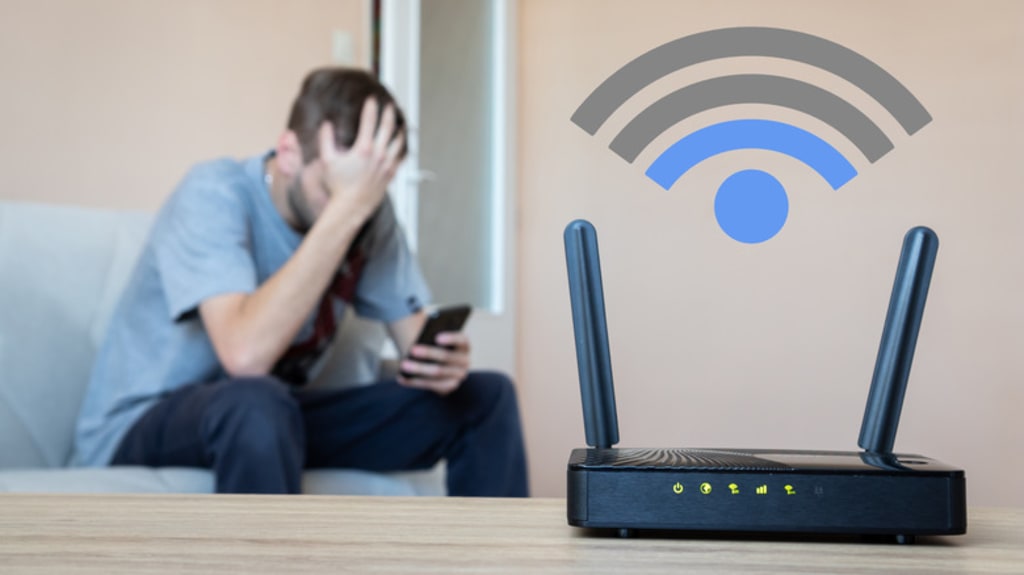
OFCOM has revealed some of the common household objects that can ruin your Wi-Fi speed.
The UK comms watchdog says lightning, speakers and even power cords can play havoc with your broadband.
Are you to blame for your dodgy Wi-Fi speeds?
Having good internet at home is more important than ever.
But it’s surprisingly easy to make mistakes that can interfere with your Wi-Fi signal.
Ofcom has detailed some of the errors that could be stopping your Wi-Fi router from delivering its full potential.
“Halogen lamps, electrical dimmer switches, stereo or computer speakers, fairy lights, TVs and monitors and AC power cords have all been known to affect routers,” Ofcom warned.
“Keep your router as far away as possible from other electrical devices as well as those which emit wireless signals such as cordless phones, baby monitors etc.”
The height you place your router at can also have an effect.
It’s usually recommended that you don’t keep your Wi-Fi router on the floor or very low down.
Instead, try to get it off the ground.
“Try to place your router on a table or shelf rather than on the floor and keep it switched on,” Ofcom advised.
Of course that’s not the only reason your Wi-Fi may be slow.
You might be using too many Wi-Fi-hungry devices at home, or your broadband provider could be having issues.
But if your Wi-Fi speeds are consistently poor, it could be a sign that you’ve got your router set up in a bad way.
Try placing it high up in a central location within your home – and keeping it away from other electrical items.
If your signal still doesn’t improve, it could be worth upgrading your router, paying for a faster broadband subscription, or investing in Wi-Fi extenders.
You should also make sure you have a strong Wi-Fi password.
Otherwise you may find your speeds affecting by rogue neighbours piggybacking on your connection.
There is a standard procedure to follow when home internet fails. Let your anger stew into a cortisol bouillabaisse, complain using exotic swears on Twitter and then let rip at an underpaid helpline worker, having spent 40 minutes listening to scratchy, old, big-band tunes while on hold.
But there may be an easy solution if the issue is down to range and signal quality, rather than a genuine failure of your ISP.
1. Finding the problem
A simple test lets you, in most cases, determine if the problem is ISP or range and signal quality related. Plug a laptop or desktop computer into your router using an Ethernet cable and run a speed test, such as the one found at speedtest.net. Performance still poor or non-existent? You may have deeper problems than those we’ll attempt to solve here.
Haven’t owned a computer with an ethernet port since 2012? Performing a Wi-Fi-based test right next to the router should give you an idea if the issue is range-related, if not eliminating every Wi-Fi issue as the culprit.
2. Move the router
Frustration has a habit of knocking out a certain foundational level of our cognitive abilities. In other words, we’re not calling you stupid, but have you tried moving your router?
A router’s antennae are designed to transmit signal in a roughly radial pattern, in their standard configuration. While most of us tend to place a router within a metre of the wall socket into which it is plugged, it makes more sense to put it somewhere between the rooms that need good Wi-Fi signal the most.
The problem? No ISP router comes with the cabling you’ll need to do this. For fibre internet an optical cable is needed. Standard broadband requires a normal ethernet cable. Ten-metre lengths of either cost just a few pounds online.
3. Change the channels used by your router
Changing the channel is another thing to try. Most routers these days transmit their Wi-Fi over 2.4GHz and 5GHz frequencies, using specific frequency bands in these spectrum classes.
Other wireless equipment you have in your home may interfere with the 2.4GHz signal in particular. Baby monitors, wireless speakers and just about any other wireless home gadgets have the potential to cause this, although we only tend to see it pop up in less well-designed products, like wireless speakers made by small companies.
Read more - Firenewsfeed
About the Creator
Keep reading
More stories from Firenews Feed and writers in Journal and other communities.
Title-winning Liverpool hero could team up with Gerrard in Saudi Arabia – it’s not Firmino
Steven Gerrard is reportedly on the verge of being hired as the new manager of Saudi Arabian club Al-Ettifaq, and he could potentially bring another modern Liverpool legend with him.
By Firenews Feed3 years ago in Journal
The goals I did not achieve
Every writing goal I made for the year is a wash. It has been this way for a while, but I think it's important to be open about my failures and the reality of how life can get in the way. This is especially true considering the several times I have posted on Vocal about my writing goals, how I was changing my approach, and where I was hoping to be for the upcoming year. I will probably do that again in a couple months, but for now, it is time to acknowledge where I am today.
By Kay Husnick23 days ago in Journal
Diary of Anony Elle
If you read the last post, forgive me… I was rambling. See, I have a plan! I have learned that perfection is not needed to start that plan. So, I just started it. I am committed and I will not allow my circumstances to deter me like I have many times before. Not this time. This time I am focused, dedicated, and willing to do everything that I need to do to achieve the outcome my babies and I deserve. I now know who I am, who they are, and what I am up against. I do not plan on being nice anymore, now that I know how stupid nice is. I do not wonder if they love me (“they” will be revealed soon) and I know who my enemies are; so I no longer have limits.
By Anony Elle4 days ago in Journal


Comments
There are no comments for this story
Be the first to respond and start the conversation.