
Obesity is becoming more common in the world most especially in the USA.
Obesity

Research has indicated that a significant proportion of people worldwide are physically fit yet medically obese. The 'good fat' phenomenon is making medical professionals reevaluate the idea of weight as a general indicator of health.
In a study released this week, Chinese researchers discovered that 10% of Americans who were obese in 2002 were "healthy," meaning they did not have diseases like diabetes or high blood pressure that are often linked to obesity.
According to the survey, 15% of obese persons are now in good health.
The study supports the emerging notion that body mass index, or BMI, is an imprecise indicator of obesity and that persons who are exceptionally tall or muscular tend to fall into the overweight category because they carry more mass.
The increase in the number of metabolically healthy individuals, according to Chinese experts, is due to better technology, care, and awareness for high blood pressure and heart disease, which stop the problems from developing.
The finding, however, comes amid mounting data that suggests a person's kind of fat may be more significant than their overall level.
Visceral fat, a hard internal layer that often develops between the organs in the belly, is the most hazardous kind.
It often results in a beer belly and adds to the unattractive apple body shape, which is thought to have the greatest risk of health problems.
Contrarily, the squiggly kind of fat that resides immediately under the skin and contributes to the development of cellulite is known as subcutaneous fat.
The pear-shaped physique is a result of this sort of fat, which is really the least dangerous since it tends to collect around the thighs and buttocks rather than the stomach.
Inflammatory chemicals and hormones are considered to be released into the blood by visceral fat, making it hazardous. Future chronic illnesses including heart disease and fatty liver disease have been related to this, among others.
The layer between the skin and the muscle is made up of subcutaneous fat, which does not produce these substances.
The difference in risk was summarized earlier this year in different research.
It was shown that the risk of having heart failure was up to a third higher in persons with higher amounts of visceral fat around their thighs as opposed to the subcutaneous fat that causes cellulite. Even when the population was small, the connection maintained true.
Researchers from the University of Texas suggested that intramuscular fat is inflammatory after following 2,399 patients in the 70 to 79 age range for an average of 12 years.
But being overweight is still not a wise decision. Obesity has been shown to significantly increase the chance of developing chronic illnesses including diabetes, heart disease, several forms of cancer, Alzheimer's disease, and others.
'Skinny fat' is another term for this condition. This is the physique of someone who, when covered by clothes, does not seem to be overweight but really conceals a "beer belly" or "pot belly."
A "skinny-fat" individual often has a BMI that is deemed healthy but also has underlying health problems.
Although this notion was proposed almost 15 years ago, further data and consequences for policy change are still developing, according to Dr. Nitin Kapoor, an endocrinologist at the University of Melbourne in Australia, who wrote extensively about it in 2021. In the scientific literature, the thin-fat phenotype is sometimes referred to as normal-weight obesity or metabolic obesity etc. It is described as a person who has average weight but has an excessively high body fat percentage.
This fat is mostly visceral. This fat is mostly visceral.
Experts have discovered that visceral fat secretes hormones and chemicals that have broad effects on the body, describing it as "active fat" because of this.
The fat causes fatty acids to be released into the circulation and liver, which increases the body's synthesis of cholesterol.
Additionally, visceral fat produces cytokines, immunological proteins that increase the risk of heart disease by causing inflammation in the body.
A person who is more obviously obese may not experience these hazards, though.
Subcutaneous fat makes up the majority of a person's apparent body fat, such as the fat that can be pinched and removed from the arm and leg.
This fat makes up the overwhelming bulk of an individual's body fat and may add pounds to the body.
It even has certain advantages for the body over visceral fat in terms of how little damage it does.
The body uses the fat as insulation and cushioning. It protects the bones and muscles from the impact of bruising and trauma.
Cellulite, a benign but noticeable skin condition that produces dimpling on the thighs, buttocks, and legs, is also caused by subcutaneous fat.
Cellulite often affects women, and despite its unfavorable image, physicians claim it has no connection to one's health.
However, having a lot of subcutaneous fat is also unhealthy.
More visceral fat is often indicated by more subcutaneous fat.
About the Creator
Keep reading
More stories from OLAYINKA GIWA and writers in Journal and other communities.
Keto Meal Planner
A ketogenic diet may be a useful tool for weight loss. The ketogenic diet causes the body to burn fat for energy instead of carbohydrates by being high in fat and low in carbohydrates. Ketones, which are used as a source of energy while the body is in a state of ketosis, is produced by the body. Creating a calorie deficit, or consuming fewer calories than your body expends through exercise and other biological activities, is the main step in weight loss through diet. Here are some suggestions for weight loss through eating:
By OLAYINKA GIWA3 years ago in Journal
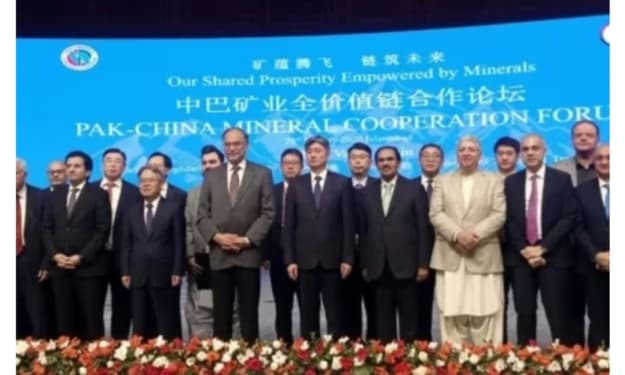
Pakistan’s Mineral Exports Could Hit $6–8 Billion Annually With Value Addition: Ahsan Iqbal
ISLAMABAD — Pakistan’s mineral sector holds immense promise, and with a strategic shift toward value addition, the country could see its mineral exports surge to between $6 billion and $8 billion per year by the end of the decade, Federal Minister for Planning and Development Ahsan Iqbal said on Wednesday. Speaking at the Pakistan–China Mineral Cooperation Forum in Islamabad, Iqbal outlined a vision for transforming Pakistan’s historically under‑utilised mineral wealth into a linchpin of export‑led growth.
By Salaar Jamali3 days ago in Journal



Comments
There are no comments for this story
Be the first to respond and start the conversation.