
Navigation Meets Innovation: Avionics Market Set to Climb with Smart Flight Systems Adoption
The worldwide avionics industry is undergoing significant expansion and transformation through the swift uptake of intelligent flight systems alongside artificial intelligence with growing demands for safer and more efficient air travel.

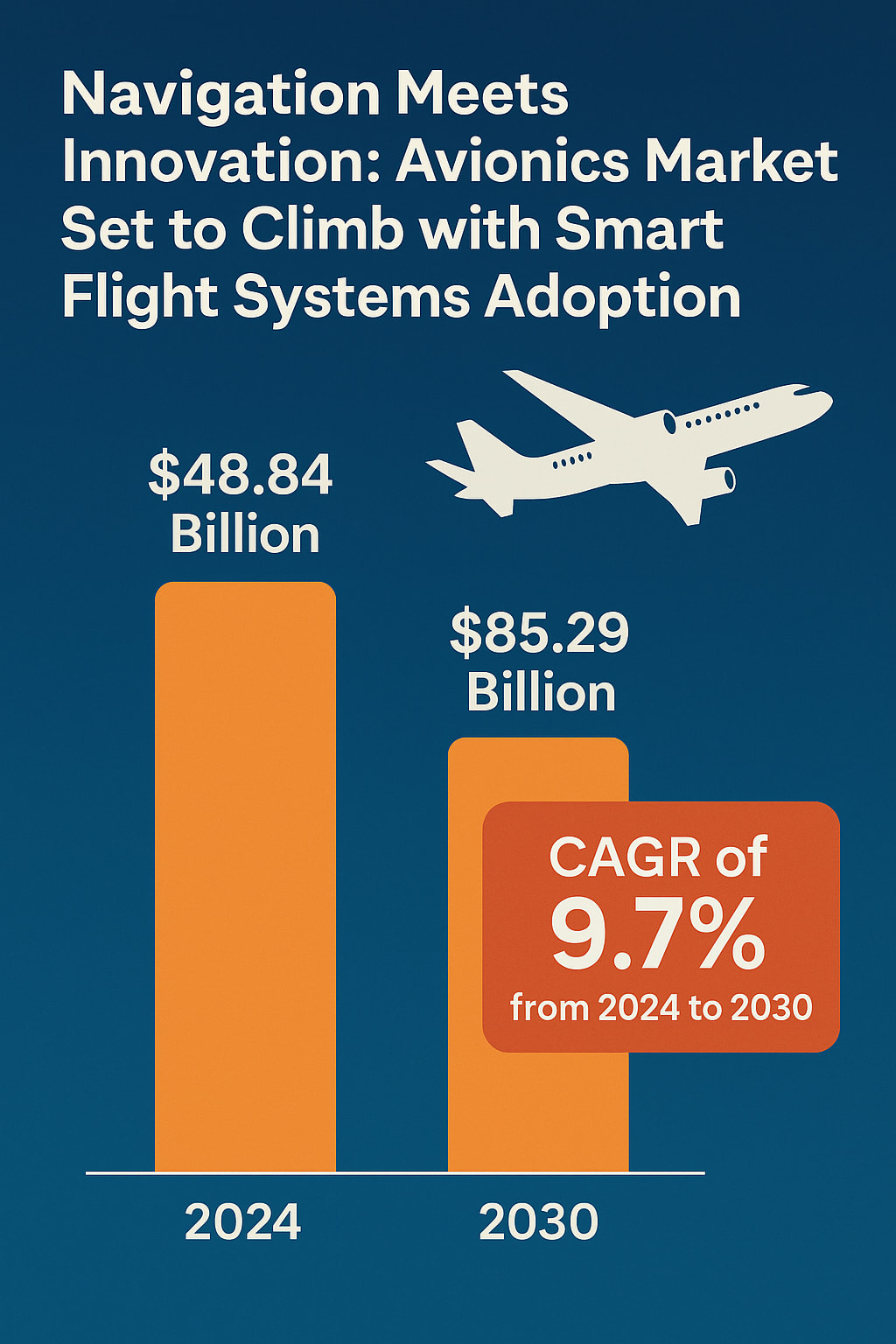
The avionics market value of USD 48.84 billion in 2024 is expected to expand to USD 85.29 billion by 2030 according to forecasts which show a compound annual growth rate (CAGR) of 9.7%. Avionics systems which used to be seen as backend infrastructure now serve as essential contributors to performance, sustainability, and safety in the evolving 21st-century aviation industry.
What Are Avionics?
Aviation electronics represent the complete array of electronic systems in aircraft operations which includes navigation systems and communication devices along with flight control mechanisms and systems for collision avoidance as well as aircraft monitoring. Avionics technologies serve as essential components for both military and civil aviation enabling pilots to navigate accurately while ensuring reliable communication and real-time decision-making in complex operational settings.
The growing demands for improved flight efficiency and security are transforming avionics from isolated hardware components into integrated digital ecosystems that merge real-time data with AI-powered insights and satellite connectivity.
Smart Flight Systems at the Forefront
The market is experiencing significant growth thanks to smart flight systems which automate and optimize multiple flight operation processes. The systems lessen the pilot's operational demands while enhancing navigation routes and permitting maintenance forecasting to decrease delays and system unavailability.
Key technologies fueling this evolution include:
NextGen Flight Management Systems (FMS)
Advanced Flight Management Systems use GPS and satellite navigation to create optimal flight paths which help lower fuel consumption and emissions.
Synthetic Vision and Augmented Reality
Pilots benefit from enhanced cockpit displays which show 3D terrain and obstacle representations that boost situational awareness during operations with low visibility.
Integrated Modular Avionics (IMA)
Integrated Modular Avionics enhance fuel efficiency by eliminating isolated systems and replacing them with centralized processing units to reduce aircraft weight while improving data management.
Real-Time Data Analytics and AI
AI-driven systems that monitor engine health and predict weather patterns enable predictive functions which improve both safety measures and cost savings.
Key Growth Drivers
1. Rising Global Air Traffic
The commercial aviation sector experiences resurgence after the pandemic through increased travel demands domestically and internationally. The increasing number of aircraft and the extension of flight distances create a demand for sophisticated avionics solutions to navigate busy airspace and intricate travel paths effectively.
2. Boom in Aircraft Modernization
Airlines in North America and Europe are increasingly choosing to retrofit their fleets with digital, satellite-linked avionics systems to replace outdated technology and achieve better precision and compliance.
3. Military Investments
Around the world governments are updating their defense aircraft fleets with state-of-the-art avionics for unmanned aerial vehicles and military surveillance planes as well as fighter jets. Standardization of features such as encrypted communication systems and radar warning mechanisms along with automated mission management capabilities is becoming widespread.
4. Urban Air Mobility (UAM) and Drones
The development of eVTOL aircraft and autonomous drones demands avionics developers to create lightweight AI-based systems capable of vertical takeoff, autonomous navigation and real-time monitoring.
Challenges in the Market
Even though the avionics industry has strong potential for growth it still must overcome multiple barriers.
High Development and Integration Costs: The process of advancing system technology while maintaining compatibility with older infrastructure demands substantial resources and prolonged efforts.
Cybersecurity Risks: The increasing interconnection of avionics systems makes cybersecurity protection their highest priority.
Stringent Regulatory Standards: Product launch timelines in avionics are extended by adherence to FAA and EASA aviation safety standards.
Regional Outlook
Heavy investments in aerospace technology combined with key OEMs presence and military modernization programs grant North America its market domination.
Europe continues to prioritize green aviation strategies and airspace digitization projects supported by SESAR (Single European Sky ATM Research).
The fastest growth in Asia-Pacific is anticipated due to expanded commercial airline activity alongside local aircraft production from China and India and growing defense spending.
The Future: Autonomous and Green Avionics
The future of the avionics market will experience growth due to two substantial trends.
1. Autonomous Flight Systems
Defense operations, drone technology, and Urban Air Mobility sectors are increasingly adopting autonomous avionic systems. The integration of AI-based decision-making and obstacle detection with self-navigation systems is transitioning from laboratory research to real-world aerial applications.
2. Sustainable Aviation
Avionics systems will become essential for eco-friendly flight operations by optimizing fuel consumption while managing electric propulsion systems and controlling hybrid-electric aircraft as emissions reduction becomes a priority.
Conclusion
Avionics stands at the forefront of innovation as aviation advances through the era of automation, connectivity, and sustainability. Traditional flight systems combined with digital technology create advancements that lead to safer, smarter, and more responsive air travel. The aviation industry sees a rising avionics market because smart flight systems become prevalent in commercial and defense applications and direct a bold new direction for future aviation.
About the Creator
Silvie Karson
Passionate storyteller exploring the world of trends. With a background in digital marketing, I craft compelling narratives that inform and inspire. Whether diving into deep-dive features, growth analysis, or trend analysis.
Keep reading
More stories from Silvie Karson and writers in Journal and other communities.
Thermoplastic Elastomers Market Set to Reach $40.9 Bn by 2030 Driven by Lightweighting Trends
The thermoplastic elastomers market will undergo substantial growth because of increasing demand within automotive, consumer goods, medical, and industrial sectors. The market value of USD 25.15 billion in 2023 is set to grow to USD 40.9 billion by 2030 while maintaining a compound annual growth rate of 7.4%. The market expansion is primarily driven by worldwide efforts toward lightweighting and sustainable practices along with design flexibility which change how manufacturers select materials to enhance product performance and efficiency.
By Silvie Karson7 months ago in Journal
The Rise of Electric Aircraft in Business Aviation: A Sustainable Future
The aviation industry has long been known for its significant environmental impact, with business aviation contributing to a large share of emissions from private aircraft. However, as sustainability becomes a more pressing issue, the business aviation sector is looking to electric aircraft as a potential solution. With advancements in electric propulsion systems, blockchain and battery technology, electric aircraft are poised to revolutionize business aviation, offering a cleaner, more efficient alternative to traditional jet fuel-powered aircraft. In this blog, we will explore the rise of electric aircraft in business aviation and how they promise to shape a more sustainable future.
By Beckett Dowhan6 days ago in Journal



Comments
There are no comments for this story
Be the first to respond and start the conversation.